 By
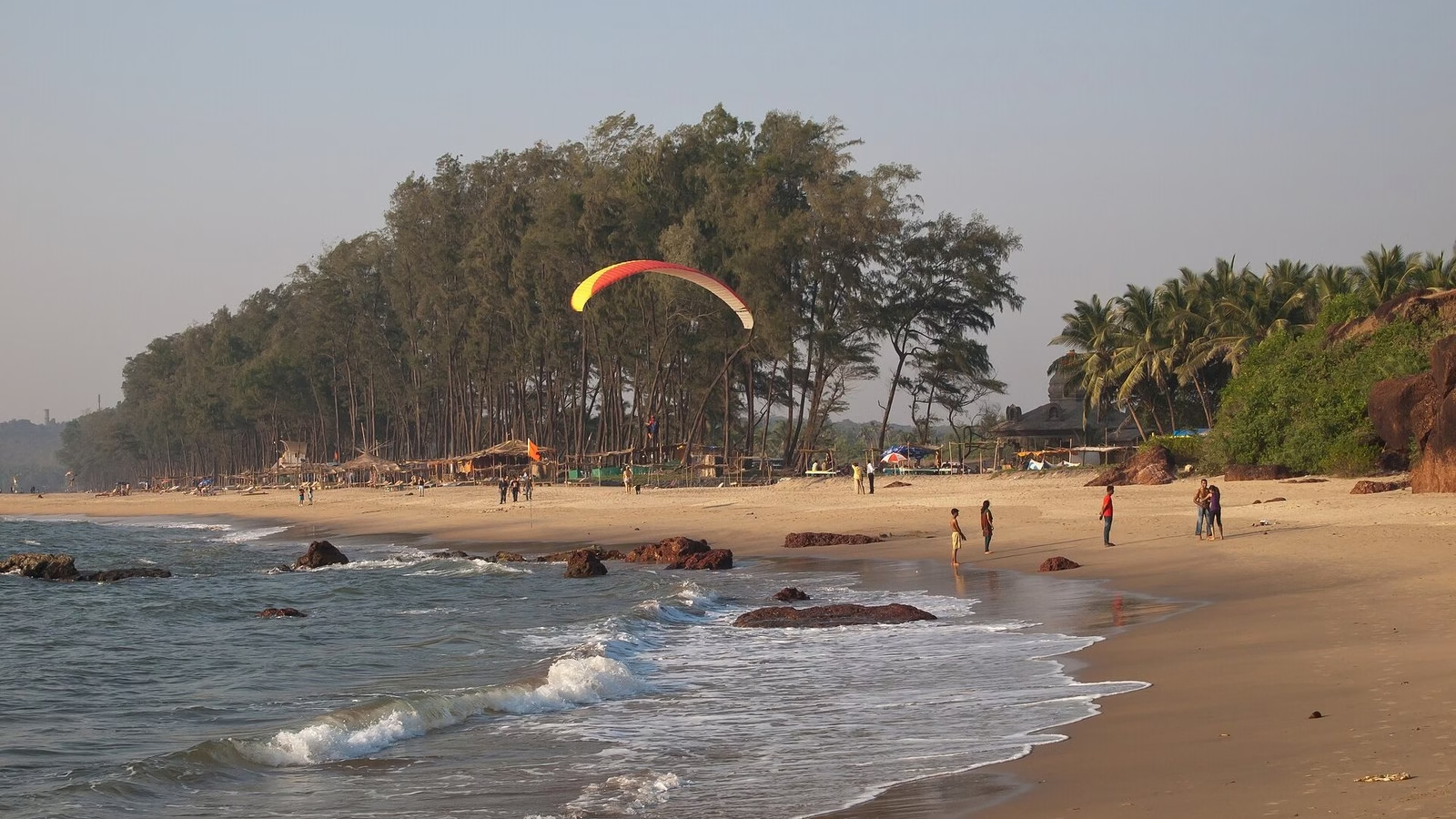
Keri Beach, also called Querim, is the northernmost beach of Goa, sitting in Pernem taluka right where the Tiracol river meets the Arabian Sea and the Maharashtra border begins. Most people stop at Arambol and turn back, but if you go just a little further north you get a long, quiet stretch of sand lined with casuarina trees, a sea cave you can walk into at low tide, rocks, a temple right next to the beach and a few simple shacks. If you are tired of the crowds of Baga and Calangute, this is the side of North Goa you should see.
I rode here on a scooter from Arambol, reached a little too late with the sunset already coming in and still managed to get inside the cave before the tide closed it, so here is everything you need to know to plan Keri better than I did.
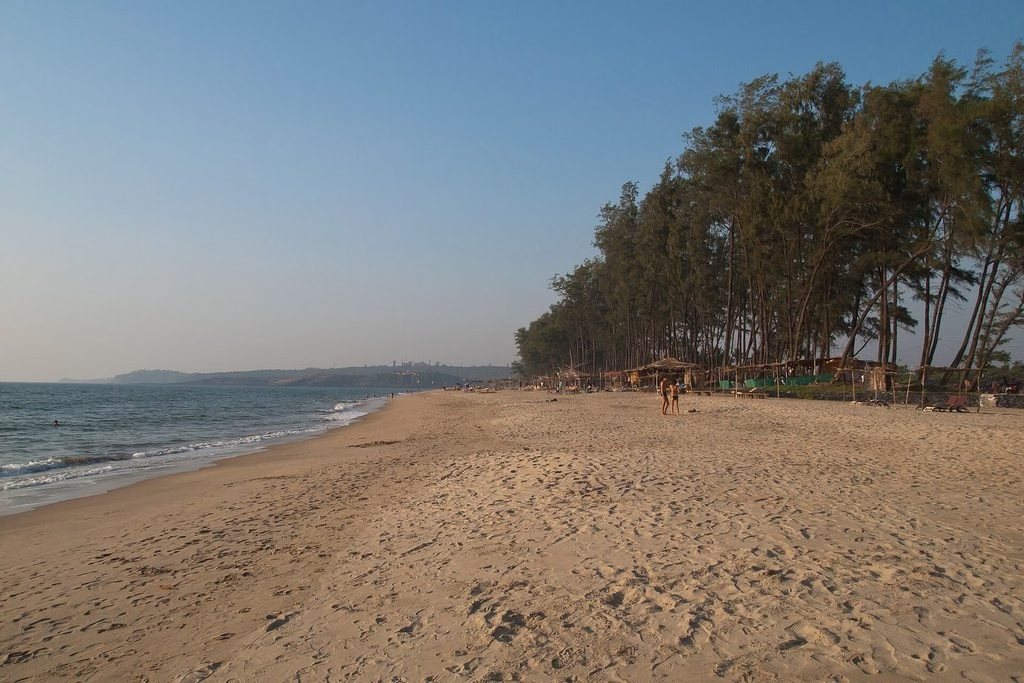
Photo: Vyacheslav Argenberg, Wikimedia Commons, CC BY 4.0.
What to do at Keri Beach?
1. The sea cave on Keri Beach
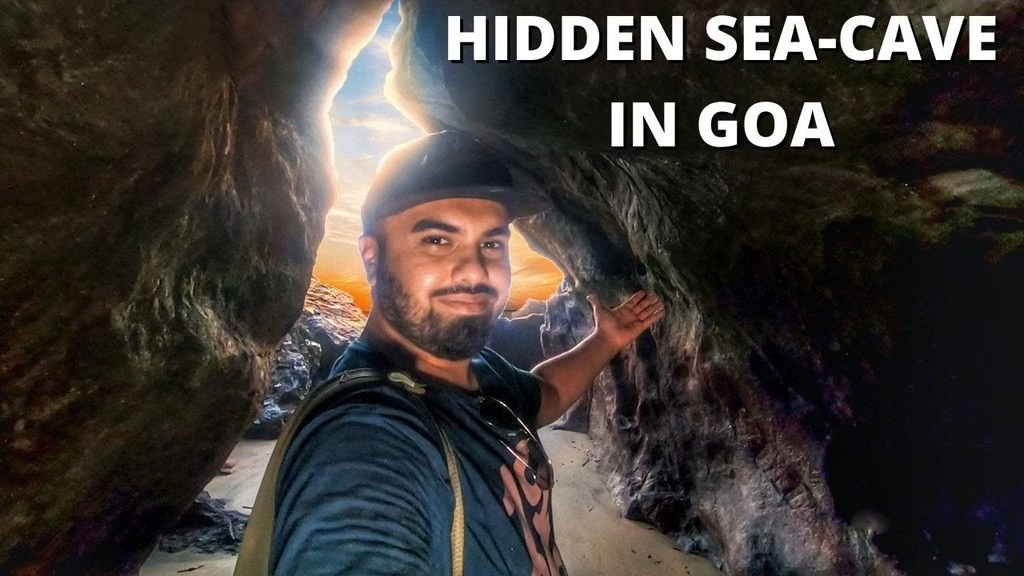
This is the main reason most people come to Keri. The cave is at the southern end of the beach where the sand ends and the rocks begin, and it can only be reached at low tide. It is a short tunnel through the rock, roughly 15 metres long with a sandy floor, and part of it gets natural light, so when you are inside you can see the sea framed by the rock on the other side. It looks small on camera, but you can actually stand straight inside, and only at the end do you have to bend a little to get through to the other side.
When I went, we reached around sunset and had barely 15 minutes before the water started coming in, and you could clearly see that in another 15 to 20 minutes the whole area would be locked by the sea. So I would suggest you check the tide timings before you go and reach at the start of low tide, not at the end like I did. Wear proper footwear with grip because the rocks are slippery, and carry a torch or phone light if you want to look around properly. For the location, click here.
2. The rocky patch
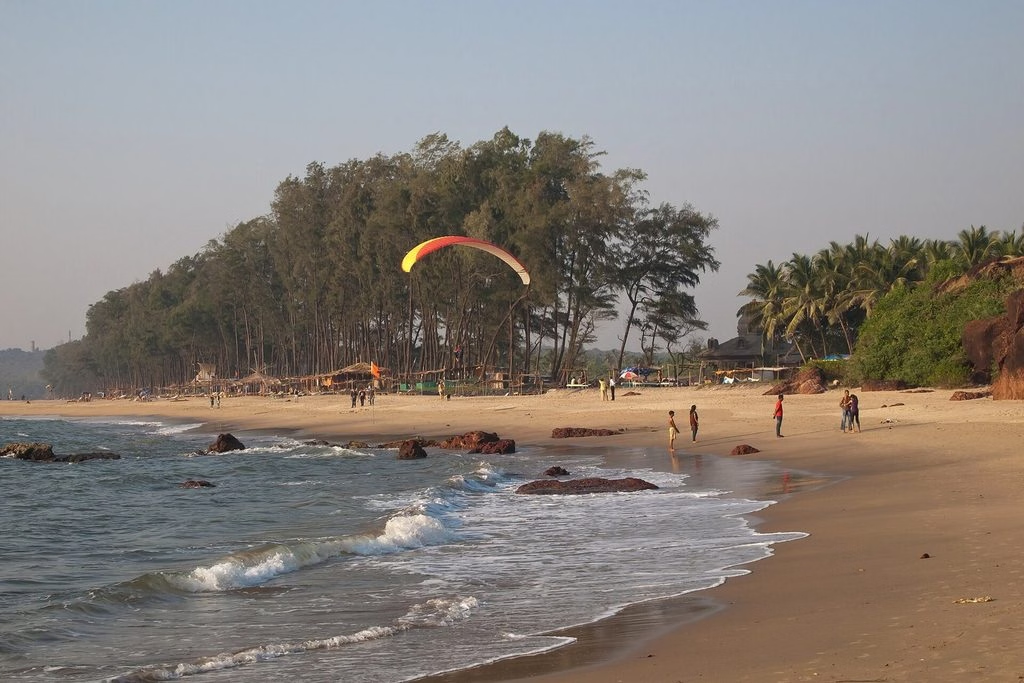
Photo: Vyacheslav Argenberg, Wikimedia Commons, CC BY 4.0.
To reach the cave you have to walk over the rocky patch at the southern end of Keri, and this part is a spot in itself. The long sandy beach is broken here by jagged red rocks and the headland, and once you cross the first bar of rocks you land up in a small secluded bay with its own little stretch of sand. It feels like a private beach, and when I was there a team of photographers was doing a full photoshoot with a model, which tells you how good this spot looks at sunset.
If you want to have a picnic, just find a spot between the rocks and sit, there will hardly be anyone around. Note that the rocks are wet and uneven, so walk slowly, don’t try to cross with bags in your hands, and start walking back while there is still light because coming back over the rocks in the dark is not fun. For the location, click here.
3. Ajoba Garden
Walk north from the shacks and, on the beach side itself, you will find Ajoba Garden. It is basically a walkway under the trees running along the beach, with benches in the shade, so it is perfect for a morning walk or for sitting and resting after you are done with the cave and the rocks. Even in the afternoon it stays shaded and cool, and it is a nice quiet spot to just sit and watch the sea through the trees. Keep it clean, there is no point carrying plates and bottles here and leaving them behind. For the location, click here.
4. Watersports
Keri has a good watersports setup, and it is one of the beaches Goa Tourism has notified for it. Most operators sell a package, and when I checked it was around Rs. 1,500 for 5 activities, which included a banana boat ride, a jet ski, a group motorboat ride, a bumper ride and a few others. Beach parasailing is not allowed at Keri because of the rocky nature of the beach, so don’t fall for anyone offering it on the sand.
If you want something bigger, there is paragliding, which costs more, roughly around Rs. 2,000, and a gyrocopter ride, which is around Rs. 3,500 to 4,000. Note that these prices are approximate and can change with the season and the operator, so confirm the rate and exactly what is included before you pay. The rides run only when the sea is calm, so don’t expect them during the monsoon, and always wear the life jacket they give you.
5. Querim Beach to the north
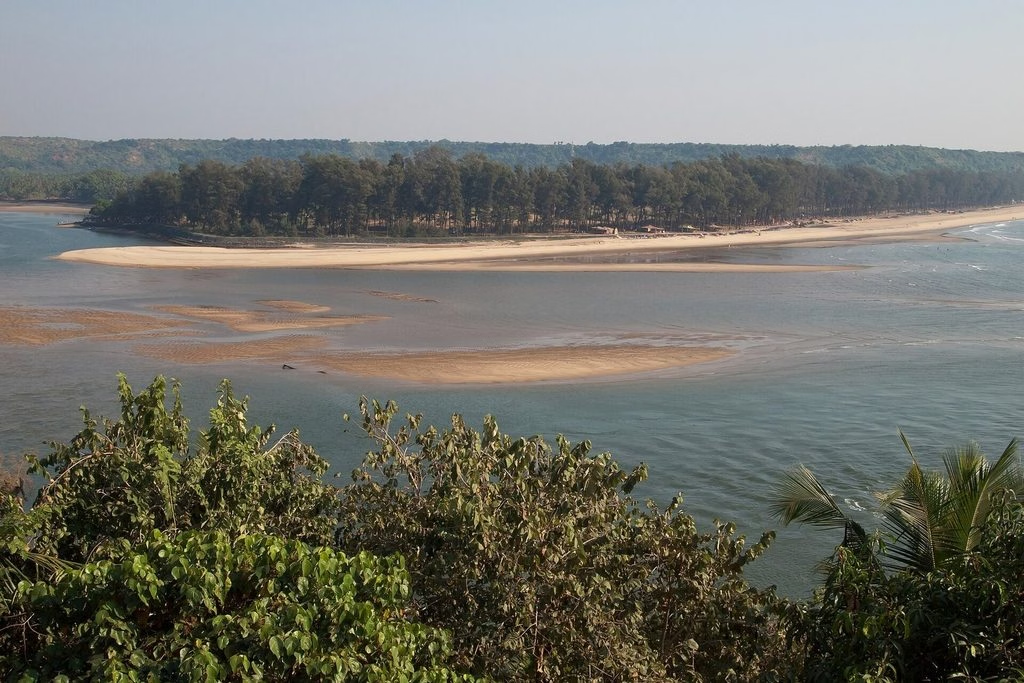
Photo: Vyacheslav Argenberg, Wikimedia Commons, CC BY 4.0.
If you keep walking north on the sand, the beach gets quieter and narrower until it ends at the mouth of the Tiracol river. Querim is actually the official name of the village and beach, so you will see both Keri and Querim on maps and signboards, but this northern end feels like a separate little beach of its own, with the river on one side, the sea on the other and the Tiracol headland right across the water. Interestingly, the sand here keeps growing northwards into the river, which is the opposite of most river mouths in Goa.
Funny story, when I was here I told everyone in the video that the land across the river was Maharashtra, and only later found out that it is still Goa and the border is a little further ahead. Avoid swimming near the river mouth because the currents here are strong. For the location, click here.
6. Ajoba Temple
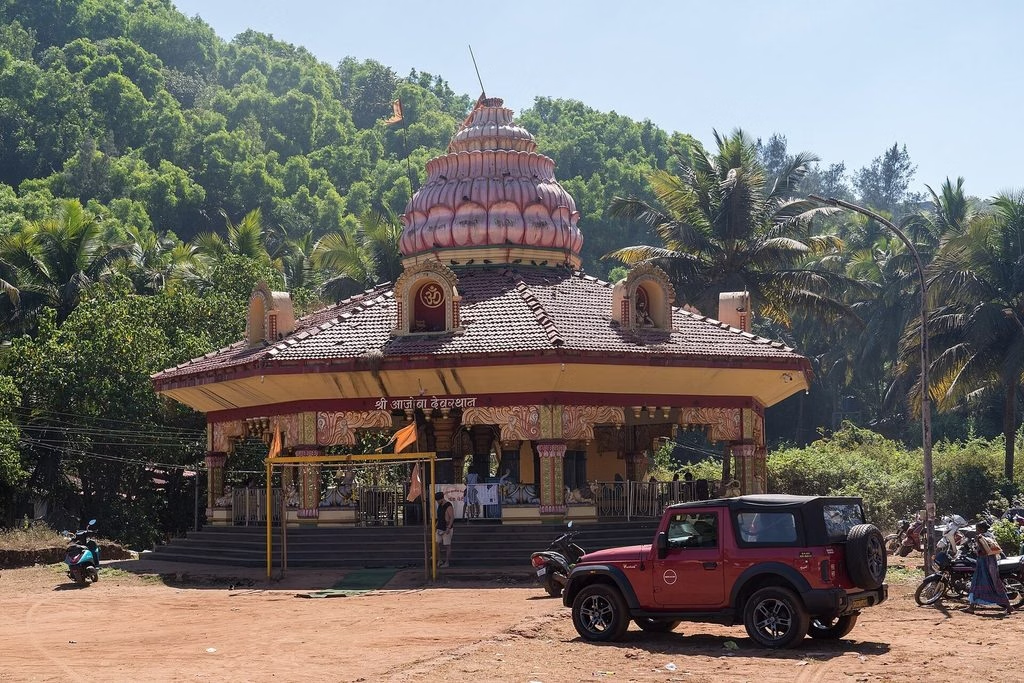
Photo: Alexkom000, Wikimedia Commons, CC BY 4.0.
Right next to Keri Beach is the Dev Ajoba Temple, the guardian deity of Keri village. Ajoba means grandfather, and the locals believe he protects the village and its coastline. The temple is quite different from most temples, it is open on all sides and stands on pillars without walls, with a sacred stone in the centre that is believed to be the presence of Ajoba.
Every year in February the temple has its jatra, when devotees from all around come here, so expect the area to be busier then. You can park close to the temple, and that is exactly what we did, we left the bike near the temple and walked to the beach. Dress decently when you go inside, and remember it is a place of worship, not a photo spot. For the location, click here.
7. Beach shacks at Keri
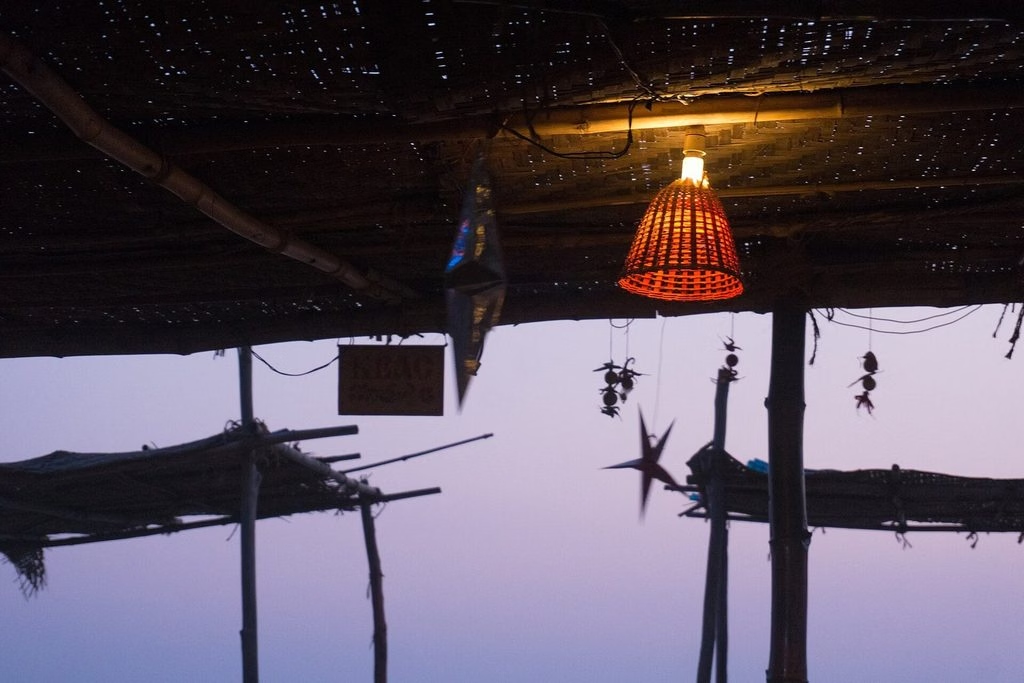
Photo: Alexey Komarov, Wikimedia Commons, CC BY-SA 4.0.
Honestly, the shacks here are nothing special. They are smaller than the shacks you see at Baga and similar beaches, with a simple menu of seafood and regular Goan food, and the prices are a little lower than those beaches, but not by much. The good part is that they are not crowded and you can sit peacefully and watch the sea. They run mainly in the tourist season and can shut early in the evening, so if you are coming for sunset carry some water and snacks with you just in case.
Ask for the fresh catch of the day and check the price before you order, especially for seafood. For the location, click here.
Things to note at Keri Beach
- Check the tide timings before you go to the cave and the rocky patch. Go at the start of low tide and come back before the water rises, or your way back can get blocked.
- Keri is not a swimming beach, especially near the Tiracol river mouth. Lifeguards are posted here, so listen to them and don’t go into the sea when they ask you not to.
- Wear shoes or sandals with grip, the rocks near the cave are wet and slippery.
- Carry water, at least a litre per person, a cap and sunscreen, because there is a lot of walking in the sun.
- Don’t litter. Keri is still clean and quiet, so carry your bottles and wrappers back with you.
- Respect the temple and the village, this is a fishing village first and a tourist spot second.
How to reach Keri Beach
By Air
The closest airport is Manohar International Airport at Mopa, which is in Pernem taluka itself, so it is the most convenient option for Keri. Dabolim airport in South Goa also works but it is much further, so add extra travel time if you are flying in there. From either airport you can take a taxi or rent a bike.
By Train
The nearest railway station is Pernem on the Konkan Railway, and Thivim is the other option. From both stations you will have to take a taxi or a bus towards Pernem and then on to Keri.
By Road
Keri is about 30 km from Mapusa and around 42 to 45 km from Panaji. Take NH 66 towards Pernem and then follow the road towards Arambol and Keri. If you are staying in Arambol, it is around 20 minutes by scooter, and the road is quite scenic, but it is dark and empty at night, so ride slowly on the way back. The best way to explore this side is on a rented scooter or bike, because public transport is limited, and if you take a taxi, fix your return ride in advance.
Best time to visit Keri Beach
October to March is the best time to visit Keri, when the weather is pleasant, the shacks are open and the watersports are running. Plan your day around low tide if you want to see the cave, and reach at least an hour before sunset so you have time to walk over the rocks and come back with daylight. Avoid the monsoon, the sea gets rough, the cave and rocks become dangerous and most of the shacks shut.
Places to stay near Keri Beach
Keri itself has only a few village homestays and guesthouses, so it suits people who want peace more than nightlife. Most travellers stay in Arambol or Mandrem to the south, where you get a lot more options in every budget, and visit Keri as a half day or full day trip. If you want the quietest stay, look for a homestay in Keri village itself and check the reviews before you book.
FAQ
- Is Keri Beach and Querim Beach the same?
Yes, Keri is the local name and Querim is the official name of the same village and beach. The northern end near the Tiracol river is the quietest part.
- Can we go inside the Keri Beach cave?
Yes, but only at low tide. Check the tide timings, go at the start of low tide and come back before the water rises.
- Is it safe to swim at Keri Beach?
No, Keri is not considered safe for swimming, especially near the river mouth. Follow the lifeguards and enjoy the water only at the edge.
- What is the cost of watersports at Keri Beach?
Around Rs. 1,500 for a 5-activity package with banana boat, jet ski, group motorboat ride, bumper ride and a few others. Paragliding is roughly Rs. 2,000 and a gyrocopter ride around Rs. 3,500 to 4,000, but these are approximate and can change.
- Are the shacks at Keri Beach cheaper than Baga?
A little, but not by much. The shacks here are smaller and simpler, and the big plus is that they are not crowded.
- How much time does it take to explore Keri Beach?
Half a day is enough for the cave, the rocks, the temple, Ajoba Garden and a meal at a shack. Stay till sunset if you can.
- Is a parking facility available at Keri Beach?
Yes, you can park near the Ajoba Temple and walk to the beach from there.
- Can I reach Keri Beach without my own vehicle?
Yes, but it is easier with a rented scooter. Taxis work too, but fix your return ride in advance.
Final Thoughts
Keri is one of those beaches that make you realise North Goa is not only about parties. The cave, the rocks and the quiet northern end are worth the ride, just make sure you plan with the tide and not with your watch like I did. If you are planning more of Goa, check my guide to the best beaches in North Goa and the adventure treks in North Goa. Tell me in the comments if you made it inside the cave and how much time the tide gave you.
I plan the route. I don’t book the ferry, the stay, or the tickets. A custom plan is Rs. 200 per travel day. Fill the trip form, pay online, and I’ll send you the plan.