 By

The places to visit in Pondicherry Auroville Mahabalipuram have very different personalities. There are streets full of colour, beaches with more sky than buildings, a golden sphere that looks almost unreal, and stone temples that have been facing the sea for centuries. That mix is what I like: this coast refuses to be just one kind of place.
I also have a ready-made Pondicherry, Auroville and Mahabalipuram itinerary. This blog is simply my countdown of the places themselves, from No. 10 to my favourite at No. 1.
Top 10 places to visit in Pondicherry Auroville Mahabalipuram
10. DakshinaChitra: South Indian Homes and Crafts

Photo: Mohan Babu V, Wikimedia Commons, CC BY-SA 4.0.
DakshinaChitra is a living-history museum built around the homes, crafts and everyday traditions of South India. Its houses represent different regional building styles, so the architecture is as much the attraction as anything displayed inside. Courtyards, tiled roofs and carved wooden details tell you something that a glass cabinet cannot: how a home can belong to a particular landscape and way of life.
I like that the focus is on ordinary life rather than only kings and grand monuments. A doorway, a shaded verandah or a handmade object can hold a surprising amount of character. The crafts add colour, but it is the domestic scale that makes the place feel warm. Think of it as a collection of stories told through houses, not a row of buildings waiting for a photograph.
9. Sacred Heart Basilica, Goubert Market and the Tamil Quarter
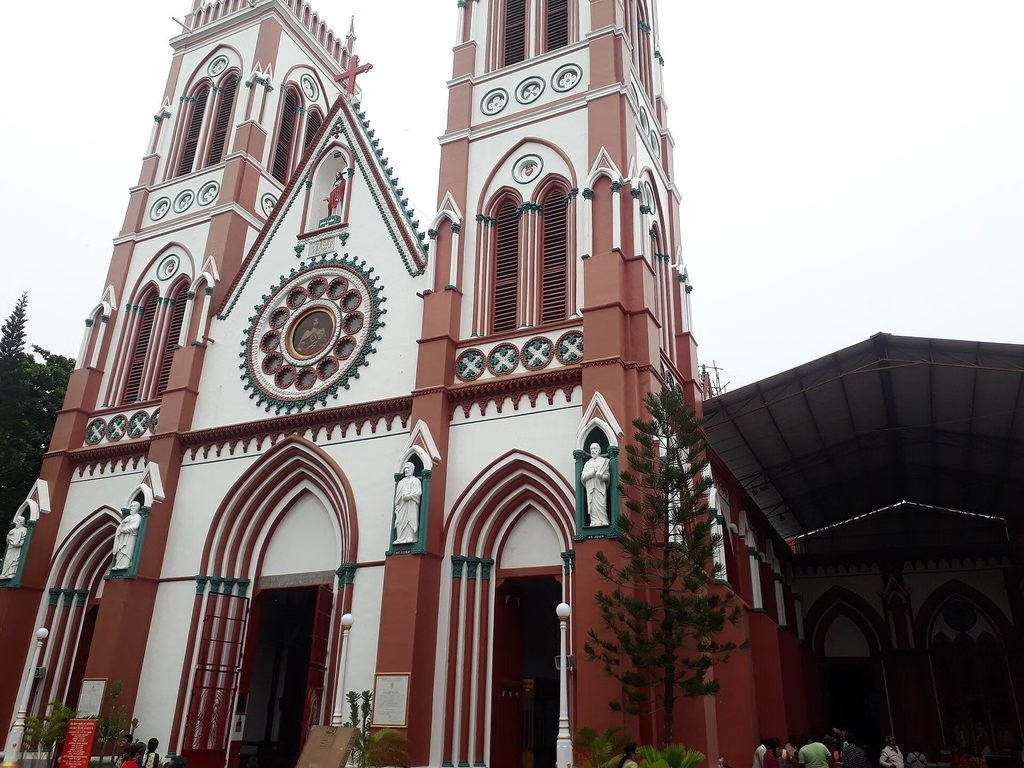
Photo: Pinakpani, Wikimedia Commons, CC BY-SA 4.0.
Pondicherry is not only pastel walls and French street names. Its Tamil Quarter has a different texture: older homes, lively shopfronts and the everyday energy of a city that does not exist just for visitors. Goubert Market brings that energy into sharp focus, with flowers, produce and the bustle of people getting on with their lives. It gives the town a pulse beyond the postcard.
The Sacred Heart Basilica adds another side to that character. Its red-and-white facade and Gothic forms feel quite different from the quieter colonial streets usually associated with Pondicherry. What draws me to this entry is the contrast between neighbourhood life and religious architecture. Together, these places remind you that Puducherry has many identities, and none of them needs to squeeze into the French Quarter version of the story.
8. Serenity Beach: Sand, Surf and Coastal Character

Photo: Pinakpani, Wikimedia Commons, CC BY-SA 4.0.
Serenity Beach has a sandy shoreline, rolling surf and a rock pier stretching into the water. The name sounds like somebody has promised you perfect silence, but the sea clearly did not sign that agreement. Waves, fishing boats and the broad horizon give it a working coastal character, rather than the polished feeling of a resort photograph.
The appeal is in those small contrasts: rough rocks against soft sand, colourful boats against blue water, and the movement of the surf against an apparently endless horizon. It is a beach with a bit of personality, not just a backdrop. If you enjoy the sea in all its noisy, untidy charm, you can see why Serenity belongs among these places. For another take on coastal energy, there is my adventure sports in North Goa blog.
7. Paradise Beach: Sand Between Backwater and Sea

Photo: Ehteshaam Khatri, Wikimedia Commons, CC BY-SA 4.0.
Paradise Beach gets its character from the meeting of sand, backwater and open sea. The pale shoreline and wide sky make the landscape feel bigger than the usual city beach scene. There is a pleasing simplicity to it: water, a sweep of sand and very little competing for your attention. The name is dramatic, yes, but the setting does a fair amount of the work.
What makes it special to me is the contrast between the gentler backwater landscape and the restless sea beyond. It feels different from the stone-edged Promenade and the lived-in streets of Pondicherry. You do not need a long list of attractions for a place to have an identity. Sometimes the shape of the shore and the sound of the water are the whole point, and that is enough.
6. Promenade Beach: Rock Beach and the Seafront

Photo: Sanyam Bahga, Wikimedia Commons, CC BY-SA 3.0.
Promenade Beach, also called Rock Beach, is where Pondicherry puts its relationship with the sea on display. This is a rock-lined seafront rather than a broad sandy beach. The Mahatma Gandhi statue is one of its familiar landmarks, while the open Bay of Bengal gives the whole stretch a sense of space that the town streets cannot quite offer.
The atmosphere is what earns it a place here. Conversations mix with the sound of waves hitting the rocks, and the sea becomes part of the town rather than something separate from it. I like that it does not need to pretend to be a hidden gem. It is a shared public space, recognisable and well loved, with the kind of everyday charm that no grand monument can manufacture.
5. Pancha Rathas, Arjuna’s Penance and Krishna’s Butter Ball

Photo: Vyacheslav Argenberg, Wikimedia Commons, CC BY 4.0.
Mahabalipuram’s rock monuments show just how much imagination the Pallava sculptors brought to stone. The Pancha Rathas are monolithic monuments with distinct architectural forms, named after figures from the Mahabharata. Despite the chariot names, these are not wheeled vehicles. Their roofs, columns and sculpted details make the stone feel like a testing ground for ideas that would shape temple architecture.
Arjuna’s Penance, also known as the Descent of the Ganga, brings a different kind of drama: a vast relief filled with human figures, animals and divine imagery. Then Krishna’s Butter Ball changes the mood completely, with its enormous rounded mass apparently balanced on a slope. I love the range here. One place gives you intricate storytelling; another makes you stare at a boulder and wonder how gravity is feeling about the arrangement.
4. Sri Aurobindo Ashram and Manakula Vinayagar Temple
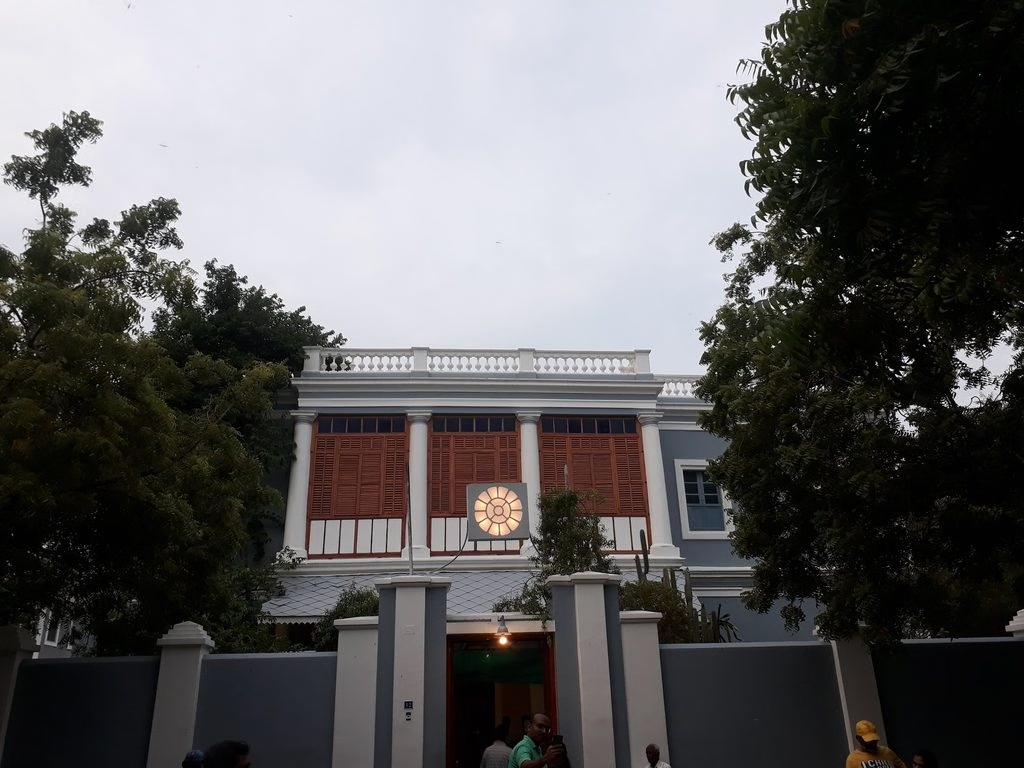
Photo: Pinakpani, Wikimedia Commons, CC BY-SA 4.0.
Sri Aurobindo Ashram is closely connected with Sri Aurobindo and the Mother, whose spiritual work became an important part of Pondicherry’s identity. Its courtyard and white marble Samadhi give the main building a stillness that contrasts with the streets outside. The setting is modest compared with a monumental temple, but that quiet scale is part of its presence.
Manakula Vinayagar Temple brings another expression of the town’s spiritual life, centred on Ganesha and rich in devotional colour. The difference between the Ashram’s restrained atmosphere and the temple’s visual detail is striking. I would not flatten them into the same experience just because both are spiritual places. Each has its own character, and together they show how much of Pondicherry lies beyond its colonial architecture.
3. White Town: French Quarter Streets, Cafes and Colonial Colour
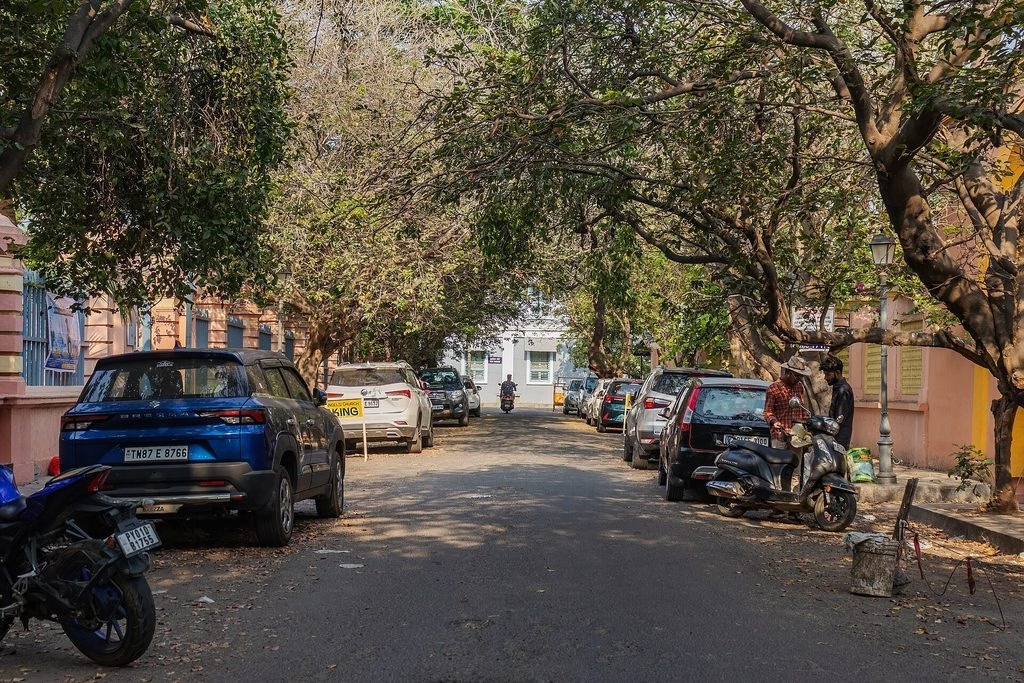
Photo: iMahesh, Wikimedia Commons, CC BY-SA 4.0.
White Town is the Pondicherry most people recognise first: pastel facades, shuttered windows, bougainvillea and streets with French names. Its architecture carries the imprint of the town’s French colonial past, but the neighbourhood is not a preserved stage set. Cafes, homes, churches and ordinary street life keep it firmly in the present.
What I like most is the texture rather than any single famous wall. A weathered door can be more interesting than a freshly painted facade, and a patch of shade can change the feel of an entire street. The beauty is in those details, not in making every corner look like Paris. White Town belongs to Puducherry, and its mixture of influences is exactly what gives it character. That atmosphere also features in my solo travel destinations in India guide.
2. Matrimandir and Auroville: The Golden Sphere
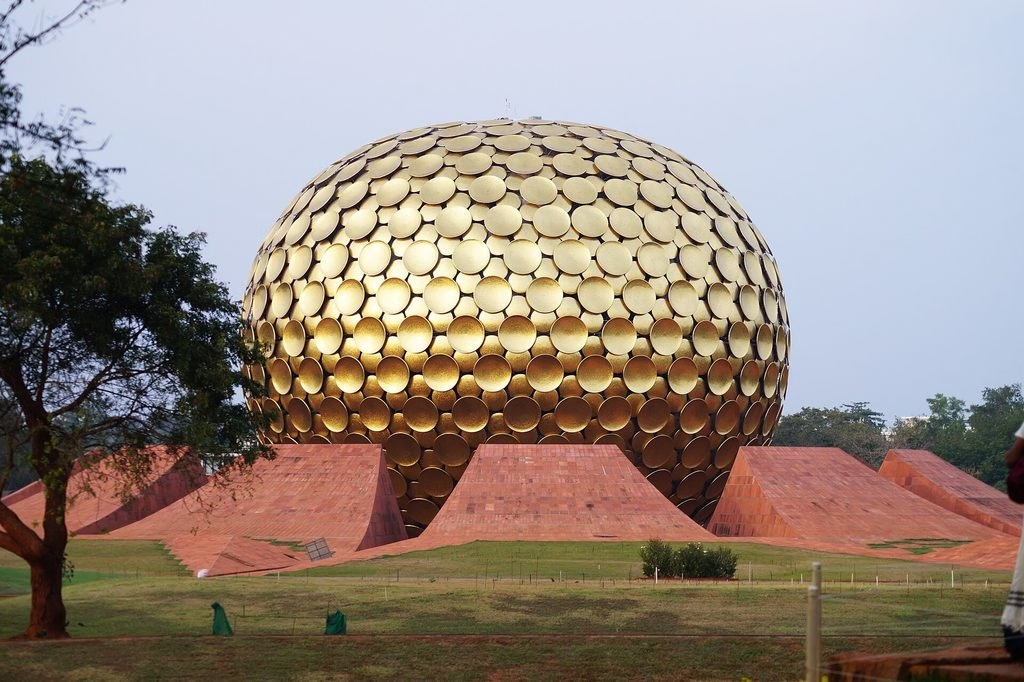
Photo: Kpsudeep, Wikimedia Commons, CC BY-SA 4.0.
Auroville is an experimental township associated with the idea of human unity, and the Matrimandir is its most recognisable architectural expression. The golden sphere rises above its landscaped surroundings with a form that seems both futuristic and strangely timeless. It is not a conventional temple with a familiar tower and crowded sculptural facade. Its geometry gives it a language of its own.
The contrast between that gleaming surface and the greenery around it is what stays with me. In photographs, the sphere can look almost like an object dropped into the landscape from another world. But Auroville is more than an unusual building: it is also an ongoing community experiment. That combination of an ambitious idea and a very distinctive visual identity is why it sits so high on this list.
1. Shore Temple: The Soul of Mahabalipuram

Photo: Bernard Gagnon, Wikimedia Commons, CC BY-SA 3.0.
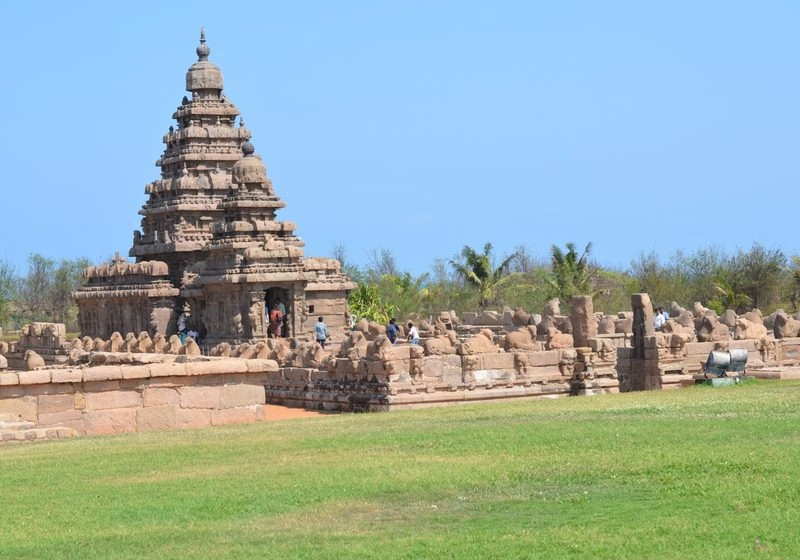
Shore Temple is my No. 1 because the setting and the architecture belong so completely together. The granite towers stand against the Bay of Bengal, carrying the presence of an early eighth-century Pallava monument. Unlike the rock-cut forms elsewhere in Mahabalipuram, this is a structural temple built with stone blocks. Its silhouette is part of what makes the UNESCO-listed monuments here so recognisable.
The stone has a weathered texture that makes the building feel rooted in the coast rather than placed beside it. Sculpted bulls, rising towers and the sea beyond create a scene that does not need much decoration from a writer. I can describe the history, but the real pull is simpler: old stone facing an enormous sea. Among all these places to visit in Pondicherry Auroville Mahabalipuram, this is the image that stays with me.
Want more than a list of beautiful places? My ready-made Pondicherry, Auroville and Mahabalipuram itinerary is available separately. Take a look if you would like the planning done for you.
I plan the route. I don’t book the ferry, the stay, or the tickets. A custom plan is Rs. 200 per travel day. Fill the trip form, pay online, and I’ll send you the plan.