 By
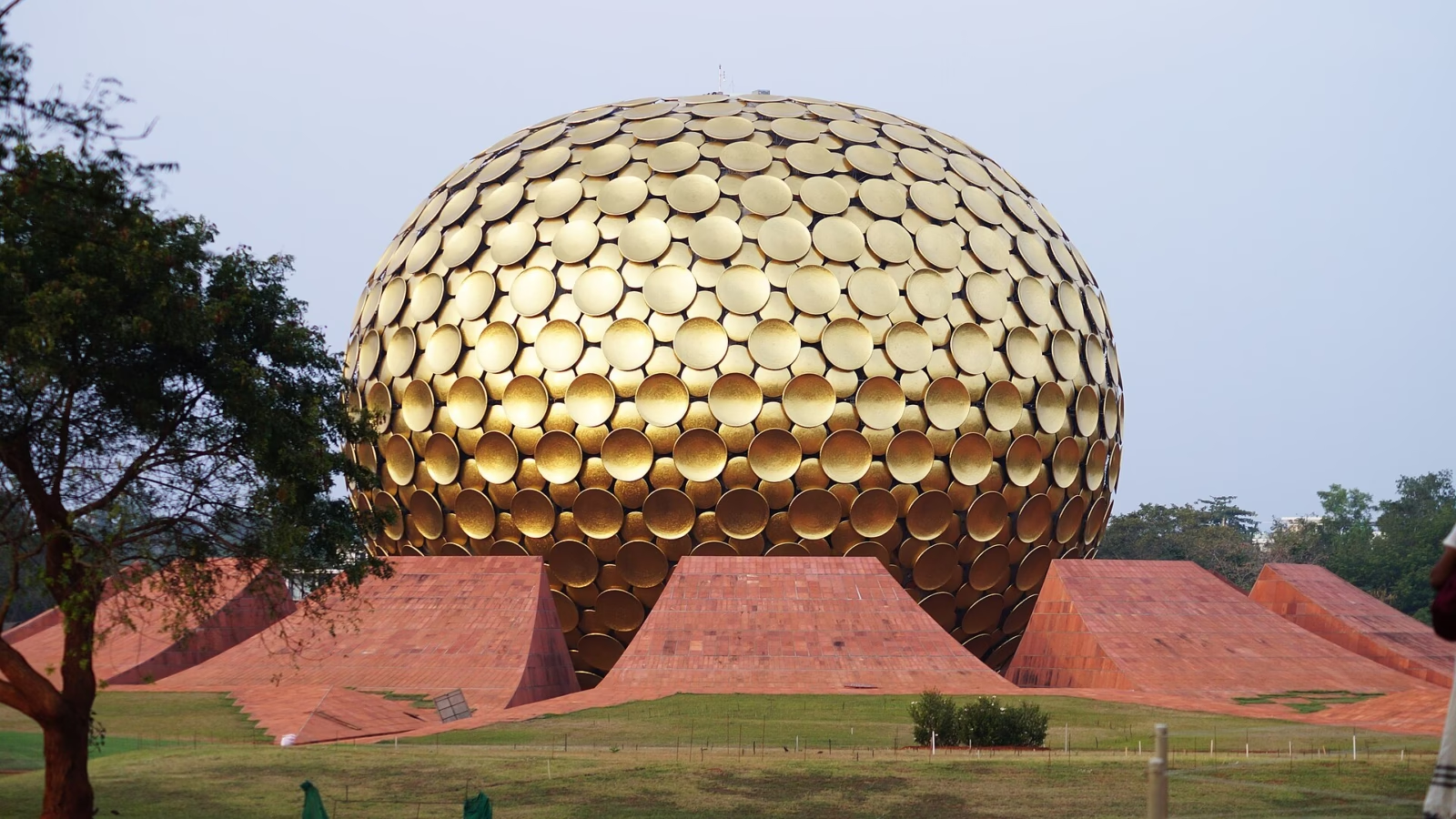
Matrimandir Auroville is the giant golden sphere you have probably seen on Instagram, sitting in the middle of green lawns a short distance from Pondicherry in Tamil Nadu. In photos it looks almost unreal, but there is a lot more to it than one shiny picture, and knowing the story makes the visit far more interesting.
If you like quiet places, odd architecture or just want to understand what Auroville is really about, I would suggest giving Matrimandir proper attention rather than ticking it off between cafes. It is one of the stops on my Pondicherry, Auroville and Mahabalipuram itinerary, but here let us stay with the place itself: what it is, how it came up, what to notice and how to behave around it. So here is everything you need to know.
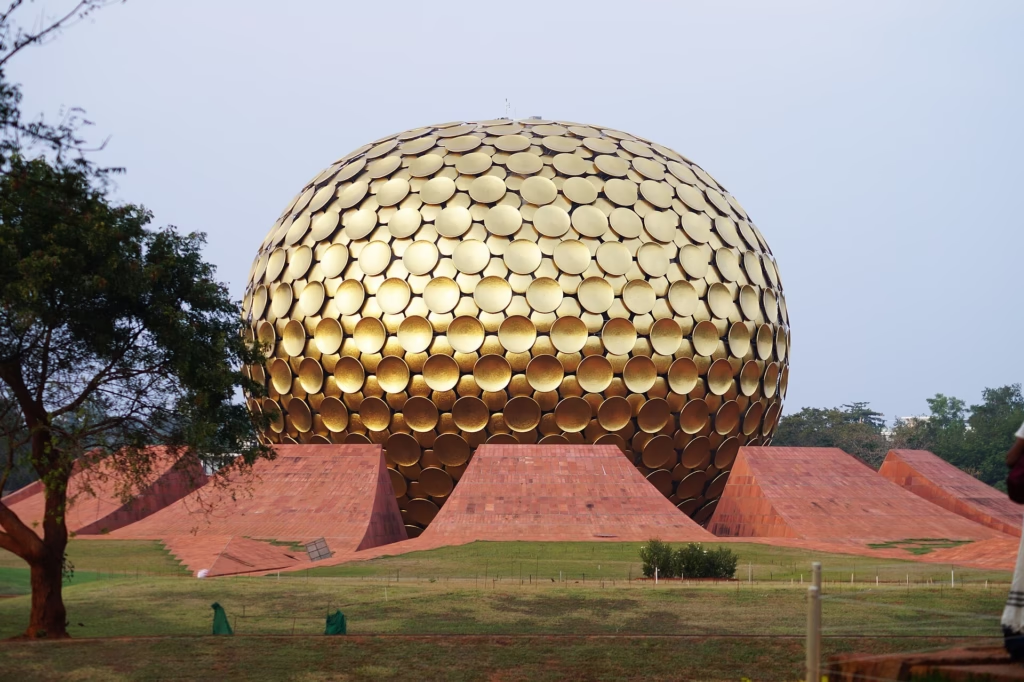
Matrimandir Auroville: what it actually is
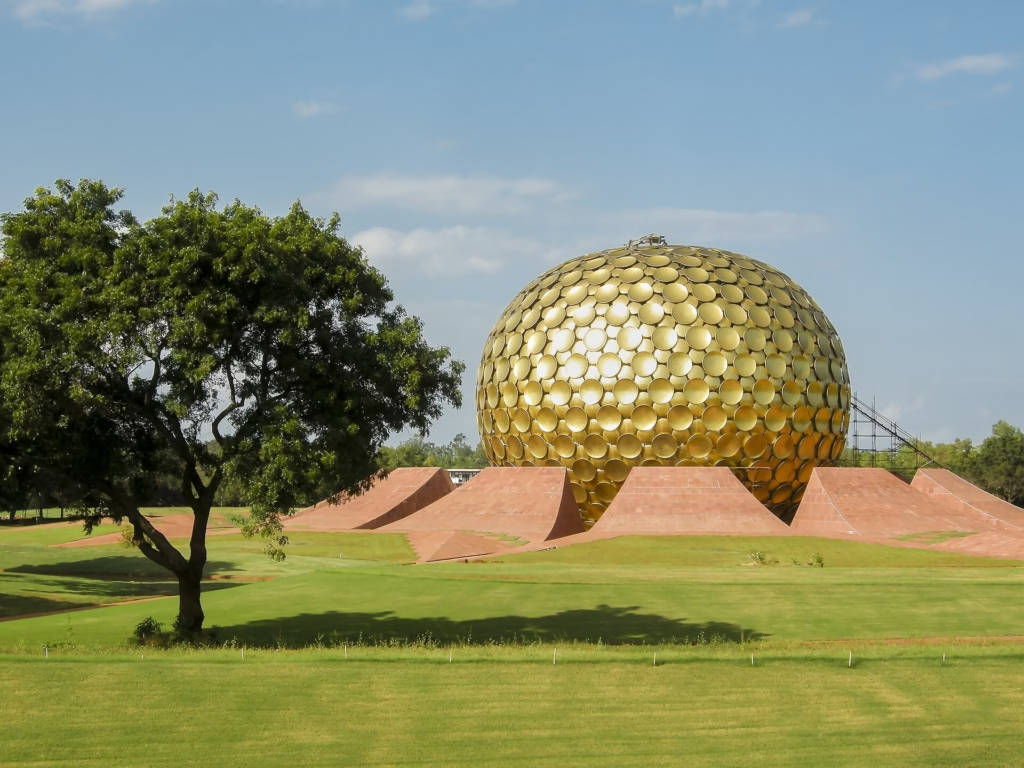
The name Matrimandir literally means “Temple of the Mother”, and Auroville calls it the soul of the city. It stands at the very centre of the township, in a large open area called Peace, and the rest of Auroville is planned to spread outwards from here. Right next to it is a huge banyan tree that Auroville describes as the geographical centre of the township.
Even though the word “mandir” is in the name, this is not a temple in the usual sense. The Mother, who founded Auroville, was very clear that she did not want it to become a religion, with no dogmas and no rituals. Inside there are no idols, no flowers, no incense and no organised meditations. It is meant to be a place for silent concentration, which is why you should not walk in expecting aarti, prasad or a darshan queue.
The “Mother” in the name refers to Mirra Alfassa, known as The Mother, who worked with Sri Aurobindo in Pondicherry. In Sri Aurobindo’s teaching, the Mother stands for the conscious force of life that helps humanity grow into a higher consciousness. The golden sphere is often described as rising out of the earth, symbolising the birth of that new consciousness. You do not need to follow the philosophy to enjoy the place, but it explains why the area feels so calm.
The golden discs up close
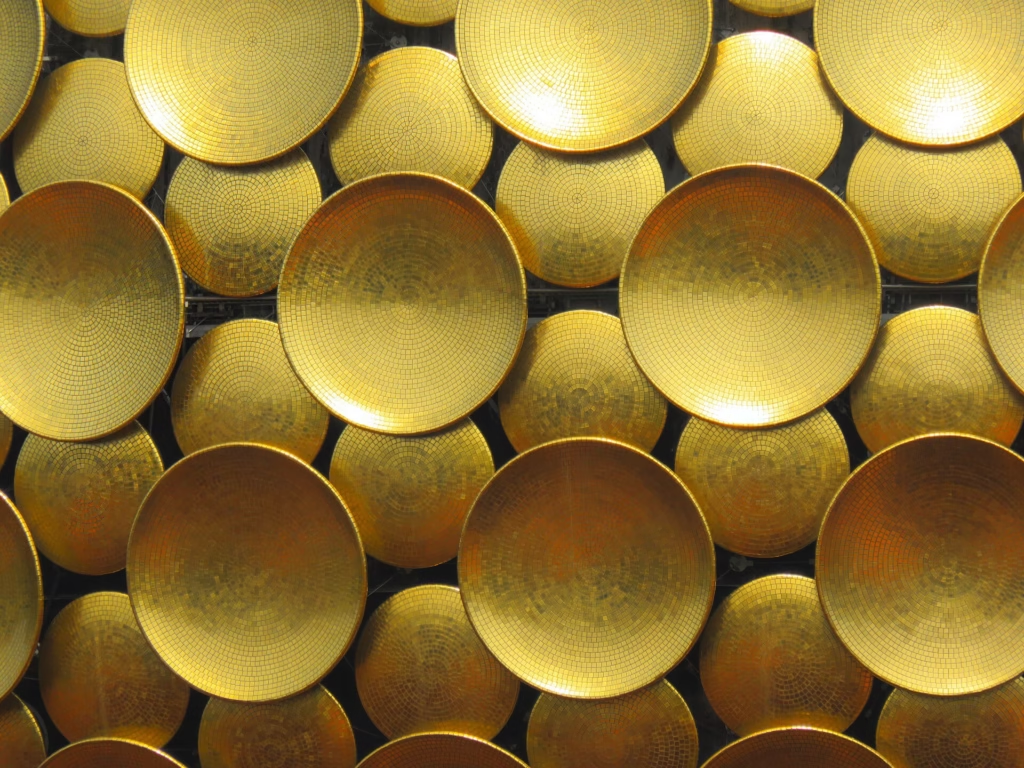
From a distance the sphere looks smooth and polished, but walk your eyes closer and you see it is covered in large golden discs, each one slightly cupped and set at an angle. That is why the surface seems to glow and shift as the light changes. When the sun is out, different discs catch it at different moments, so the sphere looks alive rather than flat.
Look even closer and each disc turns out to be a mosaic of tiny golden tiles laid in circles. That detail is easy to miss if you only see the sphere from far away, so zoom in with your phone or look at close-up photos to appreciate how much patient work went into it.
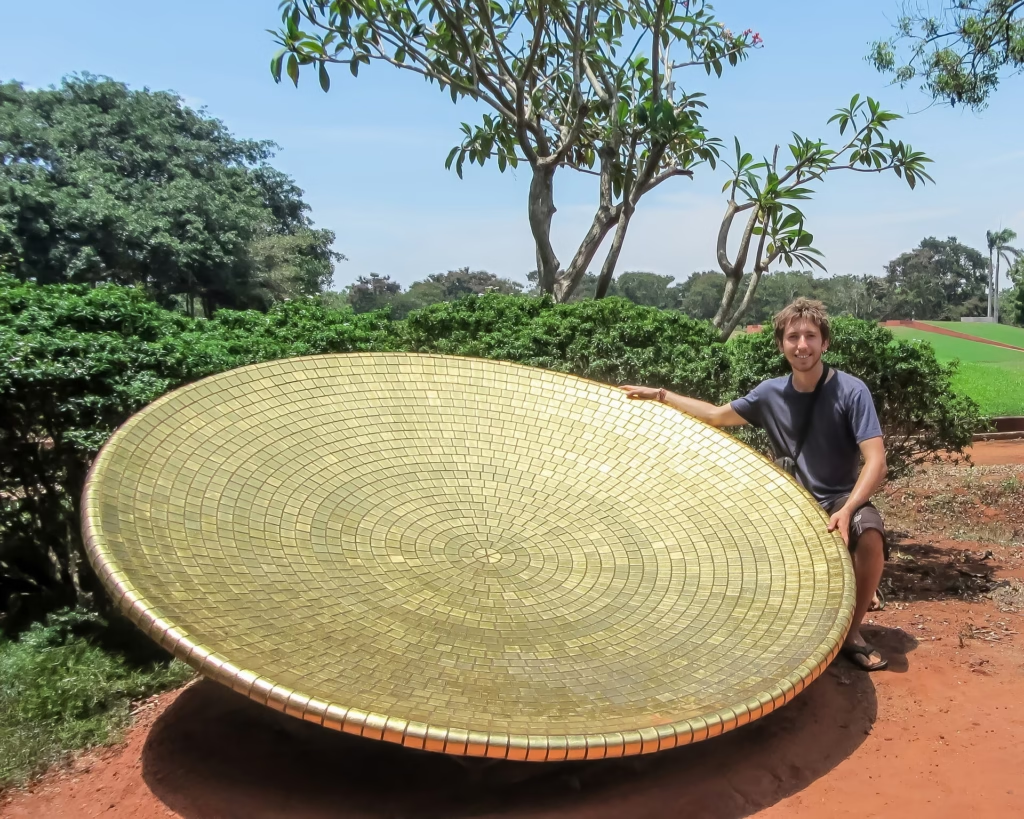
The discs are also much bigger than you would guess. In the photo above, a single disc is wider than the crouching volunteer beside it, so multiply that across the whole sphere and you understand why this took decades to finish.
Around the base you will see the 12 reddish “petals” sloping down into the lawns. Together with the sphere they give the place its unusual shape, almost like a golden seed or flower pushing up from the ground. The 12 surrounding gardens follow the same idea, each one with its own name like Harmony, Bliss, Perfection, Progress and Consciousness, and their own mix of flowers, shrubs and trees.
From a barren plateau to the soul of the city
This is where the story gets really interesting. Auroville was inaugurated on 28 February 1968 on what Auroville itself describes as a barren, almost treeless plateau, with only a lone banyan tree standing in the dust. Around 5,000 people gathered at an amphitheatre for the ceremony, and young people from more than 120 countries and 23 Indian states placed soil from their homelands into an urn shaped like a lotus bud.
That urn still sits at the centre of the amphitheatre next to Matrimandir, along with the Auroville Charter handwritten by The Mother. So when you see the amphitheatre, remember it is not just seating; it is the spot where the whole Auroville experiment officially began.
The foundation stone of Matrimandir was laid on 21 February 1971, The Mother’s 93rd birthday, and the design was developed with the French architect Roger Anger, who also drew the early plans for the city. It then went up slowly over decades, built by Aurovilians and workers, and the golden sphere was completed in 2008. Even today work continues in the gardens.
What I like about this history is that the green you see today was not always there. Remember that bare plateau when you look at the lawns and trees, because they are as much a part of the story as the gold.
What is inside the Inner Chamber?
Inside the upper half of the sphere is the Inner Chamber, which Auroville describes as completely white, with white marble walls and deep white carpet. In the centre sits a crystal-glass globe, and a ray of sunlight guided from an opening at the top of the sphere falls on it and lights up the room. There are no images or religious symbols, just silence.
Note that seeing the sphere from outside and sitting in the Inner Chamber are two very different experiences. The Inner Chamber is a separate, quieter experience meant for people who genuinely want to sit in silence, not for a quick look, so check the official Auroville website well before your trip if it interests you.
Photo tips at Matrimandir
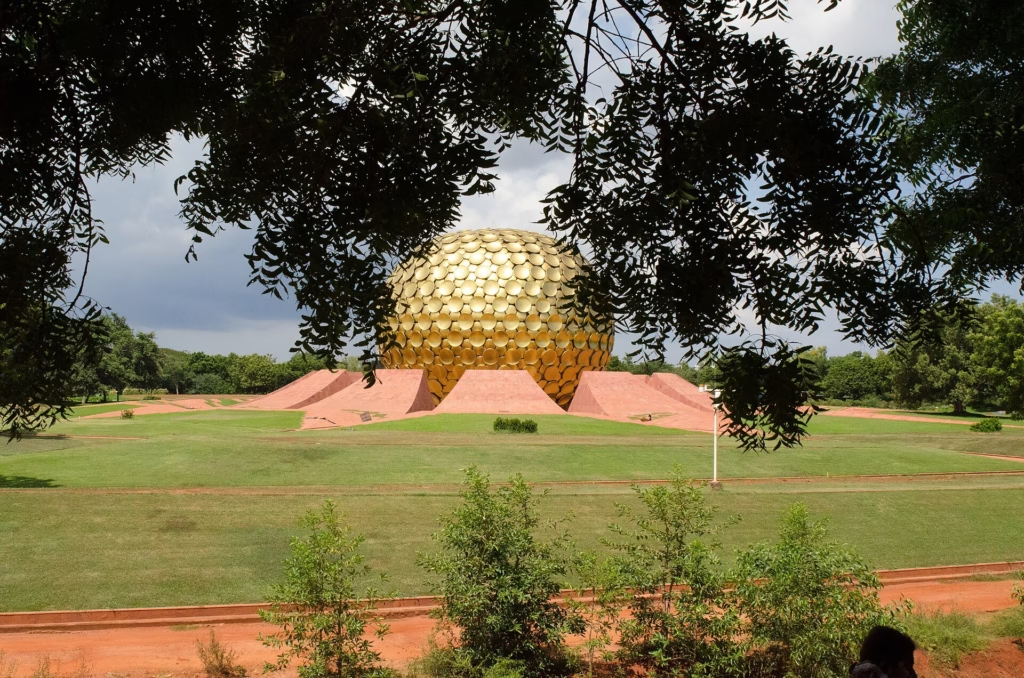
The classic shot is the full sphere with the petals and lawn in front, and it works best when there is some blue sky behind it. Bright, soft light makes the gold glow without blowing out, while harsh overhead sun can make the discs look flat and white in photos. I would suggest keeping the horizon straight and leaving some green at the bottom of the frame, because the lawns are half of what makes the place look so calm.
For something different, use the trees around you as a natural frame, like the photo above, or step back and include the red earth path in the foreground. Follow whatever photo rules the volunteers or signboards give you, and do not cross any barrier just to get a cleaner angle.
Also keep your voice down while you shoot. This is a place of silence for a lot of people around you, so skip the loud reels and group shouting.
The red earth and the bigger Auroville picture
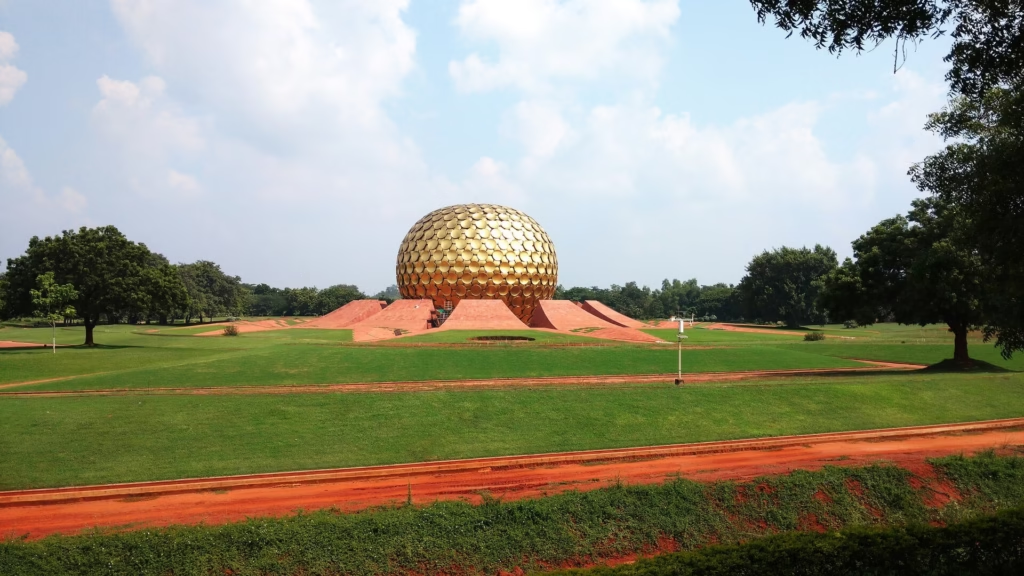
One thing you will notice everywhere in Auroville is the red laterite earth. The paths, the edges of the lawns and even your shoes will turn a rusty orange by the end of the day, so do not wear your whitest sneakers. The contrast of that red soil with the bright green lawns and the gold sphere is what makes this place so photogenic.
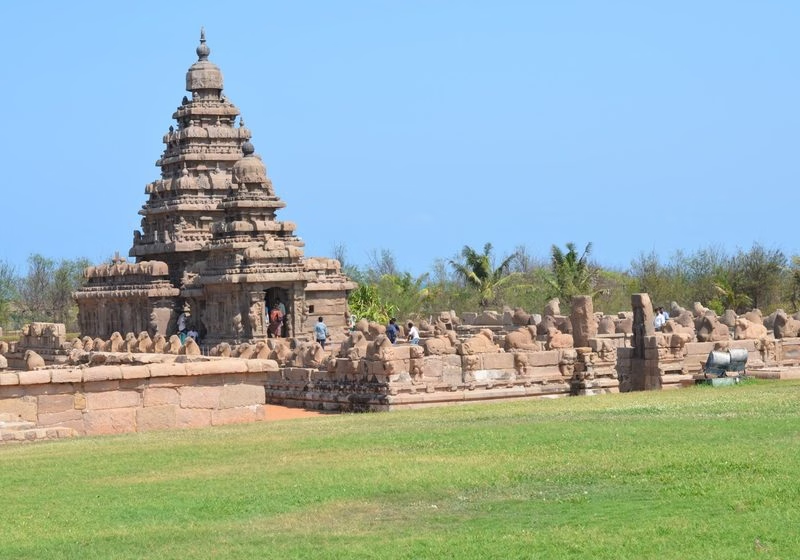
The area around Matrimandir has a lot of open ground, so carry water, wear a cap and use sunscreen, especially in the warmer months. Greenery also means mosquitoes, so a repellent is a good idea. If you want to see more of the area after this, my Top 10 places in Pondicherry, Auroville and Mahabalipuram covers the beaches, White Town and the Pallava monuments, including the Shore Temple in Mahabalipuram. To see where Matrimandir is on the map, click here.
Best time to visit Matrimandir Auroville
The cooler months from around November to February are the most comfortable time for walking around Auroville, since Tamil Nadu summers get very hot and humid and the open lawns offer little shade. The monsoon makes everything greener, but the red earth turns muddy.
FAQ
- Is Matrimandir a temple?
No, not in the usual sense. Auroville describes it as a place for silent concentration, with no idols, rituals or organised meditation inside.
- Who built Matrimandir?
It was conceived by The Mother (Mirra Alfassa), the founder of Auroville, and designed with the architect Roger Anger. Aurovilians and workers built it slowly from 1971, and the golden sphere was completed in 2008.
- What are the golden discs on Matrimandir?
They are large, slightly cupped discs covering the whole sphere, and each one is made of small golden mosaic tiles. They reflect sunlight, which is why the sphere seems to glow.
- Can we go inside Matrimandir?
Yes, but the Inner Chamber is a separate, quieter experience from simply viewing the sphere outside, so check the official Auroville website first.
- Is Matrimandir worth visiting if I am not spiritual?
Yes. Even if the philosophy is not for you, the architecture, the gardens and the story of Auroville growing on a bare plateau make it worth seeing.
Final Thoughts
Matrimandir Auroville is one of those places that looks like a photo backdrop but turns out to have a real story behind it. I would suggest going with a little patience, reading up on The Mother and the 1968 inauguration, and spending more time looking at the discs, the petals and the gardens than at your screen. Would you come for the architecture or for the silence? Tell me in the comments, and if you like exploring places at your own pace, my solo travel in India guide has more ideas for you.
If you are planning the whole Pondicherry, Auroville and Mahabalipuram trip, just use my ready-made itinerary for the number of days you have, book from its links and go. The planning is already done, so you can enjoy the places without any planning worries.
I plan the route. I don’t book the ferry, the stay, or the tickets. A custom plan is Rs. 200 per travel day. Fill the trip form, pay online, and I’ll send you the plan.