 By
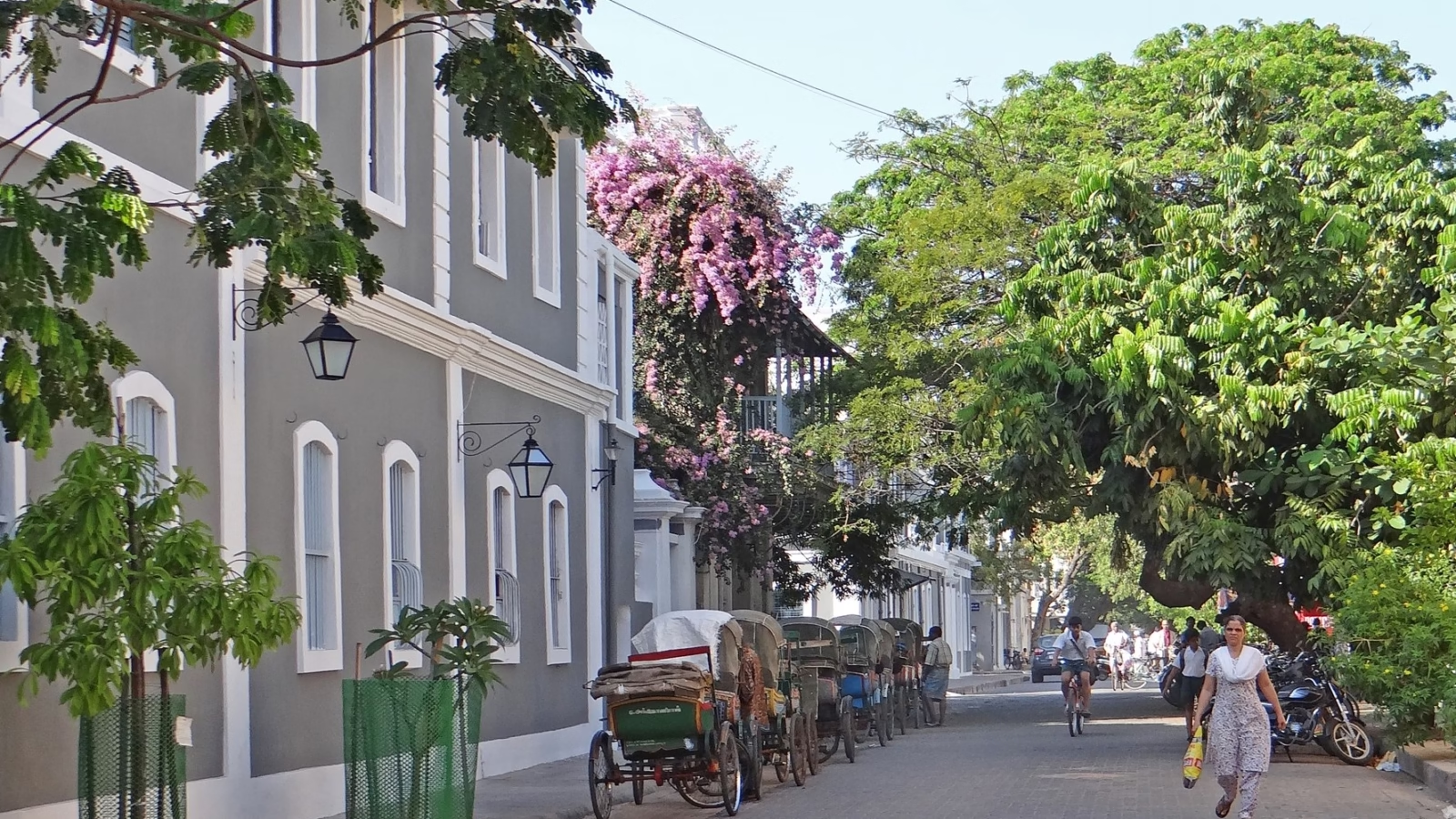
White Town Pondicherry is the old French Quarter by the sea, the part of Puducherry with mustard-yellow walls, bougainvillea spilling over gates, wooden shutters and streets that still carry French names like Rue Dumas and Rue Suffren. Most people see it on Instagram and think it is just a pretty backdrop, but almost every wall here has a story behind it, and knowing it makes the walk far more interesting.
If you like slow walks and old buildings, White Town is the one part of Pondicherry you should not rush. It is one of the highlights of my Pondicherry, Auroville and Mahabalipuram itinerary, but here let us stay with the neighbourhood itself: how it came up, why it looks the way it does and the landmarks worth knowing. So here is everything you need to know.
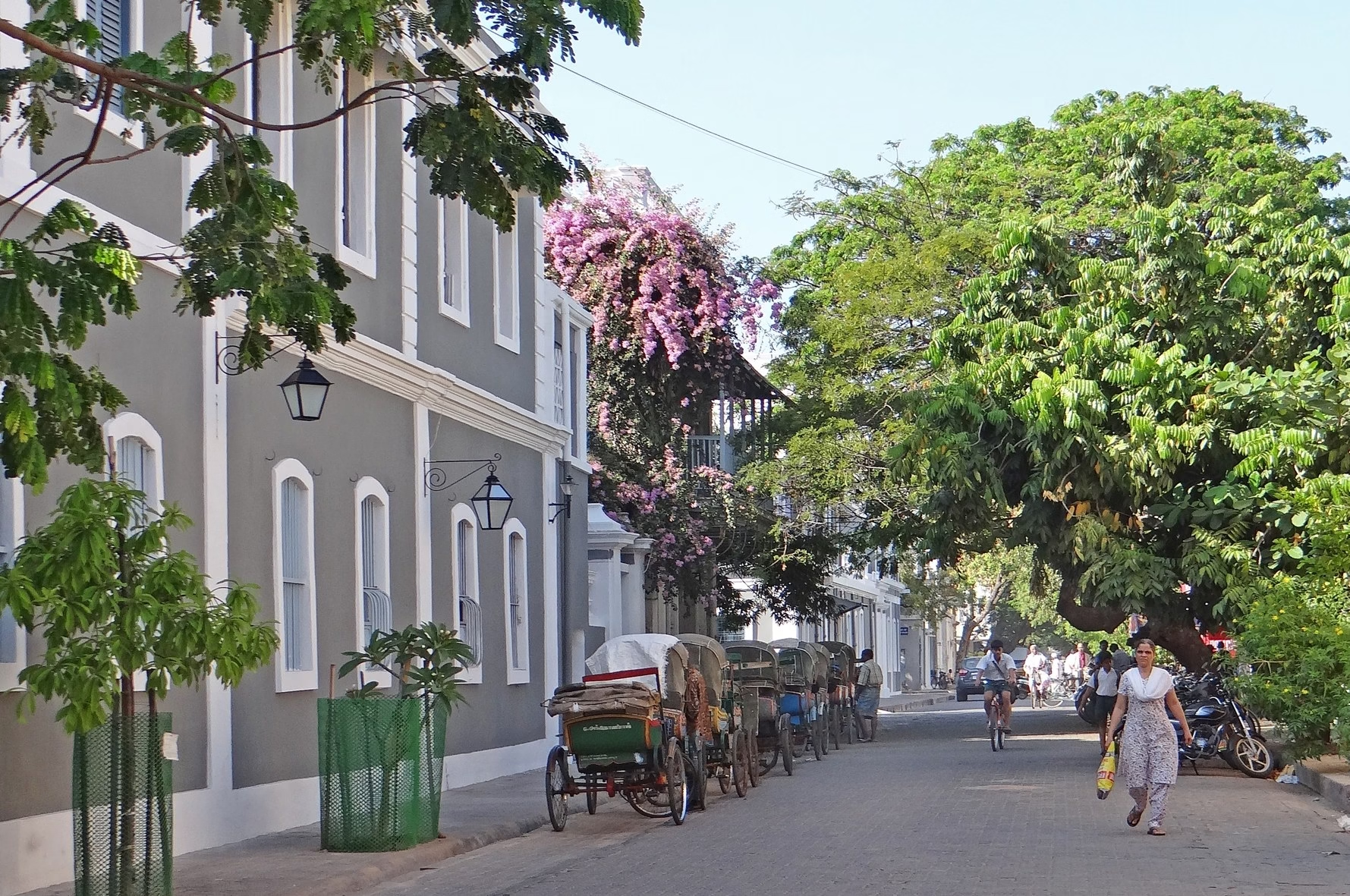
Photo: Jean-Pierre Dalbera, Wikimedia Commons, CC BY 2.0. Original composition.
White Town Pondicherry: what it actually is
White Town is the English name for the Ville Blanche, the side of the old town where the French lived and ran their trade. The French East India Company set up a trading post here in 1674, and under governor Francois Martin it grew into the chief French settlement in India. Apart from periods when the Dutch and the British captured it, the town stayed French until the de facto transfer to India on 1 November 1954.
The old town is called Boulevard Town because it is ringed by four boulevards that once marked the limits of its fortifications. A canal cuts through it. On the sea side is the French Quarter, and across the canal is the Tamil Quarter, which the French called the Ville Noire. That canal was planned to keep the two communities apart, an uncomfortable fact worth remembering. Even the neat grid of straight streets is not originally French: the Dutch drew it up when they held the town in the 1690s, and the French completed it.
Why the streets look like this
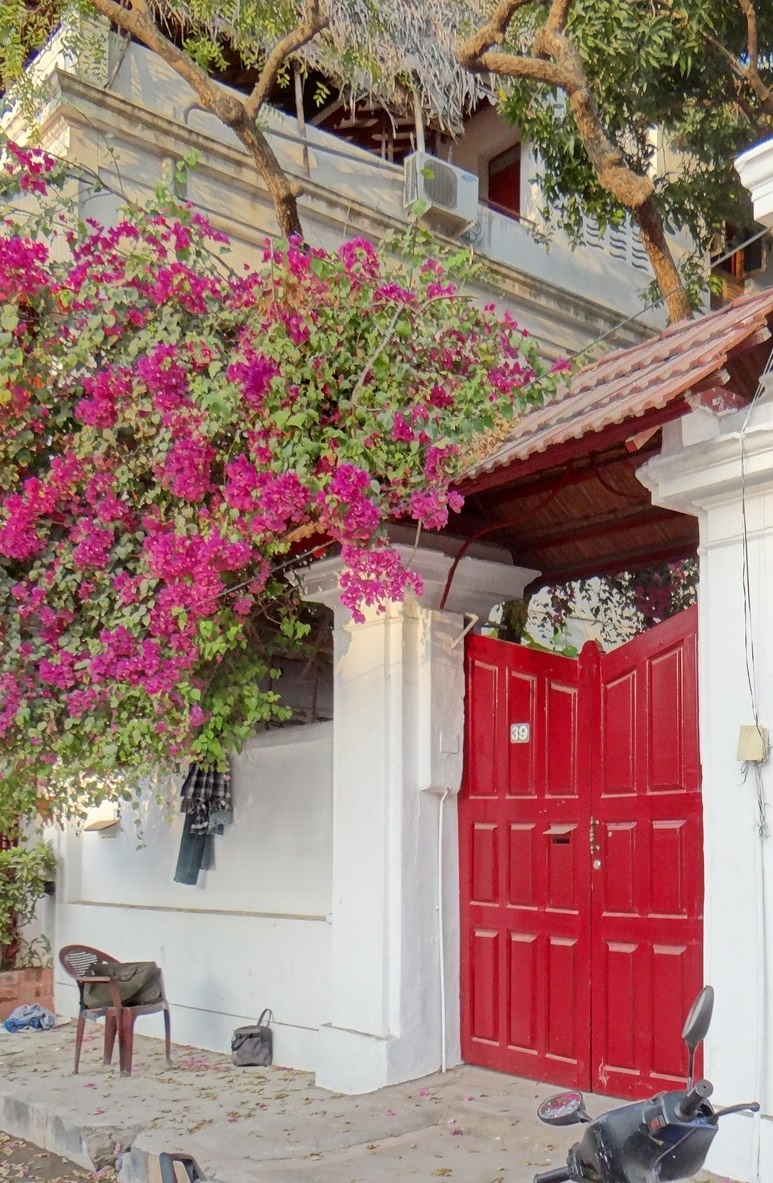
Photo: Jean-Pierre Dalbera, Wikimedia Commons, CC BY 2.0. Original composition.
Walk down any lane and you will notice that the houses do not open onto the street like they do in the Tamil Quarter. Instead you see high compound walls, big gates and treetops peeping over them. Behind those walls most homes have a garden or courtyard that keeps the rooms private and lets air move through the house, and the bougainvillea everyone photographs is usually growing over exactly these walls and gates.
Look a little higher and you will see the classic details: tall windows with louvered wooden shutters, pilasters and cornices on the facades, and wooden balconies held up on iron brackets. The roofs are flat terraces instead of sloping European roofs, which suits the coastal heat and gives families an open space for the evenings.
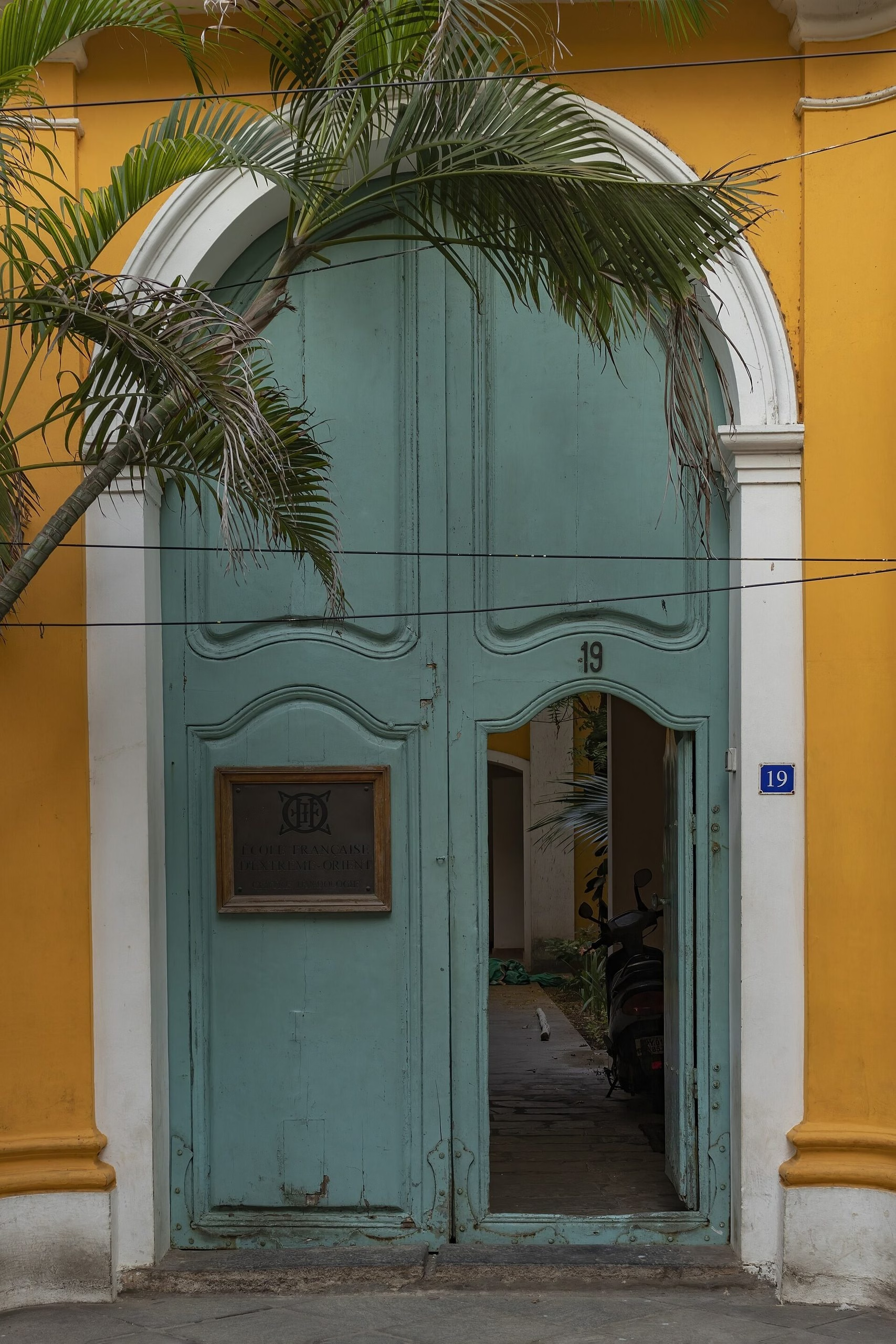
Photo: iMahesh, Wikimedia Commons, CC BY-SA 4.0. Original composition; resized for web.
This is not a copy of France. Over time French and Tamil building styles borrowed from each other, and Pondicherry ended up with its own Franco-Tamil look. INTACH and the French research school EFEO surveyed the old town and listed its heritage buildings, and 245 buildings are now notified as protected. So a freshly restored house next to a crumbling one is normal here.
Bharathi Park and the story of Aayi Mandapam
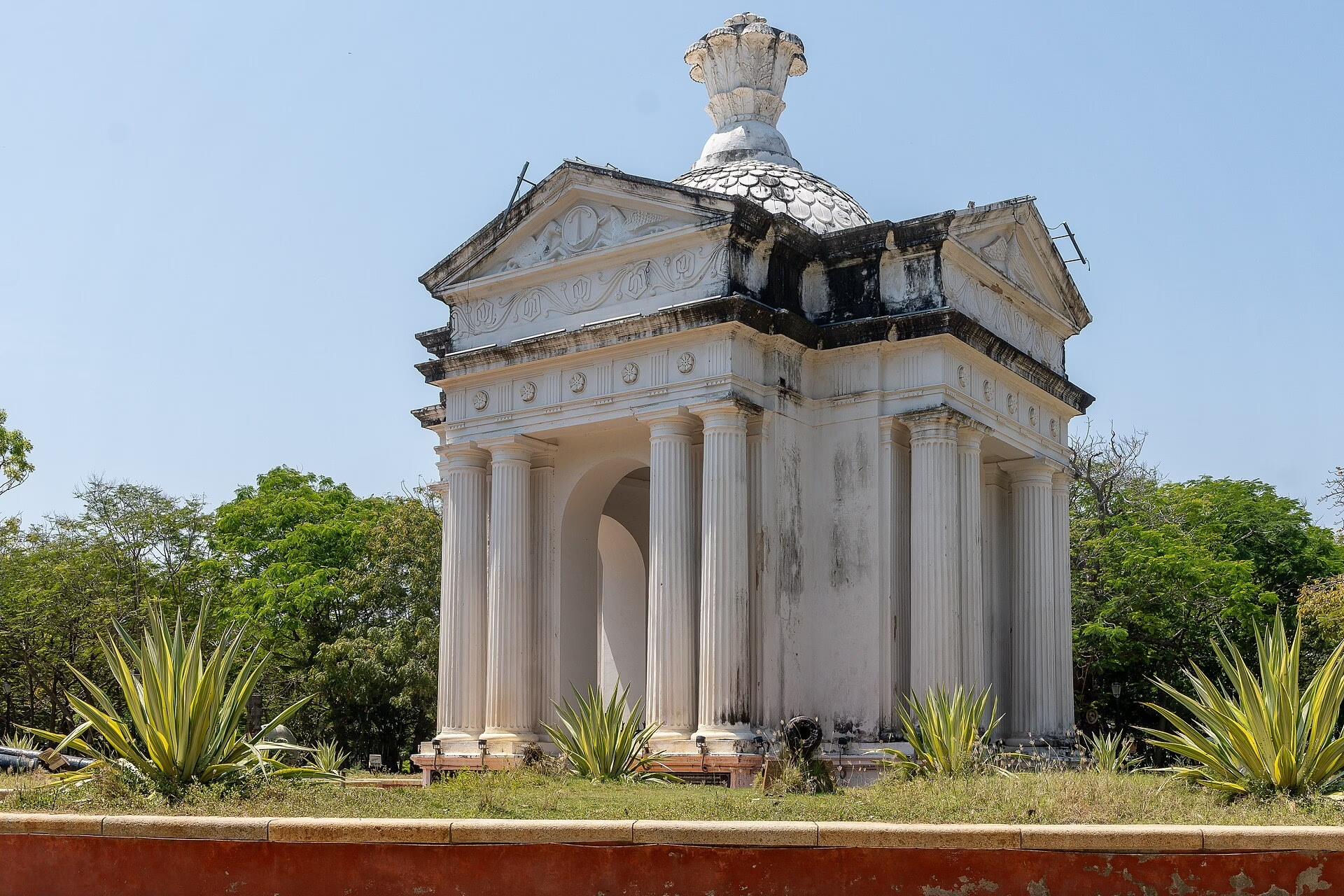
Photo: Rainer Halama, Wikimedia Commons, CC BY-SA 4.0. Original composition; resized for web.
Bharathi Park is the green square at the heart of the old French administrative quarter, surrounded by stately government buildings. In the middle stands Aayi Mandapam, also called the Park Monument, a white monument built in the time of Napoleon III.
It marks the supply of water to the town under French rule, and it is named after Aayi, a courtesan who, as the story goes, pulled down her own house so that a water reservoir could be built for the city. The shady park is a good place to sit when the sun gets too much.
Our Lady of Angels and the Joan of Arc garden
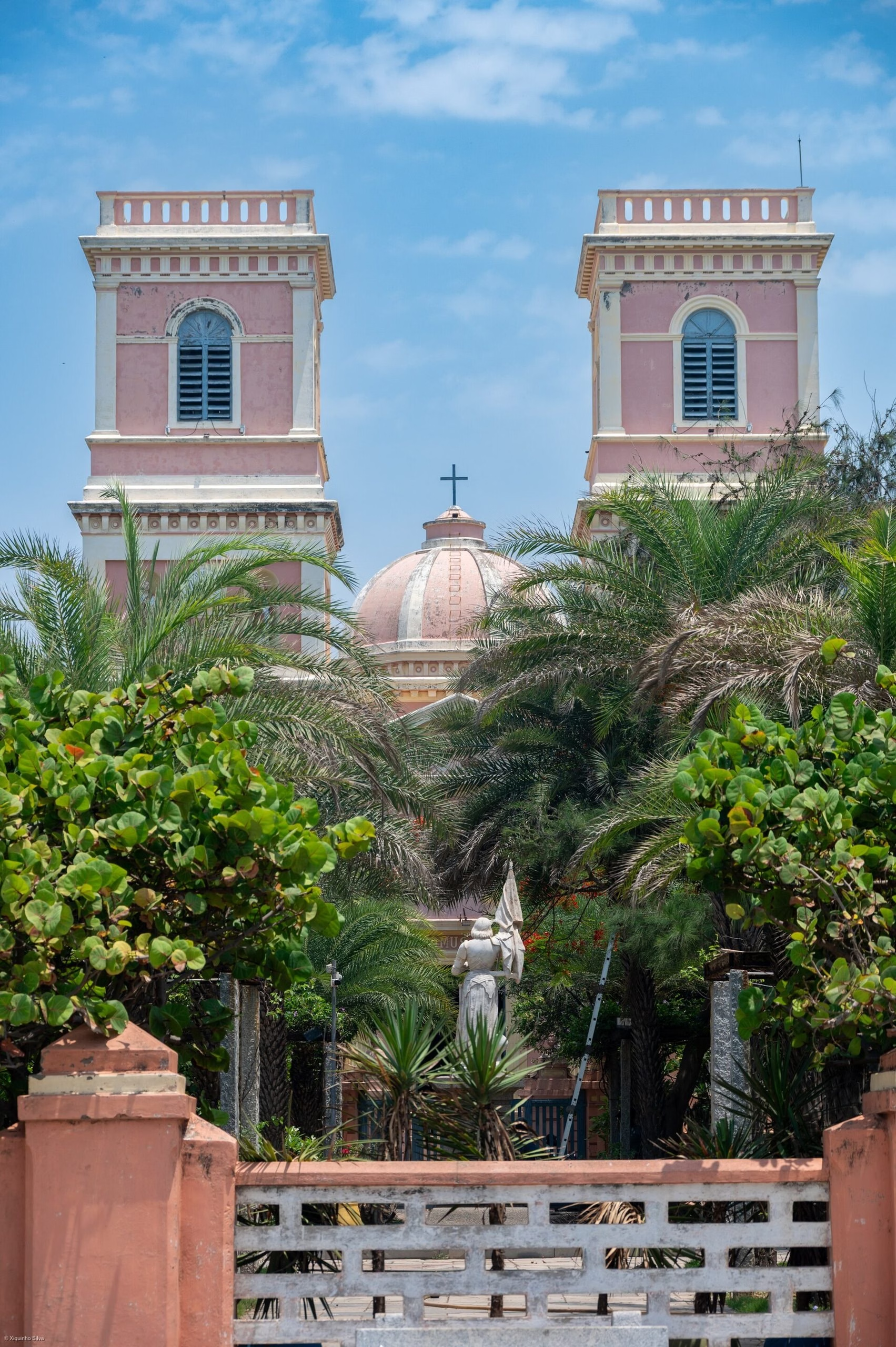
Photo: xiquinhosilva, Wikimedia Commons, CC BY 4.0. Original composition; resized for web.
If one building sums up White Town, it is the Eglise de Notre Dame des Anges, or Our Lady of Angels Church, on Rue Dumas, a block from the sea. The present church was built between 1851 and 1855 to the designs of the engineer Louis Guerre, in a Greco-Roman style with two square towers facing the sea. Three earlier churches of the same name came before it, the first in 1707.
What I like most is that it still serves the whole town: it is the only church in Pondicherry where Mass is held in all three of the city’s languages, French, Tamil and English. In the small garden between the church and the sea stands a statue of Joan of Arc in armour, holding a battle standard, gifted by the politician and industrialist Francois Gaudart. Stand in that garden for the best view of the pink towers.
The seafront promenade on Goubert Avenue
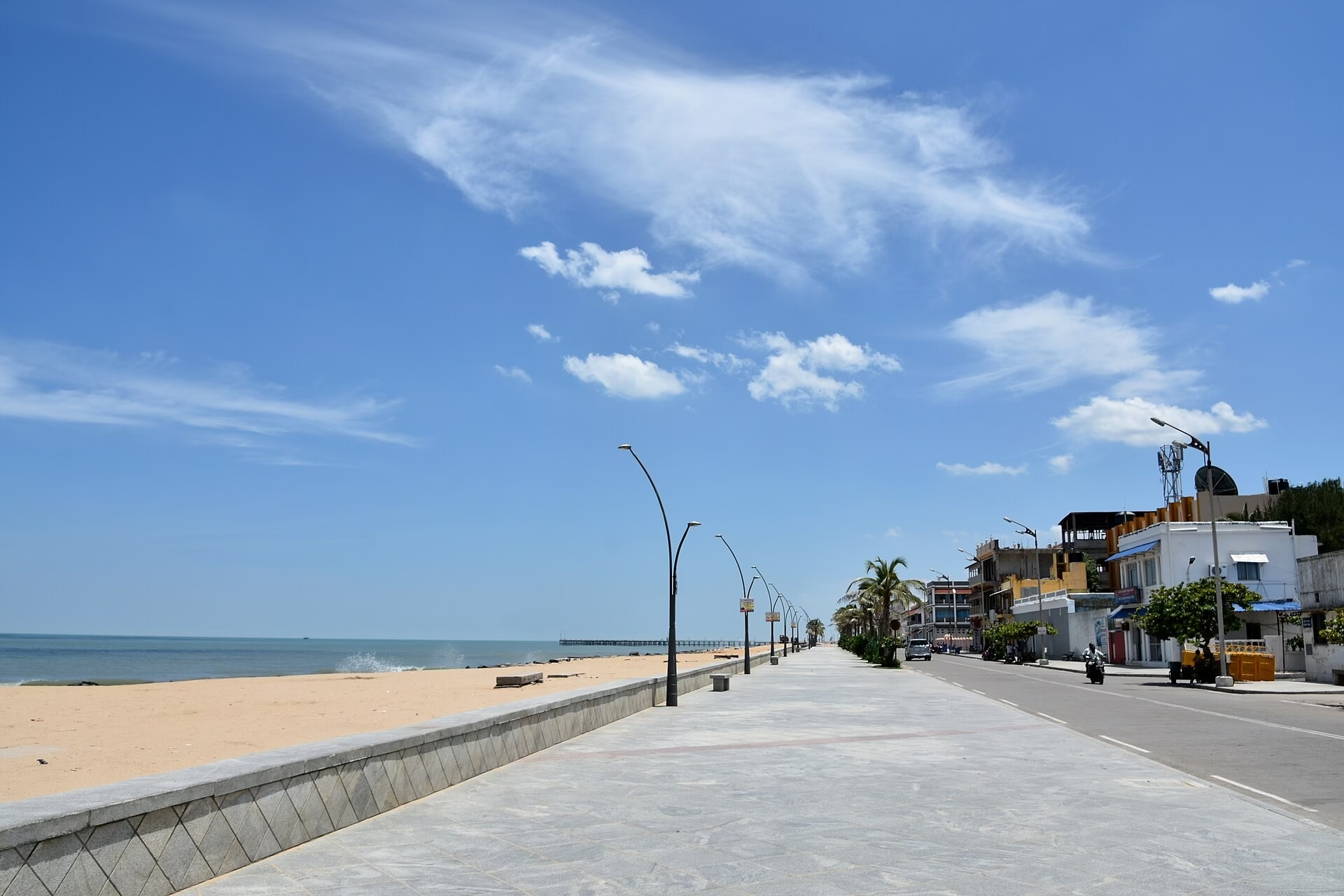
Photo: Richard Mortel, Wikimedia Commons, CC BY 2.0. Original composition; resized for web.
The eastern edge of White Town is the sea, and the road along it is Goubert Avenue, better known as Beach Road. The promenade runs about 1.2 km, from the French War Memorial to Dupleix Park. In the evenings the road is closed to vehicles, and families, walkers and visitors come out to sit on the sea wall and catch the breeze.
Note that this is not a swimming beach. The sand here disappeared because of erosion after a harbour breakwater was built just south of the city in 1989, and the town is now protected by a seawall of granite boulders. A strip of sand has come back with the help of an artificial reef, as the photo above shows, but the waves still crash hard on the rocks, so keep kids away from the boulders.
Two landmarks here deserve a minute each. The 29-metre Old Lighthouse first shone on 1 September 1836 and was switched off in 1979 when a newer lighthouse took over. The French War Memorial, unveiled in 1938, honours the soldiers of French India who died in the First World War, and every 14 July, Bastille Day, it is lit up for the French National Day ceremonies.
The Gandhi statue and the pillars from Gingee
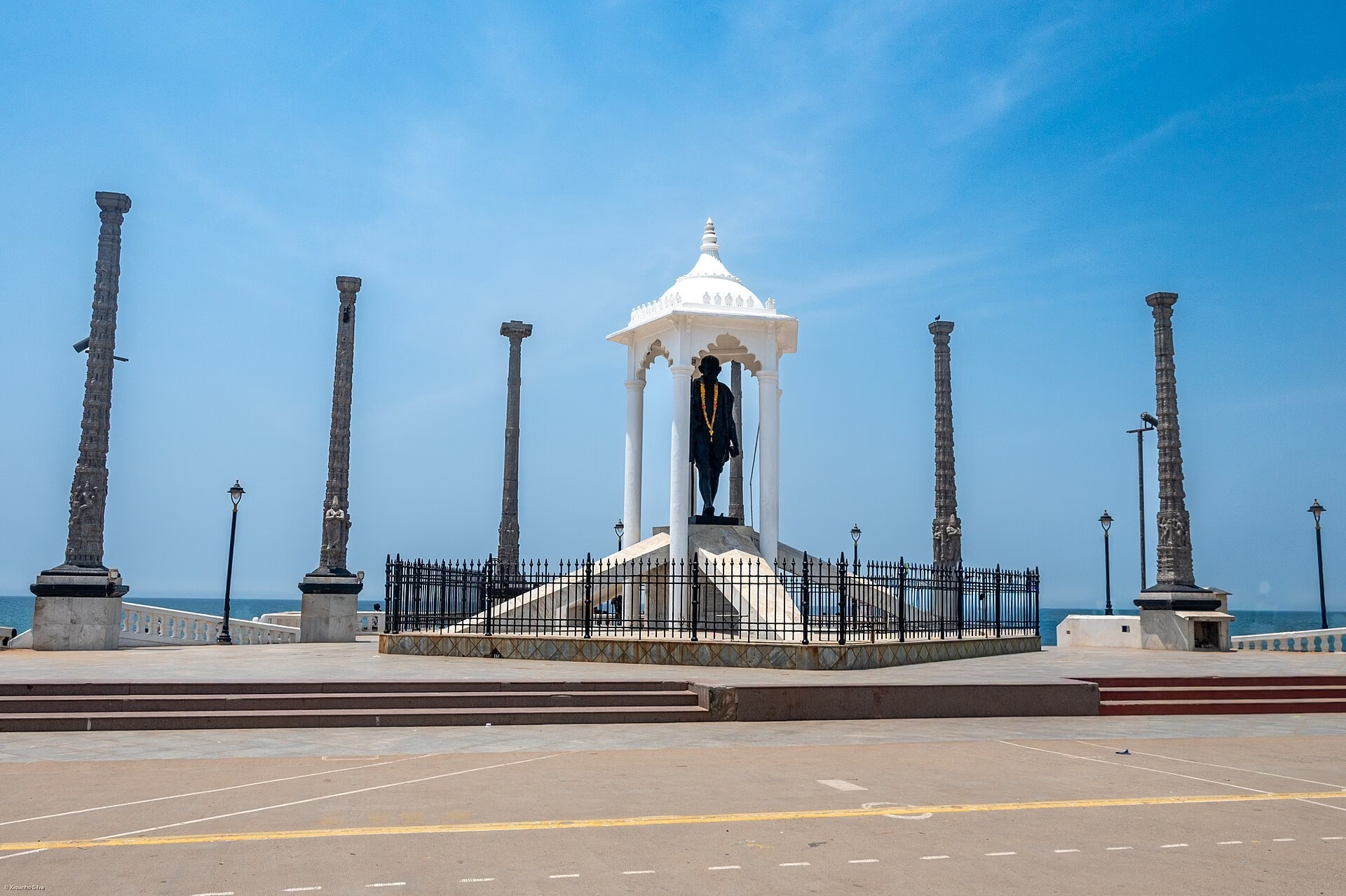
Photo: xiquinhosilva, Wikimedia Commons, CC BY 4.0. Original composition; resized for web.
The big statue of Mahatma Gandhi on Beach Road was unveiled on 26 January 1965, a few years after Pondicherry legally became part of India. Most people take a selfie and move on, but look at the tall, carved granite pillars around it. They came from the Venkataramanaswami Temple at Gingee, the old hill fort inland, and were brought here by the French.
Before Gandhi, those pillars stood around a statue of Dupleix, the famous French governor, who now stands at the southern end of the promenade. So one small square holds Nayak-era temple pillars, a French colonial story and the Father of the Nation, all facing the same sea.
Little French details most people walk past
The French connection shows up everywhere once you look. Street signs are written in Tamil and French, and the local policemen still wear red kepis, the round French-style caps. France also kept ownership of the War Memorial, the French Consulate, the French Institute of Pondicherry and the French international school after it left.
It is not only about France, though. The Sri Aurobindo Ashram is on Rue de la Marine, and the grey buildings on Rue Francois Martin in the first photo belong to it. To see where White Town sits on the map, click here.
Photo tips and street manners in White Town
The yellow walls glow in soft morning and late afternoon light and look washed out at midday. I would suggest stepping back to fit the facade, the gate and the bougainvillea in one frame, because the walls and shutters are what make a photo look like Pondicherry. Most of these houses are private homes, offices and ashram properties, so do not climb gates, sit on someone’s steps for a long shoot or block the lanes with a group.
Best time to visit White Town Pondicherry
The cooler months from around December to February are the most pleasant for walking around White Town, with winter highs of about 30 degrees and comfortable evenings on the promenade. The northeast monsoon brings most of Pondicherry’s rain from October to December, while April to June gets very hot and humid, with temperatures that can cross 40 degrees.
FAQ
- Why is it called White Town?
Because in French times this sea-facing side of the town was the Ville Blanche, where the European residents lived, while the Tamil Quarter across the canal was called the Ville Noire.
- Can we swim at Promenade Beach in White Town?
No. The seafront is lined with granite boulders and the waves break hard on them, so it is for walking, not swimming.
- Is White Town Pondicherry worth visiting if I am not into history?
Yes. The colourful streets, the bougainvillea and the evening sea breeze alone make it worth a walk.
- Can we explore White Town on foot?
Yes. The French Quarter is compact, flat and laid out on a straight grid, so it is easy to wander without getting lost.
- Is White Town the same as the French Quarter?
Yes. White Town, the French Quarter and the Ville Blanche are all names for the same sea-facing part of old Pondicherry.
Final Thoughts
White Town Pondicherry looks like a postcard, but it is a living neighbourhood with a layered history, from the canal that once divided the town to the temple pillars around Gandhi. I would suggest walking it slowly, looking up at the shutters and spending at least one evening on the promenade. Yellow streets first or the sea breeze? Tell me in the comments, and for more of this coast, my Top 10 places in Pondicherry, Auroville and Mahabalipuram, my guide to the Shore Temple in Mahabalipuram and my solo travel in India guide will help.
If you are planning the whole Pondicherry, Auroville and Mahabalipuram trip, just use my ready-made itinerary for the number of days you have, book from its links and go. The planning is already done, so you can enjoy White Town and the rest of the coast without any planning worries.
I plan the route. I don’t book the ferry, the stay, or the tickets. A custom plan is Rs. 200 per travel day. Fill the trip form, pay online, and I’ll send you the plan.