 By
Ithaa Undersea Restaurant is a small clear tunnel set 5 metres under the sea in South Ari Atoll in the Maldives, and walking into it feels like a magic trick. You go down a spiral staircase at the end of a wooden jetty, and at the bottom, instead of a basement, there is the sea. Not a window onto the sea, but the sea all around you and right over your head, with fish drifting across the ceiling while you sit at a table with a napkin on your lap. It opened in 2005 as the world’s first all-glass undersea restaurant, and you do not even get your hair wet.
Ithaa is one of the highlights of my 5-day Maldives honeymoon itinerary, and in my top 10 places to visit in the Maldives it came in at No. 3. But a few lines in a list never felt enough for a place with a story this good. So here is everything about the place itself: where it sits, the dream that started it, how a 175-tonne restaurant was built in another country and lowered into the sea, the tsunami it survived weeks later, and the reef and fish you see from your table.
Where is Ithaa Undersea Restaurant?
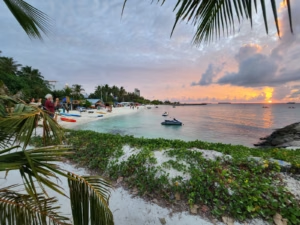
Ithaa sits in the lagoon of Rangali Island in South Ari Atoll, which the locals call Alifu Dhaalu, in the middle of the Maldives. It belongs to Conrad Maldives Rangali Island, a resort spread across two islands, Rangali and Rangalifinolhu, which are joined by a long jetty. When Ithaa was built, the resort was still called Hilton Maldives Resort and Spa, so older articles and photos you find online use that name.
From above, you would hardly notice it. All you see is a small thatched pavilion standing on the water at the end of a jetty. Inside that pavilion a spiral staircase goes down, and the restaurant itself is tucked between the sandy lagoon and a living coral reef. The reef around Rangali is also where the South Ari Marine Protected Area begins, the strip of reef famous for its whale sharks, so you are dining at one end of one of the most special stretches of water in the country. To see Ithaa on the map, click here.
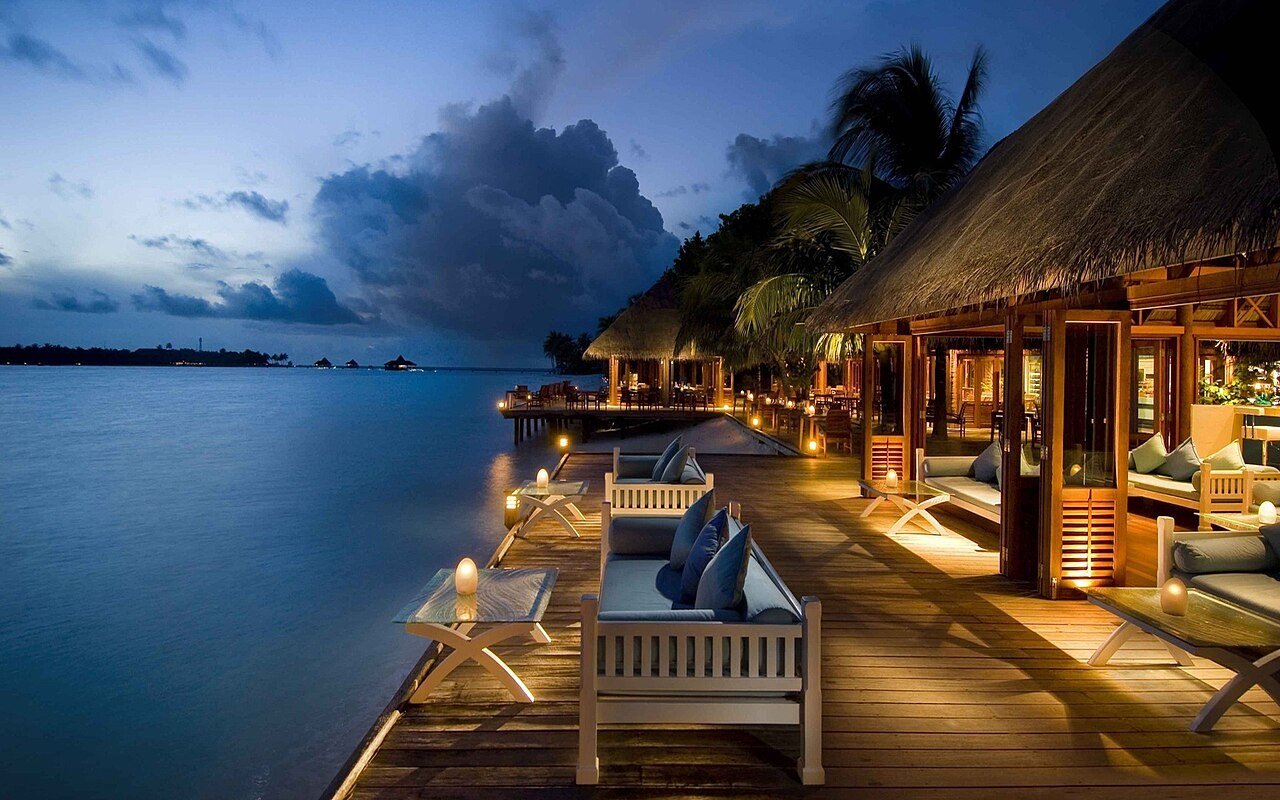
The story: a dream that started in Bali
The idea did not come from an architect or a big hotel chain. It came from Ahmed Saleem, one of the owners of the resort, in 2001. He was in Bali when he saw a room built into the side of a hill looking out at a river, and he started wondering what it would feel like to do the same thing, but under the sea. The island’s owners, Crown Company, lease Rangali to the resort, so the dream already had a home. It just needed someone who could actually build it.
That search ended in Auckland, New Zealand, with Mike Murphy of M.J. Murphy Ltd, a design consultancy that specialised in aquarium technology. The first plan Crown had in mind was a room with straight walls and glass windows. Murphy suggested something very different: a curved, see-through acrylic tunnel, the same kind of system used for the huge aquarium tunnel at the Kuala Lumpur National Science Centre, made by Reynolds Polymer Technology in the United States. Instead of looking out through windows, diners would sit inside the window. Technical drawings started in March 2004, and the clock started ticking.
Built in Singapore, sunk in the Maldives
The plan was to build Ithaa on Rangali beach and then winch it into the water. But this was going to be a steel and acrylic structure weighing 175 tonnes, and doing precise steel work, painting and quality checks on a small island in the middle of the ocean was going to be very hard. So the team made a bold call and built the whole restaurant in Singapore instead. Work started there in May 2004 and finished in October, complete with the acrylic arches, air conditioning and electrical ducts.
On 1 November 2004 the finished restaurant was lifted onto an ocean-going barge with a crane on board, in one piece, and it sailed for 16 days to reach Rangali. Even the arrival needed work, because the resort’s entrance channel had to be dug deeper so the barge could get into the lagoon, and the sand from that digging went onto the island’s beaches. Four steel piles, each 750 mm wide and filled with concrete, were driven into the seabed with a vibrating hammer, a method chosen to do as little damage as possible to the reef around them.
Then came the strangest part. A restaurant full of air naturally wants to float, so the team loaded about 85 tonnes of sand into its belly to make it sink. Over roughly 13 hours in November 2004, the structure was slowly lowered and guided onto the piles, then locked onto them with concrete. I love this detail: the restaurant was built and fitted out on dry land, so the dining room has never had the sea inside it.
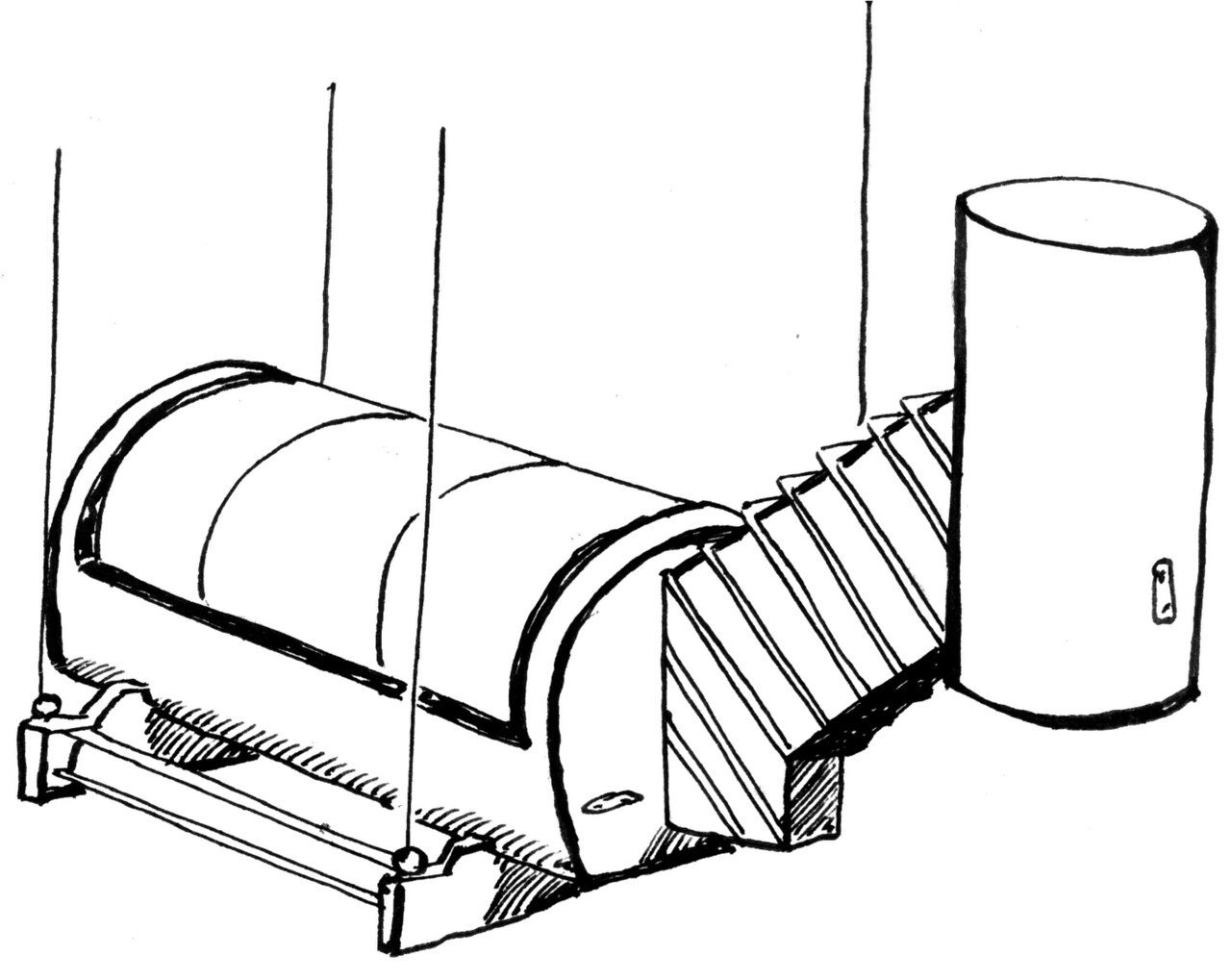
Drawing: Martin Henke, Wikimedia Commons, CC BY 3.0. Original composition; resized for web.
Then came the tsunami
Ithaa had been under the water for only about five weeks when the 26 December 2004 Indian Ocean tsunami hit the Maldives. Islands across the country were flooded and many lost homes and lives, so you can imagine the worry about a brand new glass room under the sea. The water at Rangali rose to about 0.31 metres, roughly one foot, below the entrance of the staircase and then went back. It never went in, and the restaurant was not damaged.
A few months later, on 15 April 2005, Ithaa opened its doors to its first diners. If you are the kind of person who wonders whether sitting under the sea is safe, I think this is the most reassuring piece of history the place could have.
The design: what you are actually sitting inside
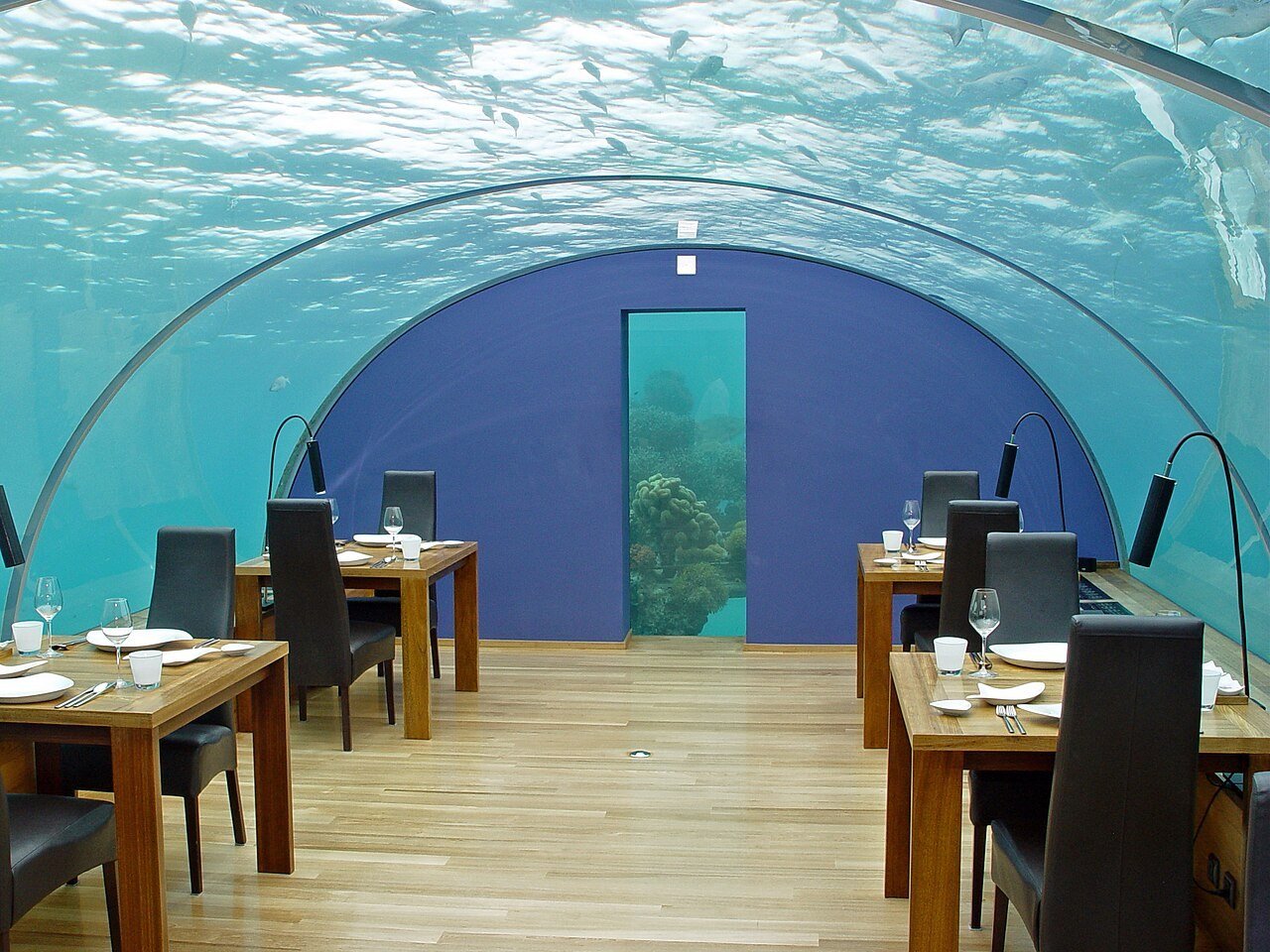
Ithaa means mother of pearl in Dhivehi, the Maldivian language, and the idea was a pearl resting under the waves between the lagoon and the reef. Inside, the room is just 9 metres long and 5 metres wide, about the size of a small apartment hall, with seats for only 14 people. The floor is 5 metres below sea level, and the roof is made of three acrylic arches, each 5 metres wide and about 125 mm thick, which were described at the time as the widest acrylic arches built underwater anywhere in the world.
The top of those arches sits only about one metre under the surface at low tide and almost two metres at high tide. That is why the light inside is so bright and why the water above you shimmers like a moving ceiling. The walls and roof curve over you to give a view of roughly 270 degrees, while the two end walls are solid, with a small window looking straight out at the coral, as you can see in the first photo above.
Every material came from somewhere else. The structural timber is treated pine from New Zealand, the lining inside and out is western red cedar from Canada, and the acrylic came from Colorado in the United States. A New Zealand engineering firm, Jackson Engineering, designed the air conditioning to keep the air fresh and hold the humidity at about 60 percent, which matters a lot when you are sitting inside a sealed tunnel surrounded by warm tropical water. The steel is protected with marine paint and zinc anodes so the sea does not eat it away.
The reef and the fish you see from your table
This is the part that makes Ithaa different from an aquarium. Nothing outside is kept in a tank. The fish are wild, and they come and go as they please over the reef and the sand of the Rangali lagoon. Some days the ceiling is busy with schools of fish catching the light. Other days it is a slower show, with one big creature taking its time to pass by. That uncertainty is part of the fun.
Schools of reef fish and sweetlips
The most common sight is simply fish, lots of them. Schools of reef fish swirl over the coral, angelfish drift past slowly, and on these reefs you can spot striped oriental sweetlips like the one in this photo, which was taken on a dive at Rangali itself. When the sun is high, a whole school flashes silver every time it turns.
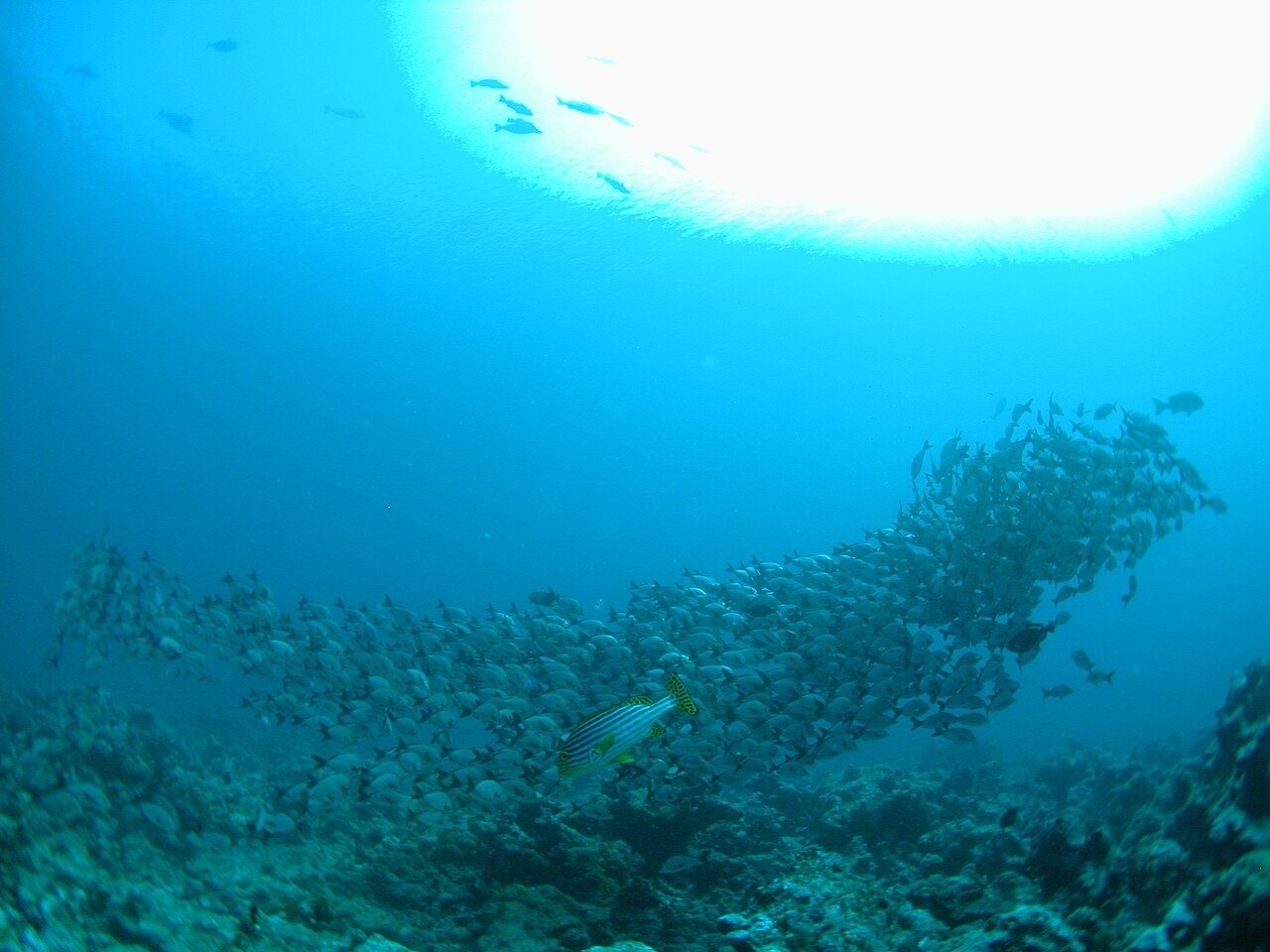
The giant moray eel
Ithaa has a well-known neighbour. Giant moray eels live in the cracks of the reef, and diners have described one popping its head out in the middle of dinner and swimming right up to the acrylic with its mouth opening and closing. It looks scary, but that gaping mouth is just how a moray breathes, pushing water over its gills. Seen through thick acrylic, it is the most relaxed way to meet one.
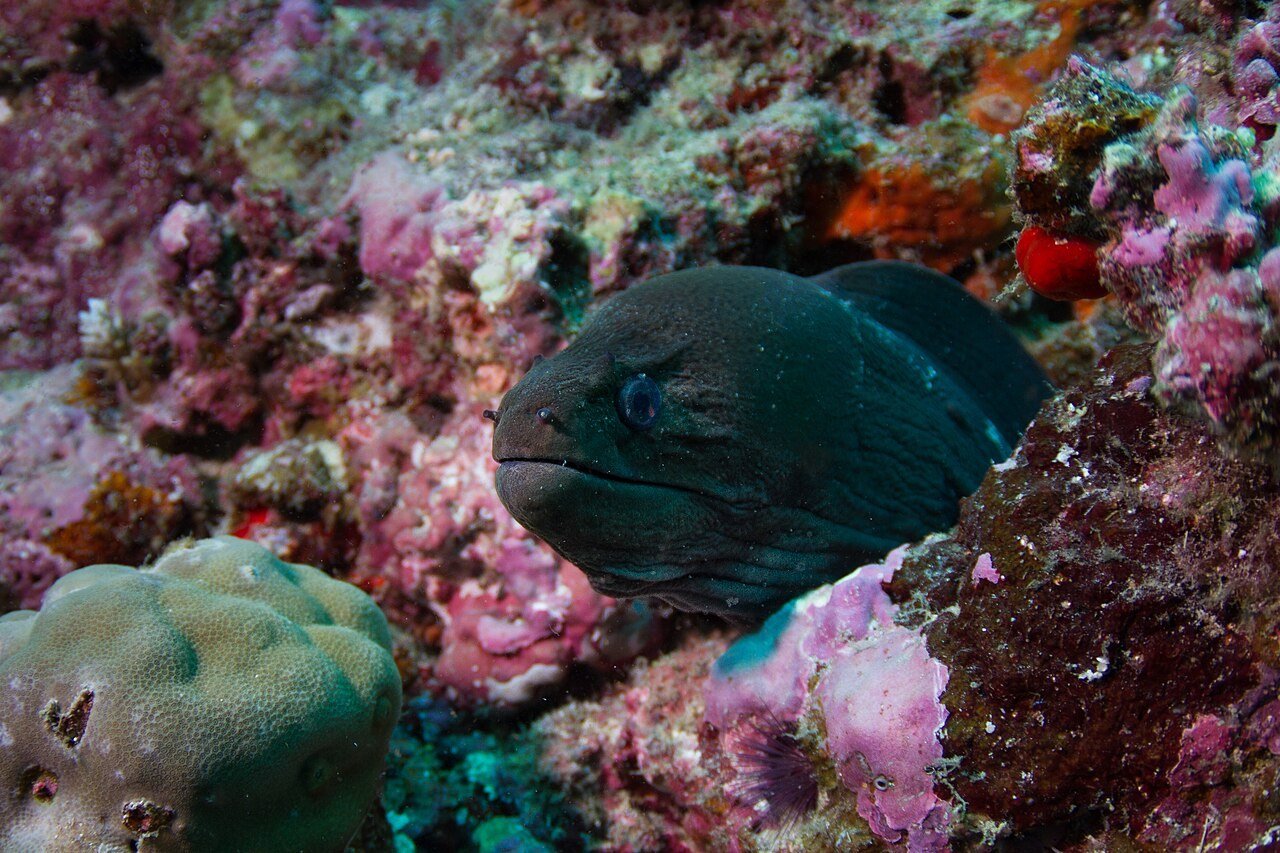
Stingrays gliding over the sand
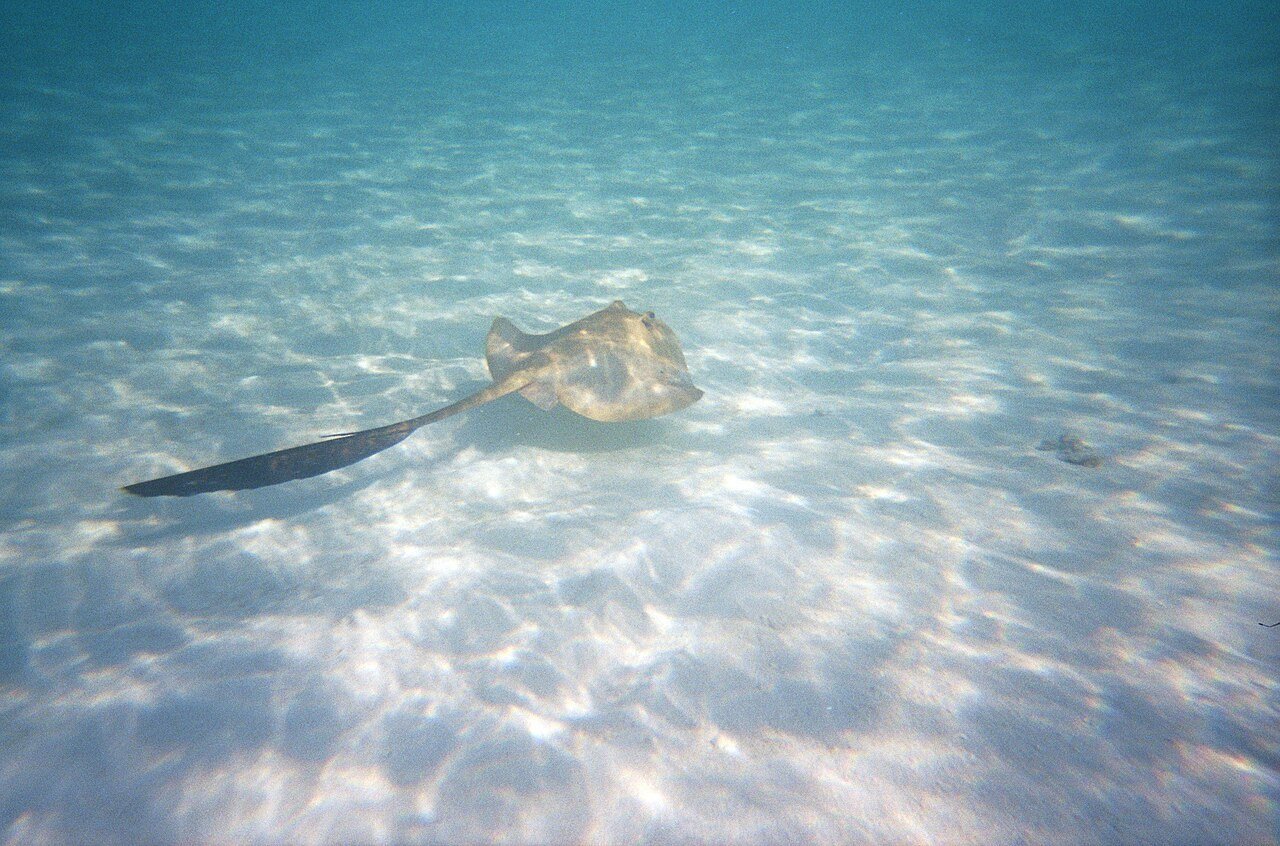
The sandy lagoon side of the restaurant is perfect for stingrays. They glide low over the sand, sometimes settle down and half bury themselves, and then lift off again with a slow flap of their wings. The resort itself talks about stingrays and schools of angelfish as part of the view, and on a bright day the ripples of sunlight on the sand make them look like they are flying.
Reef sharks circling
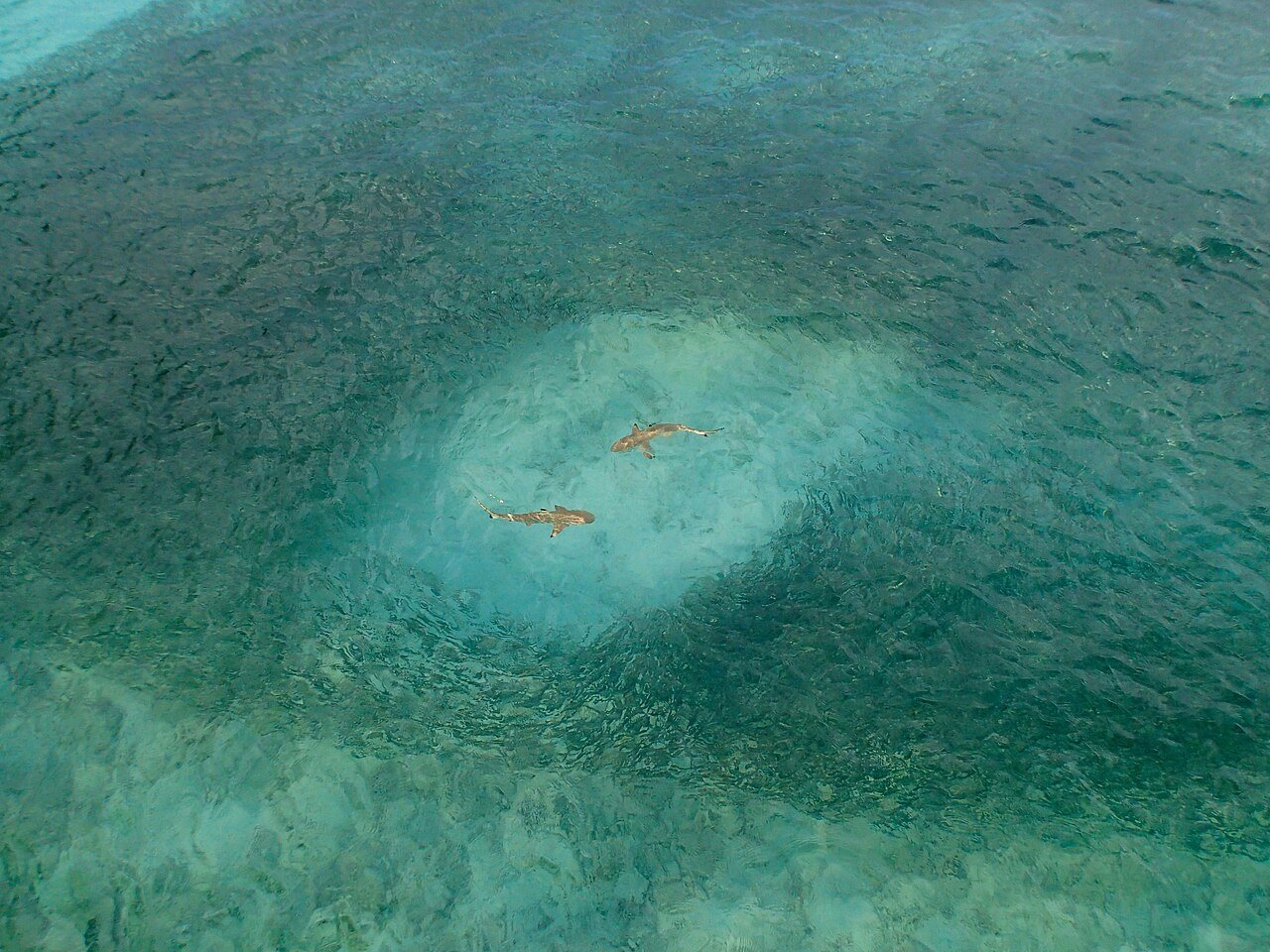
Yes, you can see sharks from your dinner table. Small reef sharks, like blacktips, patrol the reef and the shallow lagoons all over the Maldives, and they are regular visitors around Ithaa. They are shy, harmless to people and very graceful, and watching one slide over the roof while you are sitting completely dry is one of those moments you remember for years.
Turtles
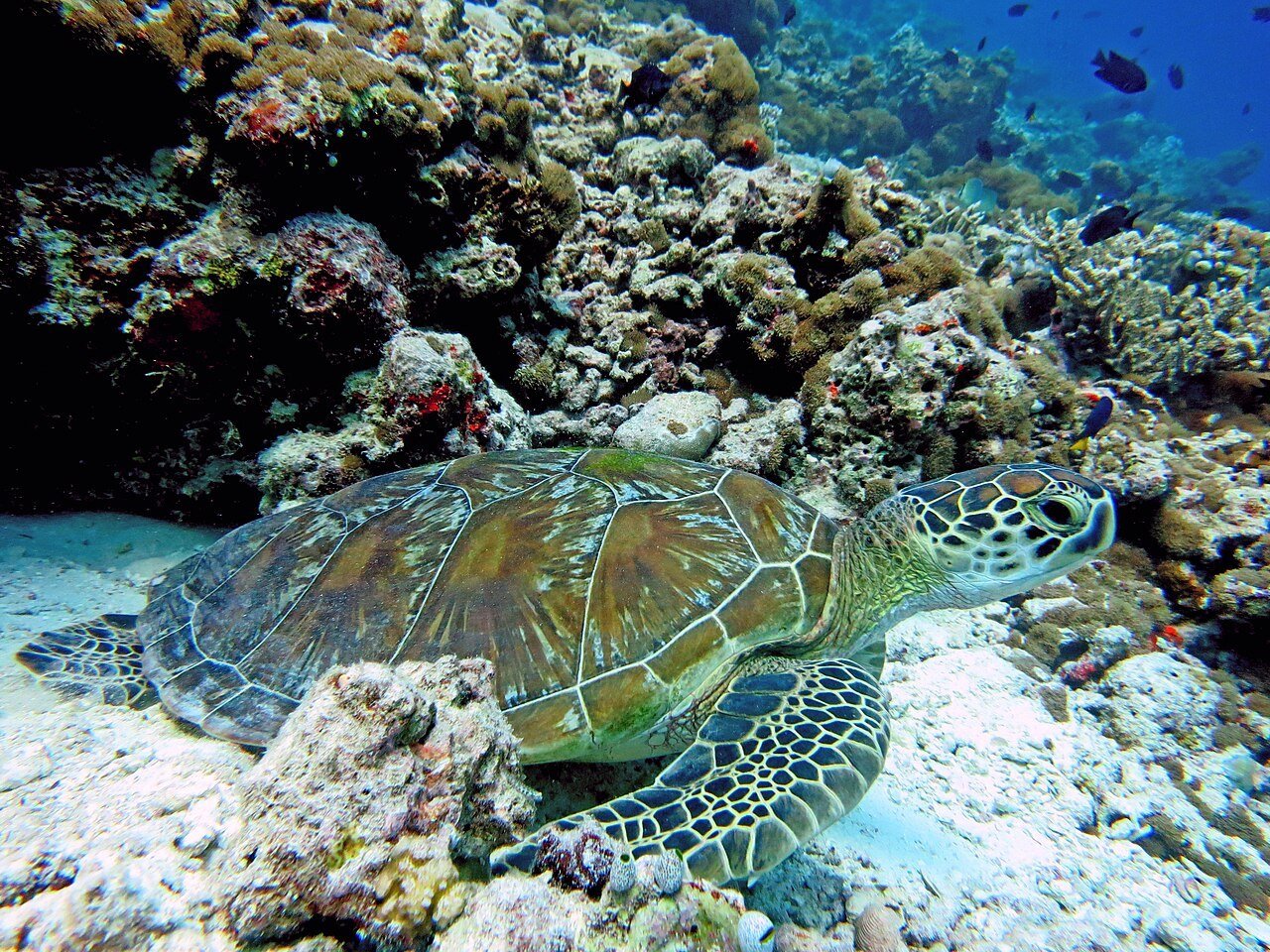
Sea turtles live on the reefs of South Ari, and they swim past Ithaa too. A turtle is never in a hurry, so if one comes by, you usually get a good long look as it paddles slowly past or stops to rest on the coral. If one does come by, it is very hard to look at your plate.
Manta rays, if you are lucky
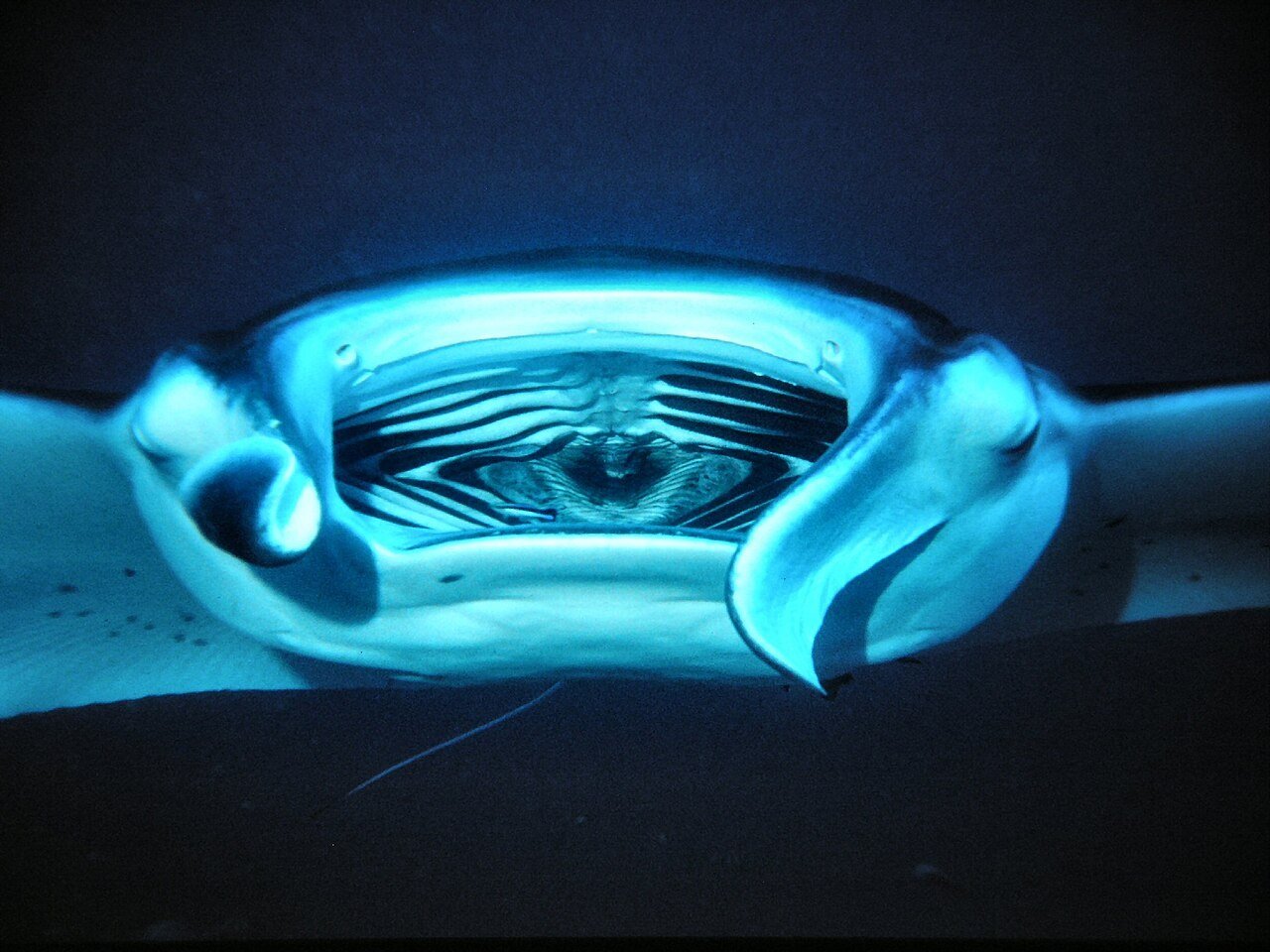
Rangali has a special connection with mantas. Just off the southwest point of the Rangali reef is a dive site called Rangali Madivaru, and madi is the local word for ray. Manta rays come there to be cleaned by small fish, especially during the northeast monsoon from about December to April. Mantas have been seen gliding over Ithaa too, but they are wild ocean animals, so treat a manta over your table as a lucky bonus, never a promise.
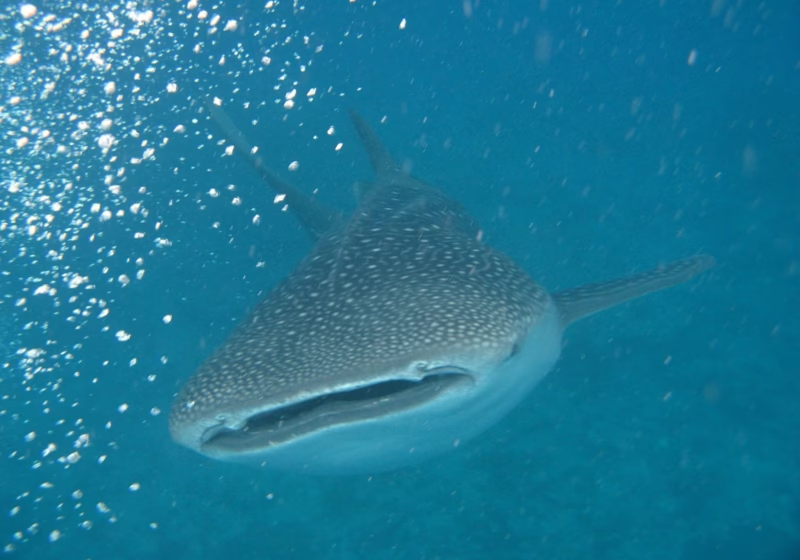
The same atoll is also home to the South Ari whale sharks, the gentle giants that stay on this reef all year.
What it actually feels like inside
The first thing that hits you is the light. In the middle of the day the room is so bright that people who have eaten there say you almost want sunglasses, and the shimmering pattern of the surface dances across the tables and the wooden floor. The second thing is the silence. There is no sound of waves down here, just soft voices and the clink of cutlery, while a whole world moves silently over your head.
The fish do not care that you are there, and that is the magic. Somebody once described it as an aquarium in reverse, where the fish get to watch the humans. It is a small room, so you share it with a few other couples, and it is not the place for big groups or loud parties. Be honest with yourself about one thing: Ithaa is mostly about the view. If you are the person who keeps looking up between every bite, you are doing it right.
A famous little room
For a restaurant that seats only 14 people, Ithaa has collected a lot of fame. In 2006 the project was placed in the top three for Engineering Innovator of the Year at the New Zealand Engineering Excellence Awards. In 2014 the New York Daily News named it the most beautiful restaurant in the world. To celebrate its fifth birthday in April 2010, it even became an underwater bedroom where guests could spend the night, a promotion that ran until April 2011, and it has also hosted private parties and weddings.
Ithaa was reportedly designed with a life of about 20 years in mind, and in April 2025 it passed its 20th birthday still serving, with several other undersea restaurants in the Maldives following its lead. It is still finding new ideas too. In 2026 the resort sank cases of champagne on the seabed in front of Ithaa to age under the sea, with the bottles due to come back up in December 2026. Only in the Maldives would a wine cellar be a patch of sand next to a coral reef.
Best time to visit Ithaa Undersea Restaurant
The reef outside is alive all year and the fish do not take holidays, but the sea does change with the seasons. The drier northeast monsoon, from about December to April, usually brings calmer seas and more sunshine, so more light reaches the reef around Ithaa, and it is also the season for mantas around Rangali. The southwest monsoon, from about May to November, brings more wind, rain and cloud, so some days are greyer, both above and below the water. Whatever the month, the middle of the day gives you the brightest light and the most colour, while the evening turns the room into something softer and more romantic.
My tips for Ithaa
- Look up, not just sideways. Most of the action happens over the roof, and that is the view you will never get anywhere else.
- Turn off your flash. Flash only bounces off the acrylic and ruins your photo. Put your phone lens close to the acrylic and shade it with your hand to cut the reflections.
- Do not tap on the acrylic. It does not bring the fish closer, and it disturbs everyone else in a room this small.
- Be patient. The fish come in waves. If the roof looks empty, give it a few minutes and something will turn up.
- Make it an occasion. Most couples save Ithaa for the one big evening of the trip, like an anniversary, a birthday or a proposal, and that is exactly how it feels best.
And if seeing the reef from the inside makes you want to meet it properly, the water around South Ari is some of the best snorkelling in the country, from turtles on the reefs to the whale sharks along the atoll’s southern edge.
FAQ
- Is Ithaa Undersea Restaurant really under the sea?
Yes. Ithaa stands on steel piles in the Rangali lagoon with its floor 5 metres below sea level, and you reach it by a spiral staircase from a pavilion on the water. The fish outside are wild, not kept in a tank.
- Is it safe to sit inside Ithaa?
Yes. The restaurant is held on four concrete-filled steel piles and the acrylic arches are about 125 mm thick. Weeks after it was installed it came through the 2004 tsunami with no damage.
- Do I need to know swimming to visit Ithaa?
No. You walk down a staircase into a dry, air-conditioned room. You never touch the water.
- Can you see sharks from Ithaa?
Yes. Small reef sharks are regular visitors, along with stingrays, turtles, moray eels and schools of reef fish. Manta rays are seen sometimes, but it is never guaranteed.
- Is Ithaa the first underwater restaurant in the world?
Yes, it opened in April 2005 as the world’s first all-glass undersea restaurant. Its own launch notes admitted there was another underwater restaurant in Eilat, Israel, but Ithaa was the first aquarium-style one, where you sit inside a clear acrylic tunnel in the open sea.
- Is Ithaa good for a honeymoon?
Yes. With only a handful of tables, light dancing across them and the reef all around you, it is one of the most romantic places you can sit in the Maldives.
- What if I am travelling on a smaller budget?
Ithaa is a special-occasion table, not an everyday meal. If you are travelling on a smaller budget, my guide to Maafushi and the Maldives local islands shows how guesthouses, marked tourist beaches and snorkel trips still get you into that same blue water.
Final Thoughts
Ithaa is not big and it does not try to be. It is one man’s idea from a hillside in Bali, built by a New Zealand design team in Singapore, carried across the ocean on a barge and lowered onto a reef just weeks before the tsunami that tested it. Twenty years later, the fish still swim over that same roof, and that is why it still feels special. Which would you most want to see swim over your table, a shark, a turtle or a manta? Tell me in the comments. And if you are still dreaming, read my top 10 places to visit in the Maldives, my top 10 places to visit in Japan or, for a romantic trip closer to home, my Udaipur for couples plan.
If Ithaa has you dreaming of the Maldives, I have already done the planning in my 5-day Maldives honeymoon itinerary, built around an overwater villa, Ithaa undersea dining and the South Ari reef. You can just use it for the days you have, book from its links and go, with no planning worries. If you want a custom version for your own dates, CLICK HERE to start on the trip form.
I plan the route. I don’t book the ferry, the stay, or the tickets. A custom plan is Rs. 200 per travel day. Fill the trip form, pay online, and I’ll send you the plan.