 By
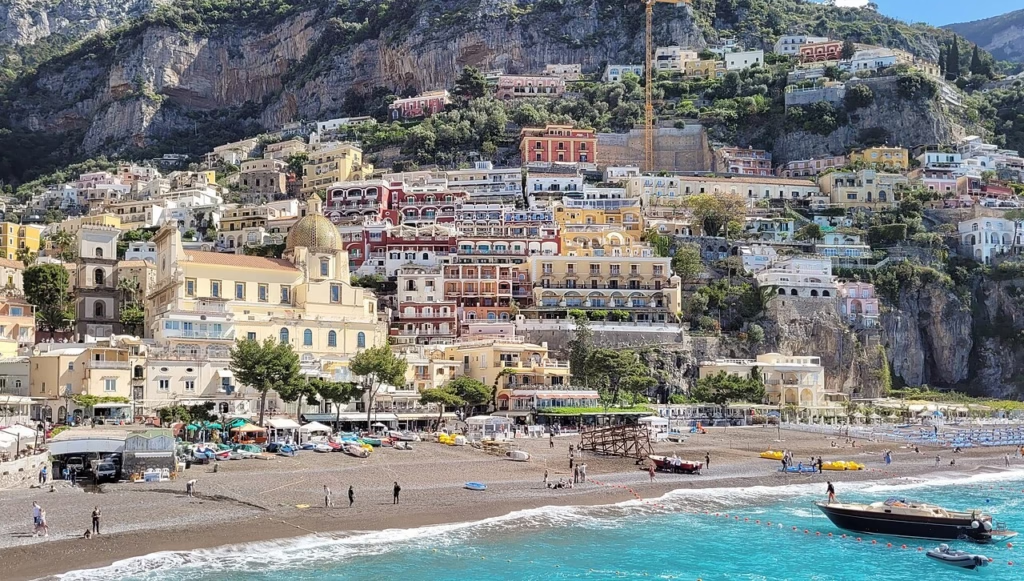
If you are planning a honeymoon, an anniversary trip or just a slow Italian summer with your partner, the Amalfi Coast and Sardinia make one of the best combinations you can pick. On one side you get cliffside villages, lemon gardens and boat rides to Capri, and on the other side you get the turquoise coves of the Costa Smeralda, which look more like the Maldives than Europe. The best part is that the two are just a 1 hour 10 minute flight apart, from Naples to Olbia.
I have just put together a 10-day couples itinerary for this exact route, so here I am going to count down the top 10 places to visit in Amalfi Coast and Sardinia, from No. 10 to the place I think you should not miss at any cost, with what to do, rough costs and a few tips that will save you time and money.
All prices below are approximate 2026 rates in euros (EUR). For a rough idea in rupees, take 1 EUR as about Rs. 100.
10. Pompeii: The Ancient City Buried by Vesuvius
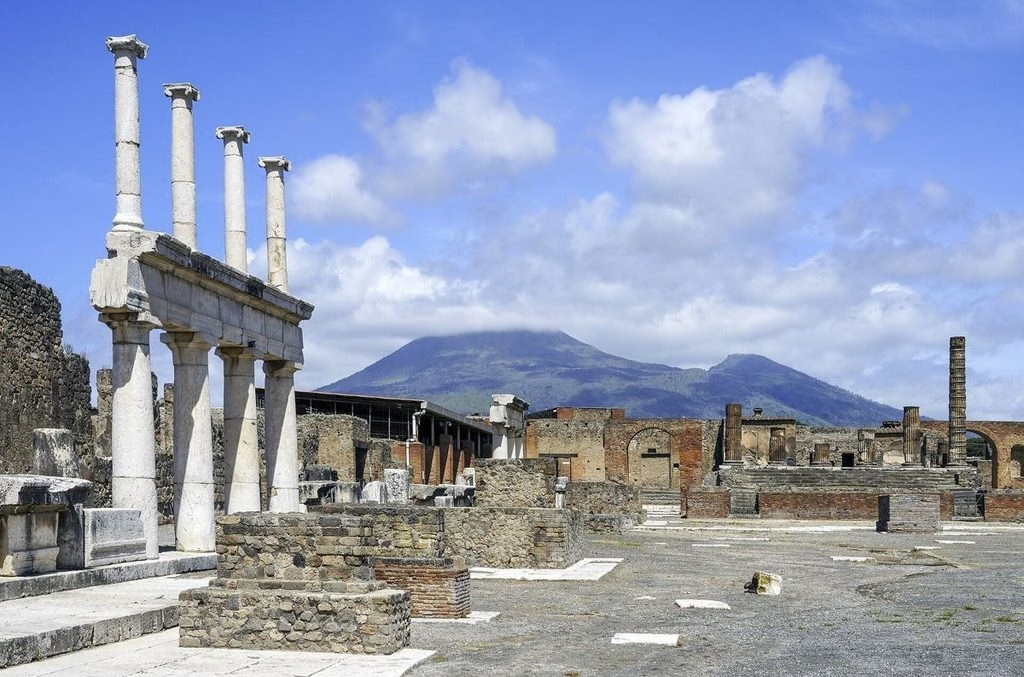
Photo: Commonists, Wikimedia Commons, CC BY-SA 4.0.
Pompeii is the Roman city that was buried under the ash of Mount Vesuvius, and today you can walk through its streets, houses and the Forum with the volcano still standing right behind it. It lies on the road from Positano to Naples airport, so the best way is to do it on the day you move from the Amalfi Coast to Sardinia, without any backtracking. Keep your bags locked in the car though, because large bags are not allowed inside the site.
Tickets are named and timed, so book them online in advance. Pompeii Express is EUR 20 and Pompeii Plus is EUR 25, which adds the Villa of the Mysteries. It opens at 09:00, and I would suggest you enter right then, before the heat and the crowds. A licensed private guide for 2 to 2.5 hours costs about EUR 150 to 250 per couple, and it is worth it because the ruins make much more sense with someone explaining them. Note that the first Sunday of the month is free and very crowded. To get the location, click here.
9. Bonifacio: A Day Trip to Corsica from Sardinia
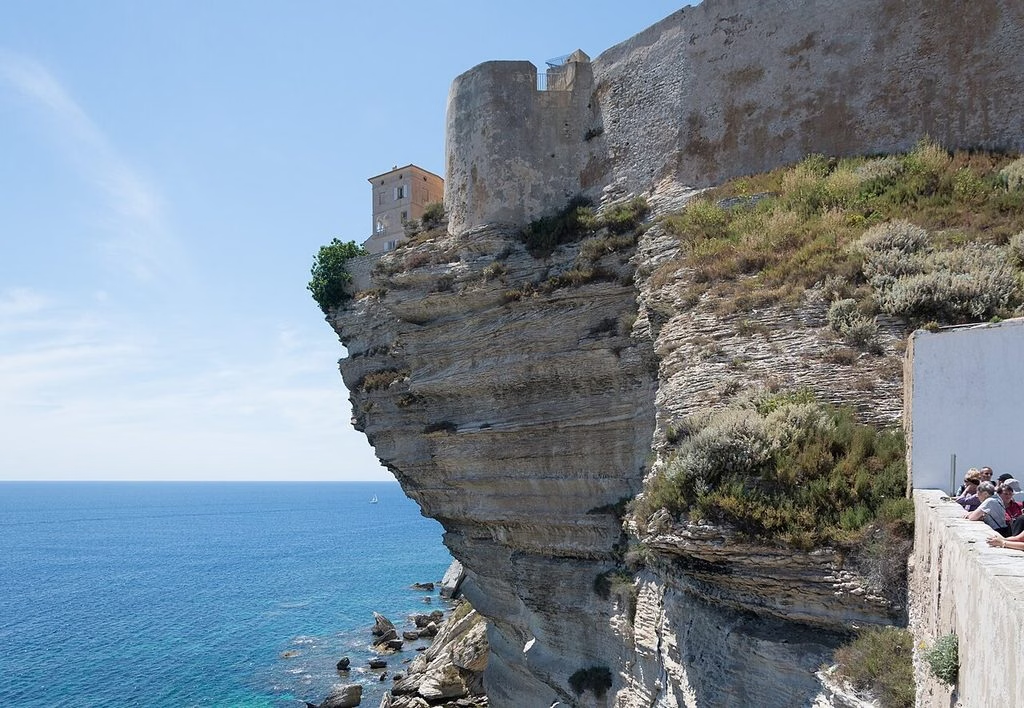
Photo: Isiwal, Wikimedia Commons, CC BY-SA 3.0.
This one is a bonus country on your trip. Bonifacio is a town in Corsica, which is France, and its old citadel sits right on top of white limestone cliffs above the sea. The ferry leaves from Santa Teresa Gallura, the closest Sardinian port to Corsica, and takes about 50 minutes. In summer, foot passenger fares start from about EUR 15 one way depending on the date and sailing, and you have to check in 1 hour before sailing. Since Corsica is France, carry your passports.
Once you land, take the 50-minute boat ride along the cliffs and caves first, as it leaves from the same marina, and then walk up to the citadel after lunch. Do not miss the Escalier du Roy d’Aragon, a staircase of 187 steps cut into the cliff. Beware of the mistral wind though, as the Strait of Bonifacio is one of the windiest in the Mediterranean and sailings get cancelled, sometimes at short notice. If that happens, spend the day at Capo Testa and Rena Bianca beach near Santa Teresa instead. To get the location, click here.
8. Porto Cervo: The Glamorous Heart of the Costa Smeralda
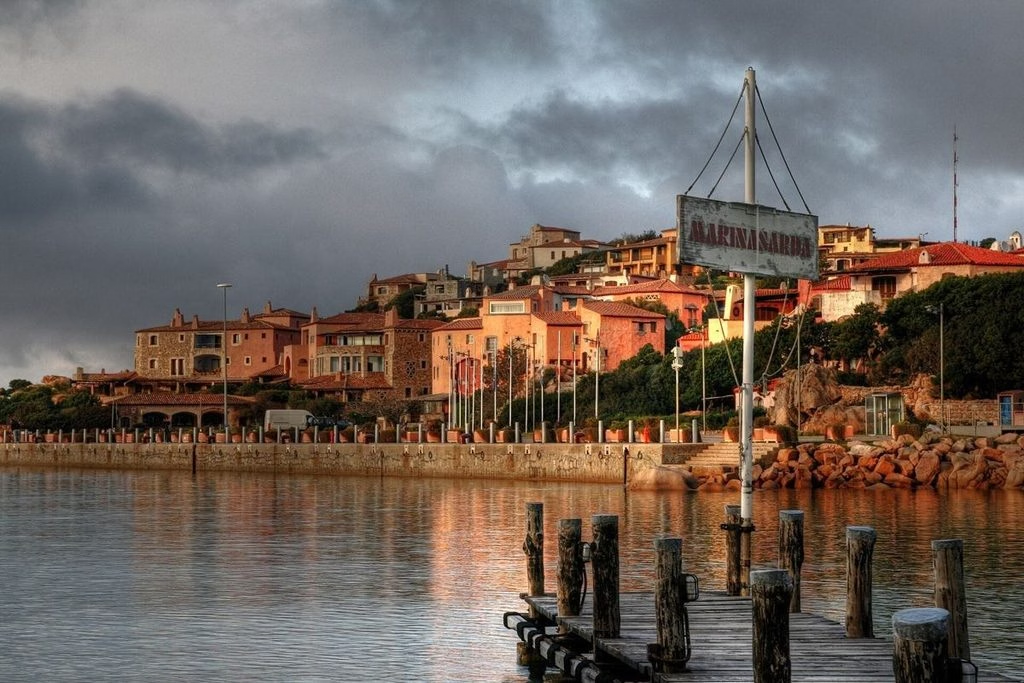
Photo: Superbass, Wikimedia Commons, CC BY-SA 3.0.
Porto Cervo is the most famous village on the Costa Smeralda, with a marina full of superyachts, a small Piazzetta, designer shops and the Stella Maris church. It is about 30 minutes from Olbia airport, and most of the luxury hotels in the area are between Cala di Volpe and Porto Cervo, so it makes a good base for your Sardinia days.
I would suggest you come here in the evening, walk around the marina at sunset when the lights come on, and then stay for dinner. Inland from here, the granite village of San Pantaleo is full of artisans and galleries, and close to Arzachena you can see the Coddu Ecchju Giants’ Tomb, which is around 3,500 years old. So if you get one cooler day, club these together. To get the location, click here.
7. Spiaggia del Principe and Pevero: The Best Beaches of the Costa Smeralda
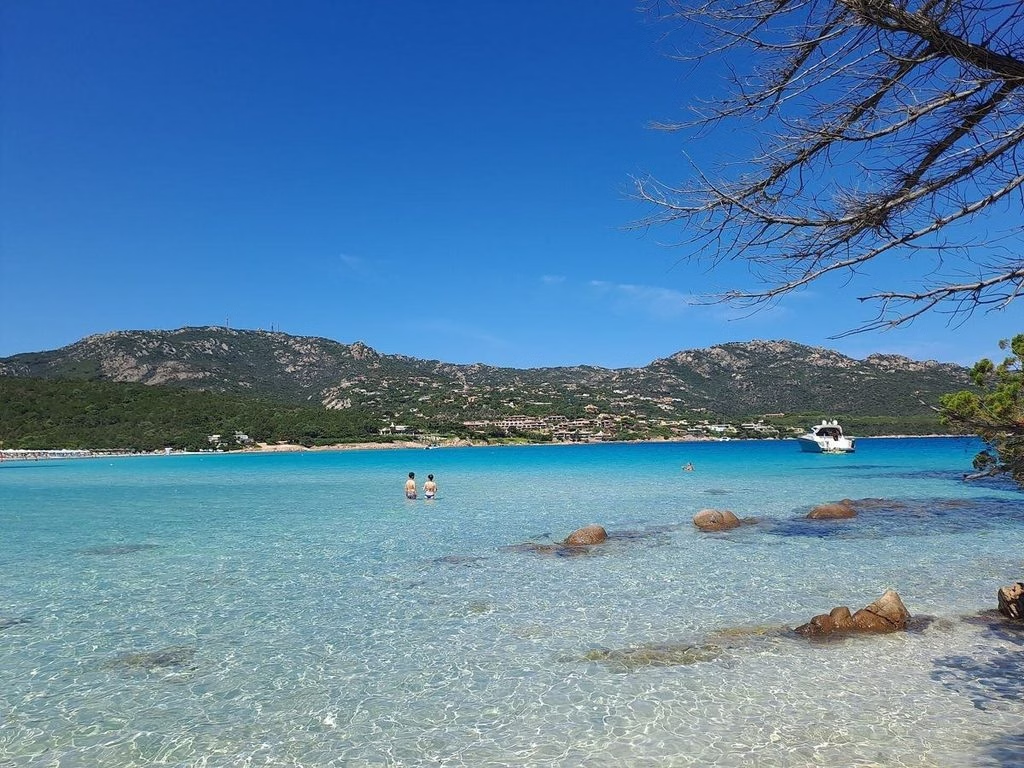
Photo: Luca numero 1, Wikimedia Commons, CC BY-SA 4.0.
Spiaggia del Principe is a white sand crescent in a protected cove, and Pevero, just a short drive away, has calm, shallow water and a beach kiosk. Both have that clear turquoise water that the Costa Smeralda is famous for, and you can easily do both in one morning. You have to park at the Spiaggia del Principe car park and walk for about 10 minutes to reach the beach.
Reach early, because in July and August the car parks fill by 11:00. These beaches have no shade and very few facilities, so carry water and an umbrella, or rent one before 10:00. Park only in the marked paid areas, which cost about EUR 10 to 20 a day. If you want one more, Liscia Ruja is the longest beach on this coast. To get the location of Spiaggia del Principe, click here.
6. Path of the Gods: The Most Scenic Hike on the Amalfi Coast
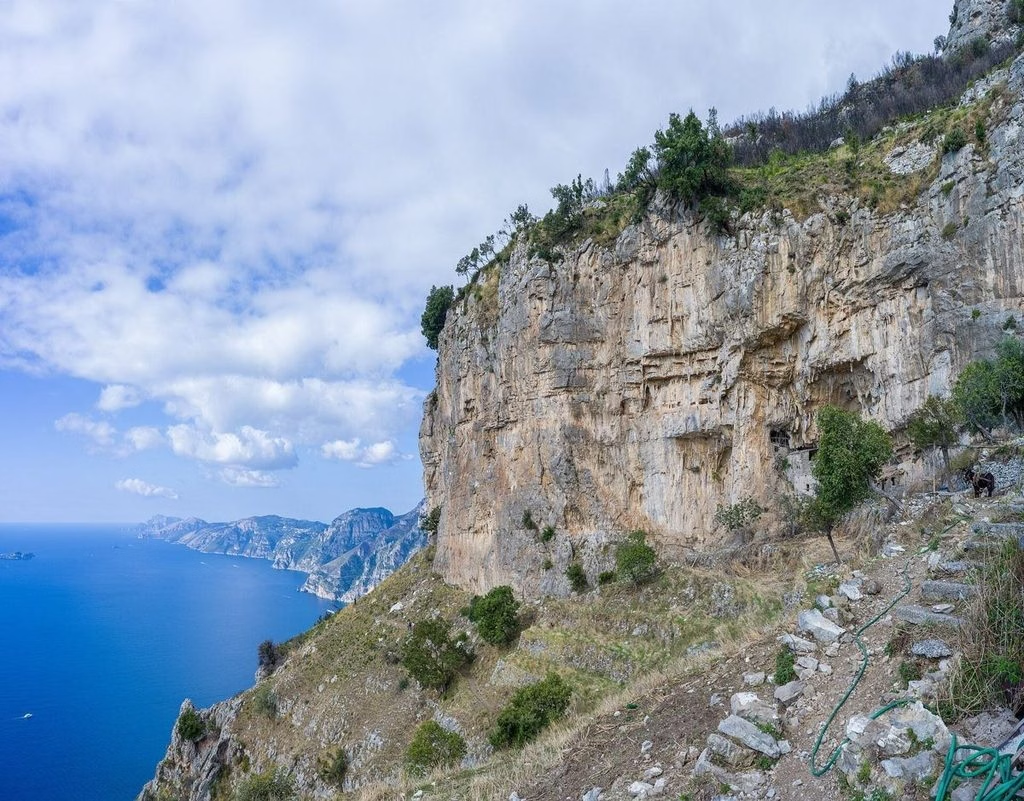
Photo: Wolfgang Moroder, Wikimedia Commons, CC BY-SA 3.0.
If you love walking, this is the one thing you should do on the Amalfi Coast. The Path of the Gods starts at Bomerano and ends at Nocelle, high above Positano, and you get views of the sea all the way. It is about 7.8 km and takes 2.5 to 3 hours, and since it is mostly downhill, it is not as tough as it sounds. The trail itself is free, and a private guide costs about EUR 200 to 300 per couple if you want one.
Start early, before it gets hot, because the path is on uneven stone with some exposed sections. Wear proper trail shoes, carry about 1.5 litres of water each and a hat, and skip it completely in a heat wave. From Nocelle, you can take the bus down to Positano, which runs roughly every hour, or walk down the 1,700 steps if your legs still have some energy left. To get the location of the starting point, click here.
5. Amalfi: The Town that Gave the Coast its Name
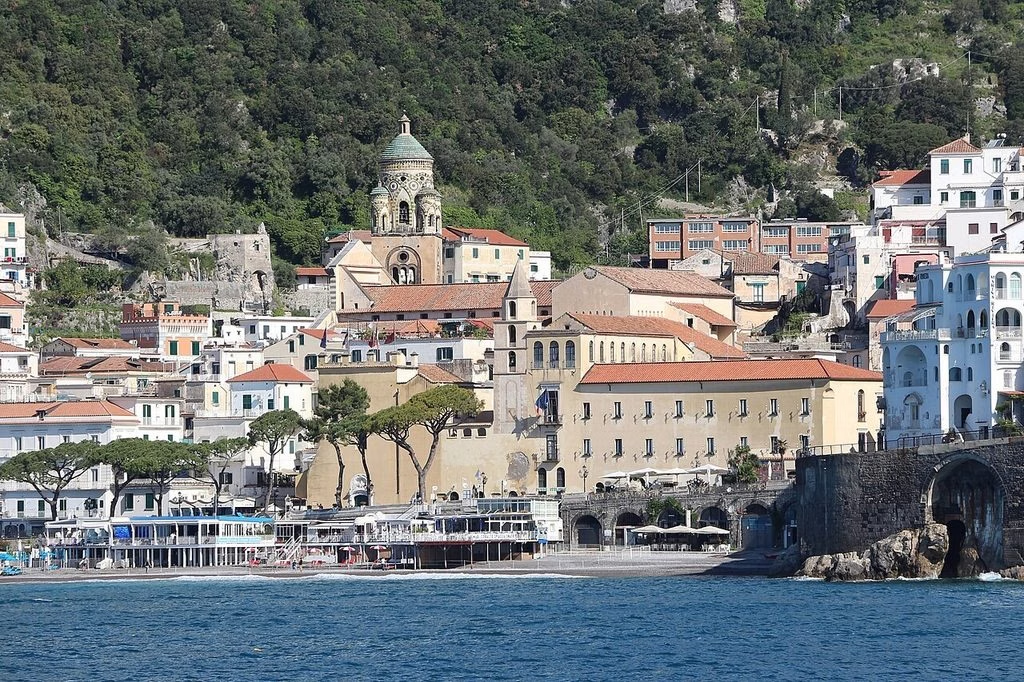
Photo: Bernard Gagnon, Wikimedia Commons, CC BY 4.0.
Amalfi town is just a 25-minute ferry ride from Positano, and the Travelmar ferry costs about EUR 10. This is the easiest way to move around, because the coast road is narrow and parking costs EUR 5 to 10 an hour, so please do not plan to self-drive here. The main sight is the Amalfi Cathedral with its big staircase, along with the Cloister of Paradise, the crypt and the museum, and the entry for these is just EUR 3.
After the cathedral, just wander through the lanes and around the harbour, and have a lemon granita on Piazza Duomo. Amalfi is famous for its lemons, and if you are a lemon lover there is also a lemon tour at the Amalfi Lemon Experience. Cover your shoulders when you enter the cathedral, and note that the paid areas close during services. To get the location, click here.
4. Ravello: Gardens and the Most Romantic Sunset
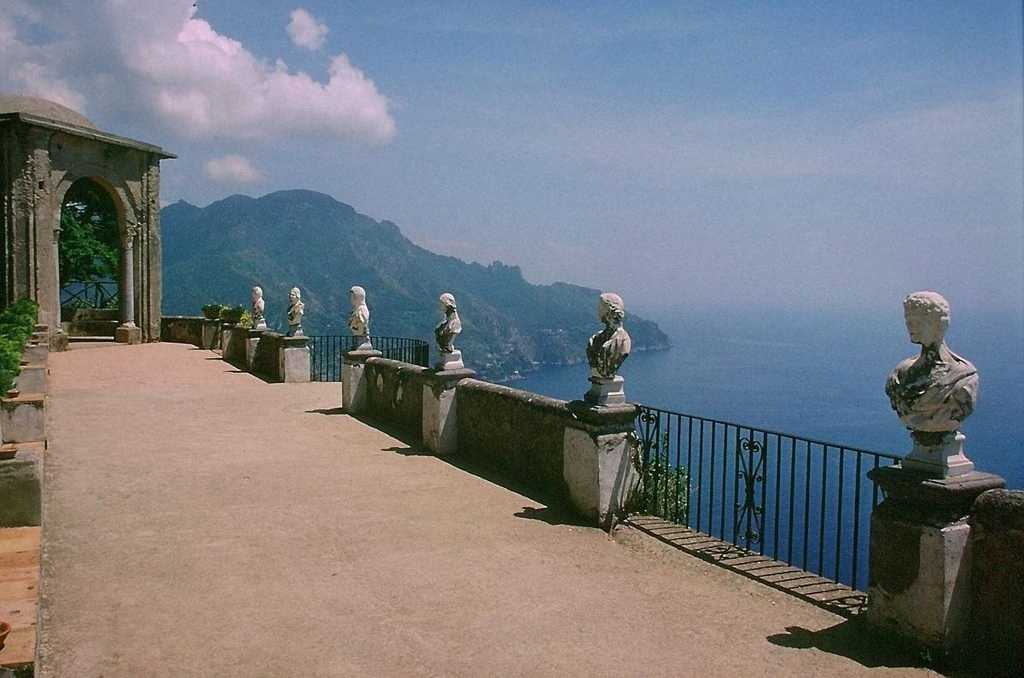
Photo: Wa at German Wikipedia, Wikimedia Commons, Public domain.
Ravello sits up on the hill, about 25 minutes by car from Amalfi, and it is much quieter than the villages down by the sea. There are two gardens here that you must see. Villa Rufolo has tiered gardens and a tower that inspired the composer Wagner, and the entry is EUR 8, with tickets sold on site only.
The real reason to come though is Villa Cimbrone. You walk down a long avenue to the Terrace of Infinity, which is lined with marble busts and sits above a 300-metre drop to the sea. The entry is EUR 10, it is open daily from 09:00 till sunset, and golden hour here is honestly the most romantic spot on the whole coast. That is why many couples choose it for a proposal. Pre-book a driver for your return, as taxis are scarce at night. To get the location, click here.
3. La Maddalena Archipelago: The Clearest Water in the Mediterranean
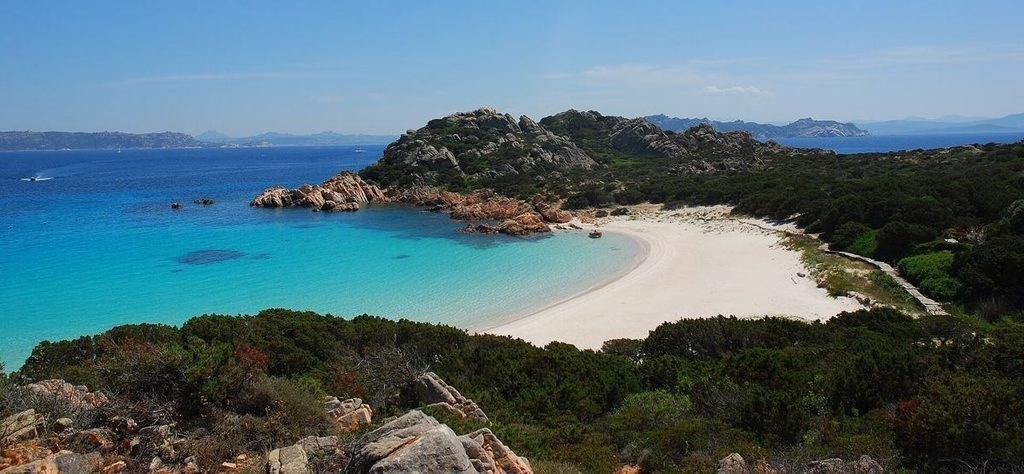
Photo: trevis_lu (Luca Giudicatti), Wikimedia Commons, CC BY-SA 2.0.
The La Maddalena Archipelago is a national park made of small islands off the north coast of Sardinia, and the water here is so clear that it looks unreal. Boats leave from Palau, which is about 35 to 45 minutes from the Costa Smeralda. On a boat day you can see Spiaggia Rosa, the famous pink beach on Budelli, swim in the Cavaliere pools between Budelli, Razzoli and Santa Maria, and stop at Cala Corsara on Spargi island.
A private boat costs about EUR 600 to 1,100 per boat for a half day to a full day, so if you are on a budget, go for a shared boat tour. Make sure you book a licensed operator, as the park permit has to be included. Note that you can only see Spiaggia Rosa from the boat, as landing on it brings heavy fines. The archipelago is exposed to the mistral wind too, so check the forecast the evening before and keep a backup day. To get the location of Palau port, click here.
2. Capri: The Blue Grotto and the Faraglioni by Boat
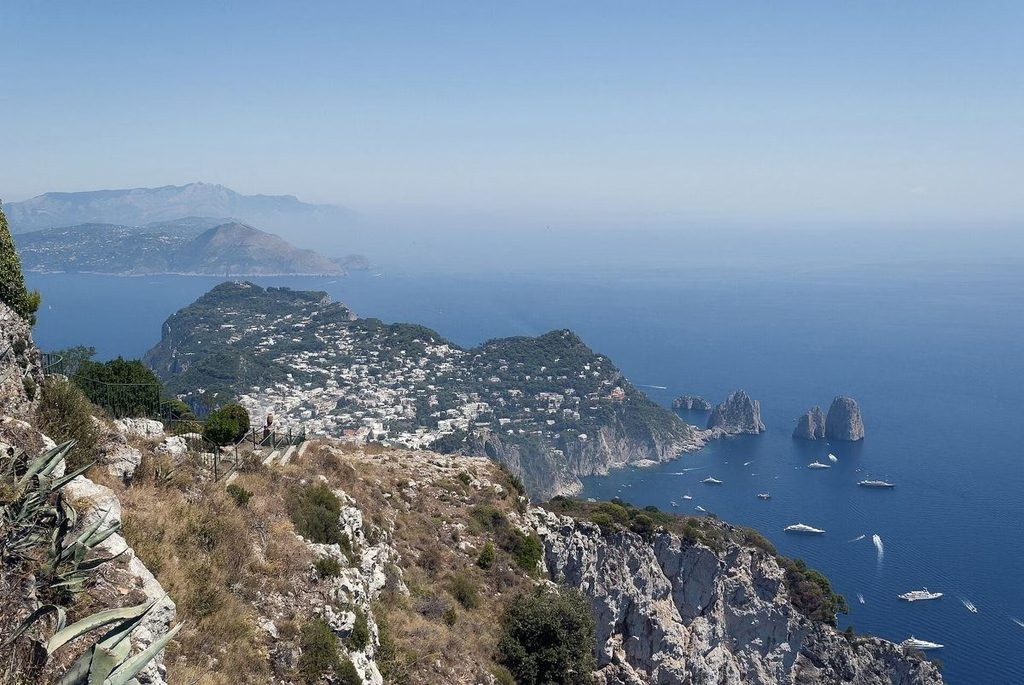
Photo: Michael Gimmelfarb, Wikimedia Commons, CC BY-SA 4.0.
Capri is the island everyone dreams about, and the best way to see it is by boat from Positano. The ride is about 50 minutes and passes the Li Galli islands on the way. Do the Blue Grotto first thing in the morning, when the sea is calmest. You transfer to a small rowboat at the entrance, wait 30 to 60 minutes in the queue and get about 5 minutes inside, and it costs EUR 19 each including the rowboat. After that, go around the island to see the Green Grotto, the Arco Naturale and the Faraglioni rocks, where couples kiss as they pass under the middle rock.
A full-day private boat costs about EUR 800 to 1,100 per boat, and there is also a Capri landing contribution of EUR 5 per person from April to October. Do not take the public ferries to Capri in August if you can avoid it, as they get packed. Once you are on land, take the funicular up to the Piazzetta for EUR 2.40 and walk to the Gardens of Augustus for the view over the Faraglioni. The Blue Grotto shuts when the sea is rough, so check with your skipper in the morning and do not waste time queueing if it is closed. To get the location, click here.
1. Positano: The Most Romantic Village on the Amalfi Coast
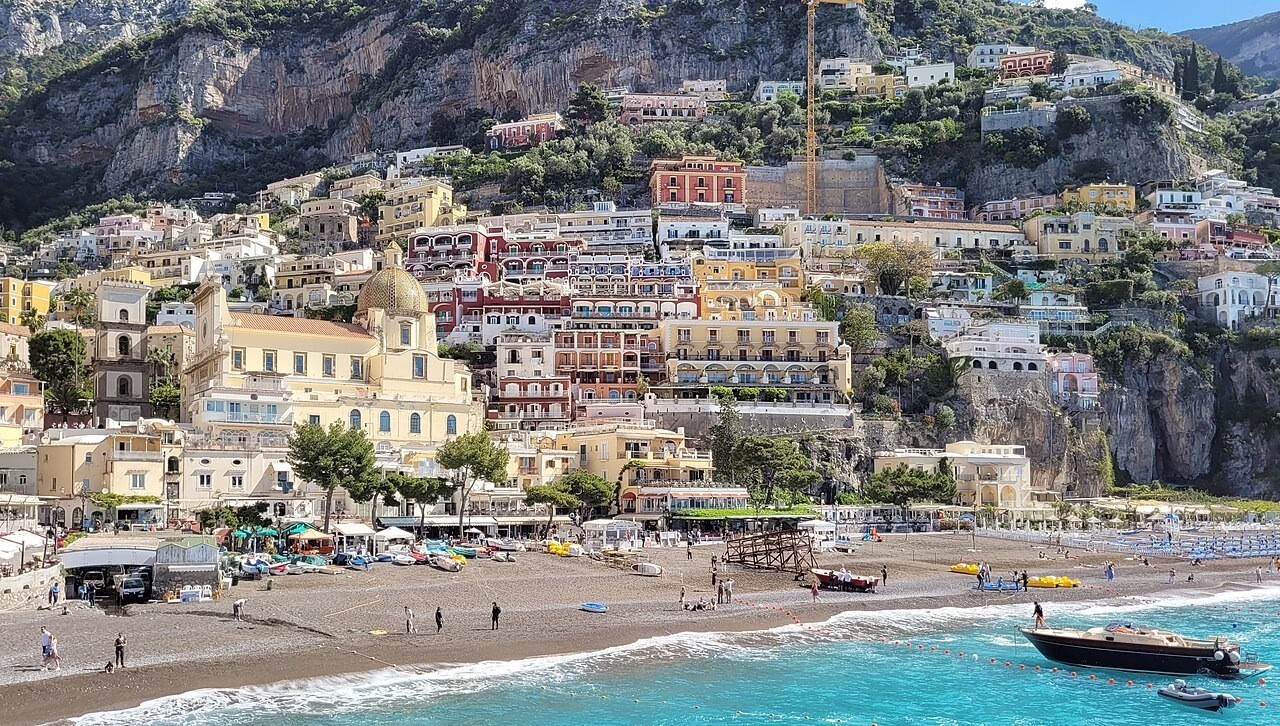
Photo: Bernard Gagnon, Wikimedia Commons, CC BY 4.0.
Positano is No. 1 on my list, and once you see the colourful houses stacked on the cliff above the beach, you will know why. It is the most romantic village on the Amalfi Coast and also the most practical base, because the boats to Capri leave from its main beach, Spiaggia Grande, and Amalfi and Ravello are under an hour away. Walk down Via dei Mulini to the beach and the Church of Santa Maria Assunta with its majolica-tiled dome, and that alone will set the mood for your trip.
In the evening, go for a sunset drink with a view, and if you are celebrating something special, Positano has some of the best candle-lit dinners on the coast. Be ready for lots of steps though, as the whole village is built on the hillside. Stays here are expensive and get booked 6 to 9 months in advance for June to September, so book this part of the trip first. To get the location, click here.
Things to note before visiting Amalfi Coast and Sardinia
- Do not self-drive on the Amalfi Coast. Use ferries, boats and a private driver there, but rent a car in Sardinia, because there is no practical public transport between the beaches.
- Book the Naples to Olbia flight before everything else. In summer 2026, the nonstop flights by easyJet and Volotea ran on set weekdays only, so this one flight decides how your whole trip is planned.
- Indian passport holders need a Schengen visa. Apply 6 to 8 weeks ahead with your flight and hotel bookings, travel insurance with at least EUR 30,000 medical cover and proof of funds.
- Carry about EUR 200 to 300 in cash for tips, boats and beach kiosks. Cards work almost everywhere else.
- Swimwear is fine on the beach but frowned upon in town centres, and you need to cover your shoulders in churches.
- The sea decides your boat days. Keep a backup day for Capri and La Maddalena, and get the weather cancellation policy in writing when you book.
How to reach Amalfi Coast and Sardinia
By Air
From India, Delhi has nonstop flights to Rome by Air India and ITA Airways, which take about 9 hours. From Mumbai, Bengaluru and other cities, you will have one stop via the Gulf or Delhi, and the journey takes about 12 to 15 hours. For Sardinia, fly from Naples to Olbia, which takes about 1 hour 10 minutes, and fly home from Olbia via Rome or another hub.
By Train
From Rome Fiumicino airport, take the Leonardo Express to Roma Termini, which takes 32 minutes and costs EUR 14. From there, a high-speed train to Napoli Centrale takes about 1 hour 10 minutes and costs about EUR 20 to 60 per person. There is no check-in for luggage on the trains, but you have to lift your own bags, so travel light.
By Road
From Naples, a pre-booked private car to Positano takes about 1.5 hours and costs about EUR 130 to 200 per car. If you land in Rome late, you can take a private car straight from Fiumicino to Positano, which takes 3.5 to 4 hours and costs about EUR 450 to 650 per car. In Sardinia, rent a car at Olbia airport, as the hotels and beaches are spread out.
Best time to visit Amalfi Coast and Sardinia
June and September are the best months to visit. The sea is warm, every seasonal hotel, restaurant, ferry and boat is running, and the crowds are smaller than in July and August, which are the hottest and most expensive months. September has the warmest sea of the year, so if you ask me, that is the sweet spot. Late May and early October are cheaper, but some places start closing, and from November to March most hotels are shut, so avoid those months for a trip like this.
Places to stay in Amalfi Coast and Sardinia
I would suggest two bases, Positano for the Amalfi Coast and the Cala di Volpe to Porto Cervo area for Sardinia, so you only repack once. In Positano, Hotel Poseidon is the best value among the well-rated hotels, while Il San Pietro di Positano and Le Sirenuse are the big splurges. On the Costa Smeralda, Hotel Capriccioli is the value pick, steps from Capriccioli beach, while Hotel Cala di Volpe and Hotel Pitrizza are the icons. Most hotels in Sardinia open only from about April or May to October, and 3-night minimum stays are common in July and August.
FAQ
- Is it safe to visit Amalfi Coast and Sardinia?
Yes, both are very safe. Just watch out for pickpockets at Roma Termini and Napoli Centrale stations, and remember that 112 is the emergency number anywhere in the EU.
- How many days are enough for Amalfi Coast and Sardinia?
Ten days is a comfortable plan, with 4 nights on the Amalfi Coast and 5 nights on the Costa Smeralda. That gives you two or three main experiences a day without rushing.
- Can we swim at the beaches in Sardinia?
Yes, the Costa Smeralda beaches have calm, clear water and are great for swimming. The only place you cannot land is Spiaggia Rosa on Budelli, which you see from the boat only.
- Can we drive a car on the Amalfi Coast?
No, I would not suggest it. The roads are narrow and parking is expensive, so use ferries, boats and a private driver there, and keep the self-drive for Sardinia.
- How much does a trip to Amalfi Coast and Sardinia cost from India?
For 10 days, it comes to roughly Rs. 4.7 to 9.6 lakh per person on the lower side and much more for the top luxury hotels, with flights and hotels being the biggest costs. June or September dates and public ferries help you save a lot.
- Do Indians need a visa for Amalfi Coast and Sardinia?
Yes, Indian passport holders need a Schengen visa, which also covers the day trip to Corsica. Apply 6 to 8 weeks before you travel.
Final Thoughts
If I had to choose just one, I would still say Positano, but the real magic of this trip is the mix, cliffside villages and lemon gardens one week and empty turquoise coves the next. Which one would you pick first, Capri or La Maddalena? Tell me in the comments. And if you love beaches as much as I do, also check out my guide to the best beaches in North Goa, and if you are planning another trip abroad, read my top Caribbean cruise destinations as well.
All 10 of these places are part of my new 10-day Amalfi Coast and Sardinia couples itinerary, which plans every day hour by hour, with ferries, boats, hotels with ratings, three restaurant options for every meal, maps and a full budget in EUR and Rs. If you want this itinerary, or a custom version for your own dates, this is how I can help.
I plan the route. I don’t book the ferry, the stay, or the tickets. A custom plan is Rs. 200 per travel day. Fill the trip form, pay online, and I’ll send you the plan.