 By
Vietnam is one of those countries that looks simple on a map and then refuses to be one kind of place. In the north you get a busy old capital and limestone towers rising out of rice fields. In the centre there is a trading town that still glows with silk lanterns, a Cham temple valley with a clear link to India, and a golden bridge held up by two giant stone hands. In the south, an island has a long white beach and a cable car that actually crosses the sea.
Vietnam has more beautiful spots than any one trip can cover, and famous names like Ha Long Bay deserve their own stories. This list is built from the places I spent the most time on while planning my 10-day Vietnam itinerary from Hanoi to Hoi An and Phu Quoc, ranked by how much they stayed with me. So here are the top 10 places to visit in Vietnam, counted down from No. 10 to the one place I would never let you miss, with the story behind each and small tips that actually help.
Top 10 places to visit in Vietnam
10. Thang Long Water Puppet Theatre, Hanoi: Stories Told on a Pool of Water
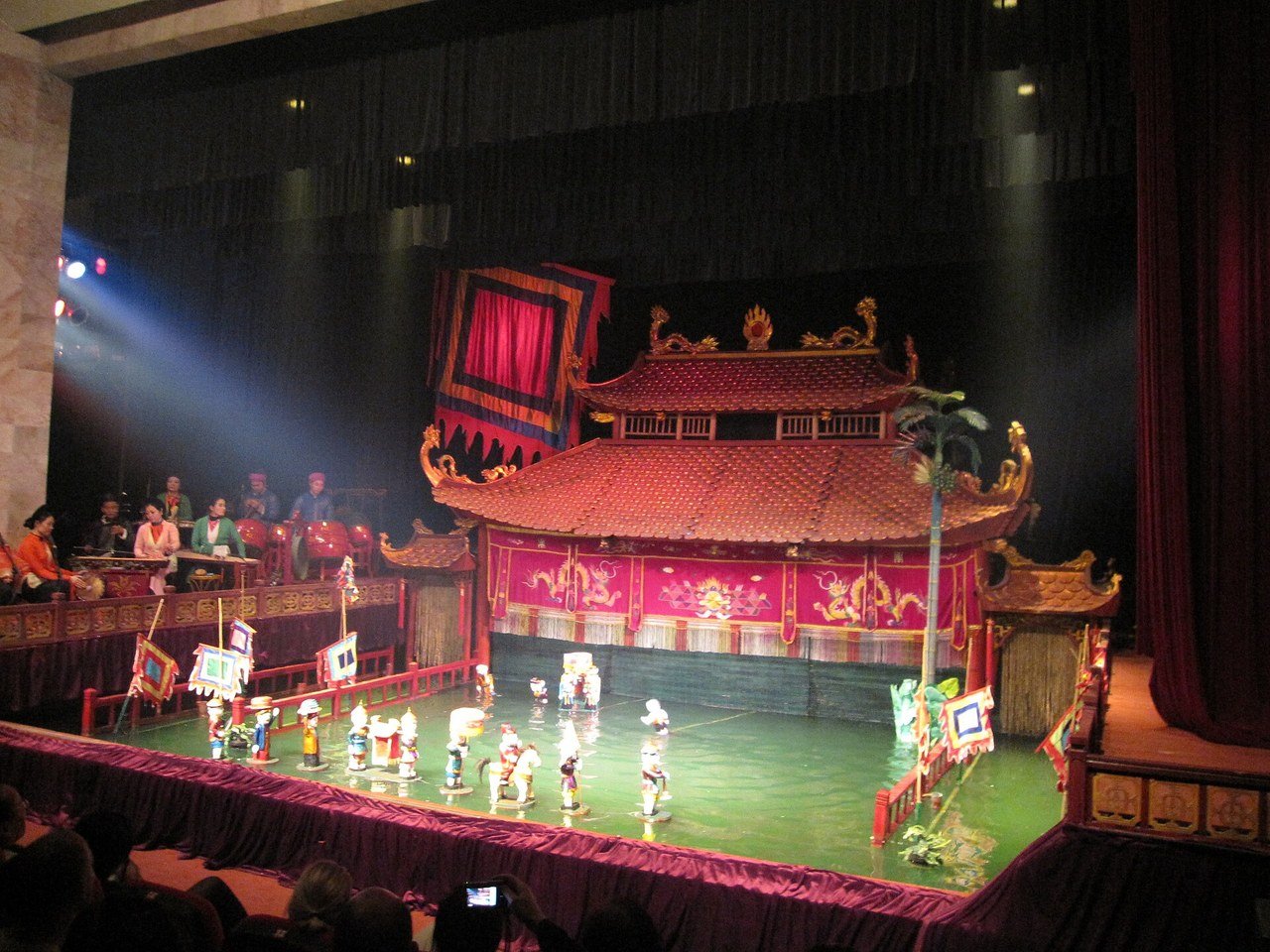
Water puppetry sounds a bit odd until you sit down and the first figure shoots across a brown pool of water, and then you cannot look away. The art comes from the wet rice villages of the Red River Delta, where farmers used to perform in ponds and flooded fields, and it goes back many centuries, at least to the time of the Ly dynasty. The puppets are carved from wood, lacquered, and worked from under the water on long poles, so they seem to walk, row, fight and dance on the surface by themselves.
The easiest place to see a proper show is the Thang Long Water Puppet Theatre, on the edge of Hoan Kiem Lake in Hanoi. You sit in a small hall, a traditional orchestra plays live, and the scenes run through village life, festivals, dragons and folk stories, all on that one pool. It is popular, so I would suggest booking a seat rather than hoping for a walk-in at busy hours. To get the location, click here.
9. Temple of Literature, Hanoi: Vietnam’s First University
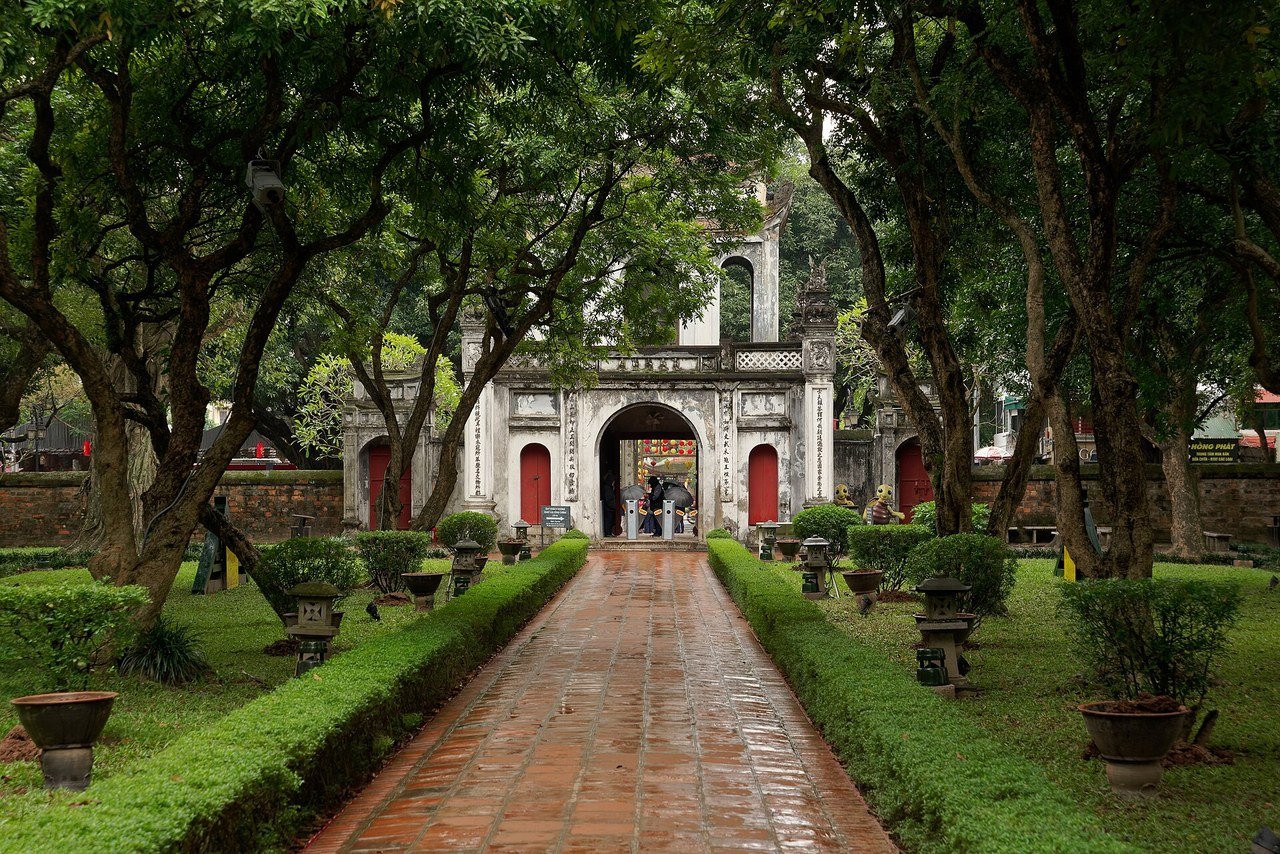
If you want a quiet hour in Hanoi that still has a real story, go to the Temple of Literature. It was founded in 1070 by Emperor Ly Thanh Tong as a temple to Confucius, and in 1076 a national academy, Quoc Tu Giam, was set up beside it, which is why people call it Vietnam’s first university. You walk through gates and courtyards, past trees, ponds and tiled roofs, and the city noise drops away in a way that feels almost unfair in the middle of Hanoi.
The most famous relics here are the stone stelae of doctors, mounted on the backs of stone turtles, recording men who passed the royal examinations over several centuries. There is also the Constellation of Literature pavilion, Khue Van Cac, which has become one of the symbols of the city. Dress modestly, take your time, and go earlier if you can, because tour groups fill the paths by late morning. To get the location, click here.
8. Marble Mountains, Da Nang: Caves, Pagodas and a View of the Coast
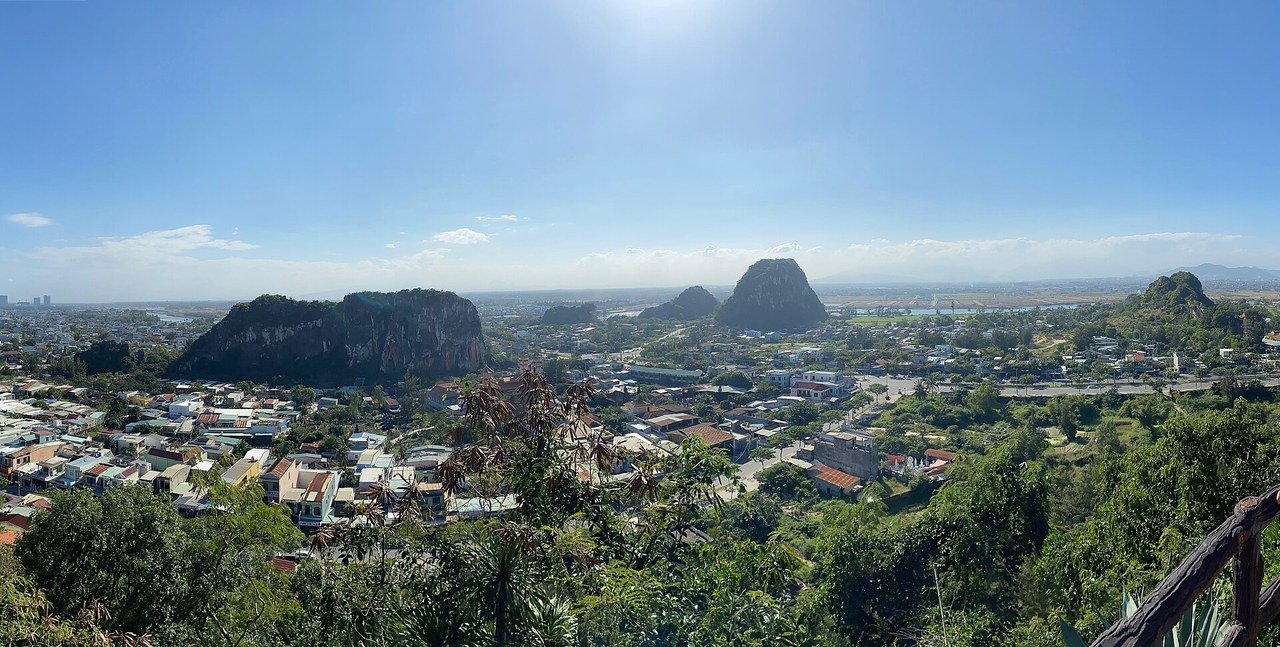
The Marble Mountains, or Ngu Hanh Son, are a cluster of five limestone and marble hills on the edge of Da Nang, named after the five elements: metal, wood, water, fire and earth. Most visitors only go up Thuy Son, the water mountain, because that is the one with the caves, pagodas and viewpoints. Once you are on the hill, you find stairways, shrines tucked into hollows, and cave chambers with altars and shafts of light.
Give yourself time to wander rather than rushing up and down for one photo. The caves are the real surprise, especially the larger ones with pagodas built inside the rock, and from the upper terraces you get a wide view over Da Nang, the beach and the sea. The steps are steep in places, the stone can be slippery after rain, and the midday sun is a bummer, so take water and wear shoes you can climb in. There is also a lift on Thuy Son if the climb is too much. To get the location, click here.
7. My Son Sanctuary: Cham Temples with a Clear Link to India
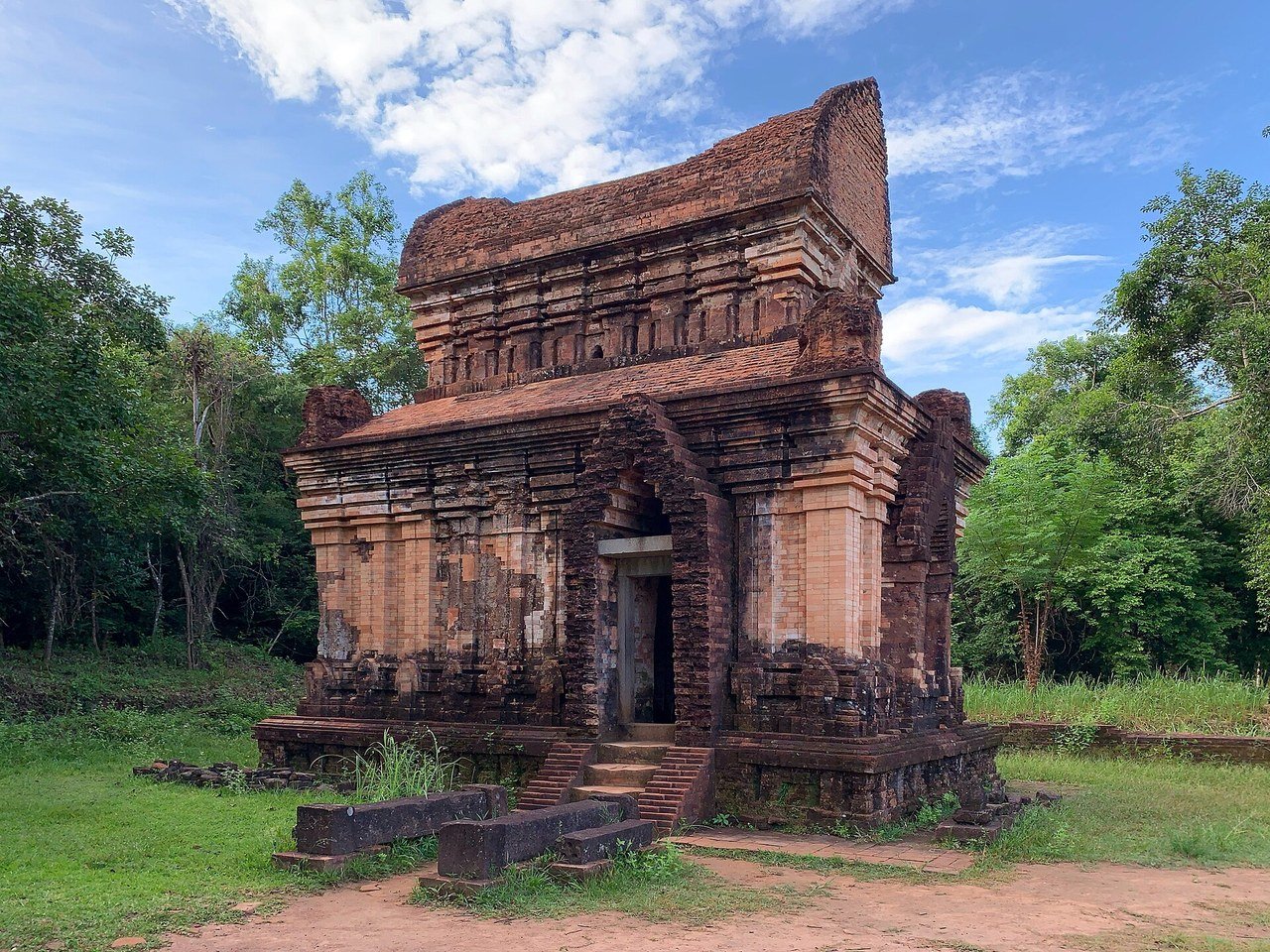
My Son is the place in this list that will make a lot of Indian travellers stop and look twice. From the 4th to the 13th centuries this valley in central Vietnam was a sacred centre of the Champa kingdom, and the brick tower-temples were built mainly for Hindu gods, above all Shiva. UNESCO inscribed My Son as a World Heritage site in 1999, the same year as Hoi An Ancient Town, and the Thu Bon River, which runs through Hoi An, has its source in the mountains around this sanctuary.
The temples stand in groups in a green valley ringed by hills, built of fired brick with sandstone carvings, and they were meant to recall Mount Meru, the sacred mountain at the centre of the Hindu universe. The site was badly damaged by bombing in August 1969 during the war, and you can still see the gaps and later restoration work, including projects involving teams from Vietnam, Poland, Italy and India. It is a ruin, not a polished palace, and that is part of its power. Go early if you can, carry water, and stay on the marked paths. To get the location, click here.
6. Hon Thom Cable Car, Phu Quoc: A Ride That Actually Crosses the Sea
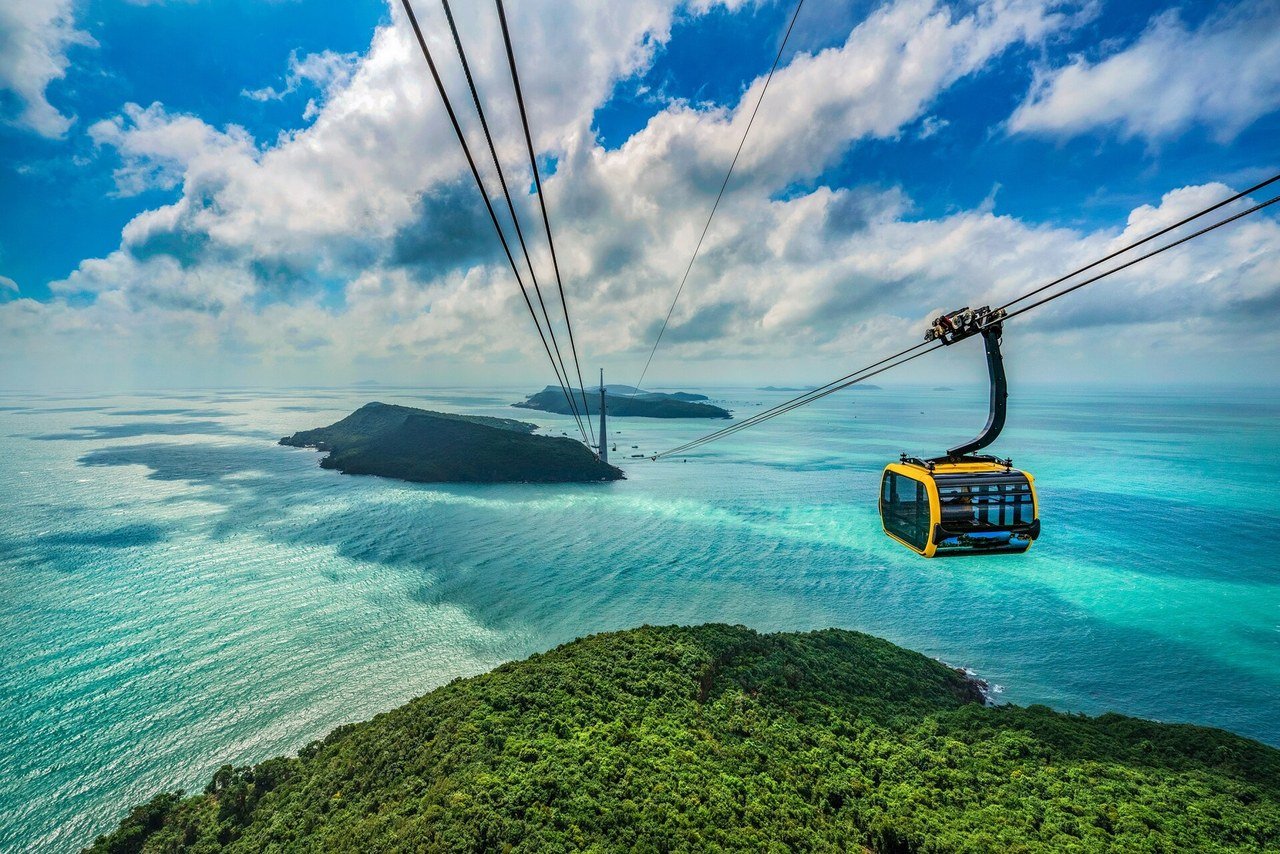
Most cable cars give you a mountain or a valley. The Hon Thom cable car, in the south of Phu Quoc island, gives you the sea. The line runs from An Thoi on Phu Quoc across the water to Hon Thom island, and in January 2018 Guinness World Records certified it as the longest non-stop three-rope cable car, at 7,899.9 metres. The cabins hold about 30 people, and the crossing takes around 15 minutes, with the water, fishing boats and small islands sliding past under your feet.
On the Hon Thom side you will find a modern leisure park, a purpose-built waterfront area called Sunset Town, and the Kiss Bridge standing out in the sea. I will be honest with you: this is a tourist development, not a fishing village frozen in time, and it can feel busy. The reason it still makes this list is the ride itself. Sitting in that cabin over nearly 8 km of open water is a feeling you do not get in many places. To get the location, click here.
5. Sao Beach, Phu Quoc: The Island’s Prettiest Stretch of Sand
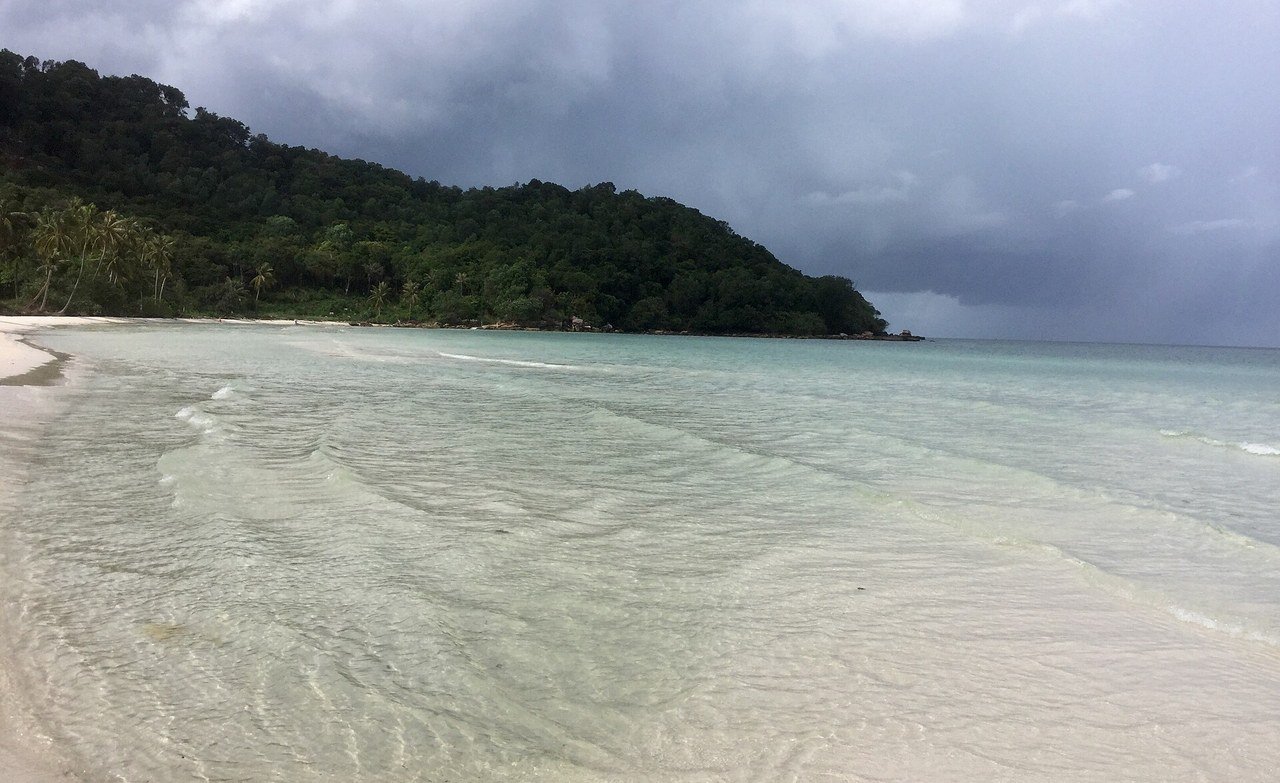
Sao Beach, or Bai Sao, sits on the south-eastern side of Phu Quoc, and this is the beach that usually makes people go quiet for a minute. The sand is fine and pale, the water is shallow and clear in the dry months, and the bay curves around in a way that looks almost unreal on a bright morning. The name means Star Beach, after the starfish that used to be easy to find here. I would not count on seeing many now, and you should never pick them up.
This is a place for swimming, walking and doing very little, not for a long list of activities. The nicest days are in the dry season, roughly from November to April, when the sea is usually calmer and clearer. From about May to October the water can be rougher and less blue, so do not judge the beach by a wet-season photo. I would suggest getting there earlier if you want a quieter stretch of sand. To get the location, click here.
4. The Golden Bridge at Ba Na Hills, Da Nang: Two Giant Hands in the Clouds
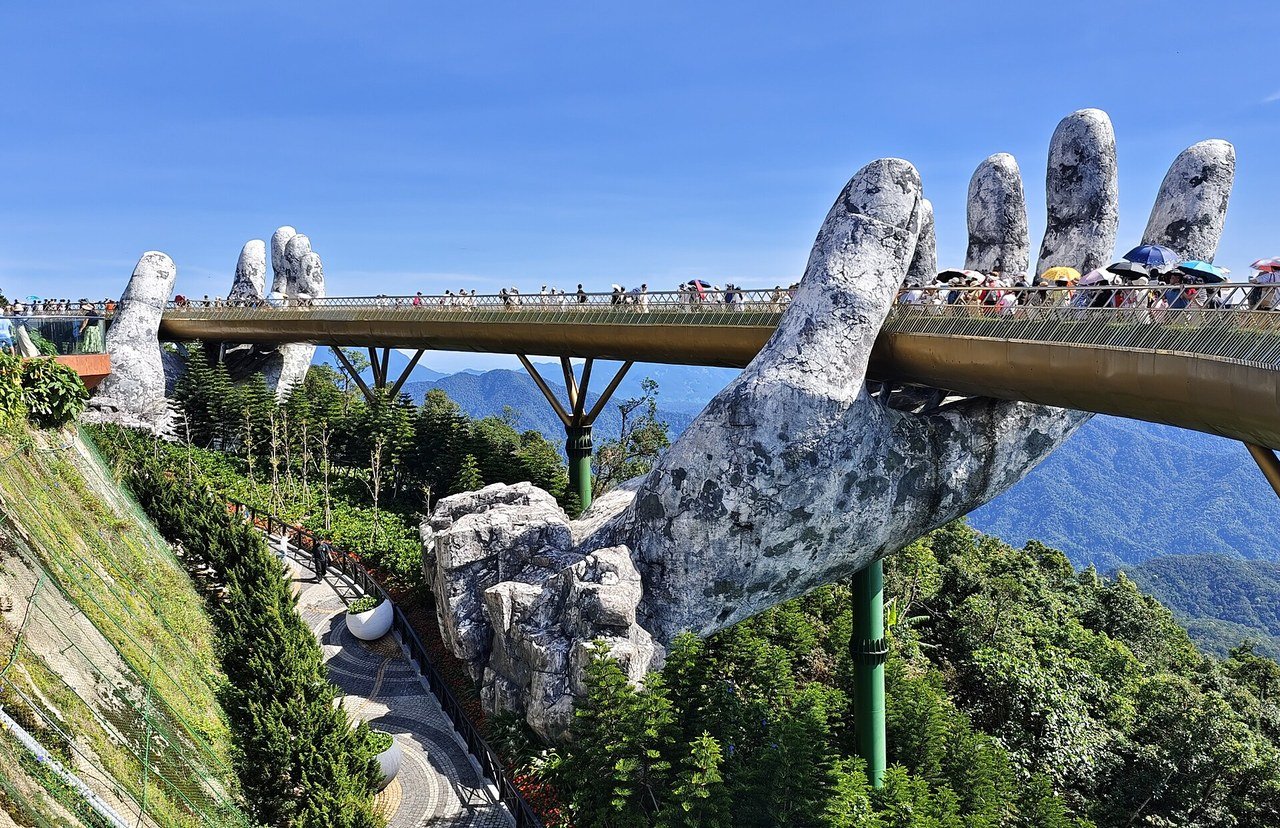
Some places become famous because they are old. The Golden Bridge became famous because two giant hands appear to be holding a gold walkway in the air, and the photographs went around the world almost as soon as it opened in June 2018. It sits in the Ba Na Hills, a mountain resort above Da Nang that began as a French hill station in 1919 and now sits at about 1,487 metres. The bridge is about 150 metres long, designed by TA Landscape Architecture in Ho Chi Minh City, with Vu Viet Anh as principal designer, and those weathered hands are a sculpted skin around a steel structure, made to look like ancient stone.
The walkway gives you a wide view over the hills and, on a clear day, towards the coast. Ba Na Hills is a full mountain park, with a cable car, a French-style village, gardens and plenty of other attractions, so it is busy, it is not cheap, and the bridge will have a queue for photos. Go anyway, because it is stranger and more fun in person than it looks on a phone, especially if the clouds are moving around the hands. The air up there is also cooler than Da Nang, which is a relief after a hot morning. To get the location, click here.
3. Hoan Kiem Lake and the Hanoi Old Quarter: The City’s Living Heart
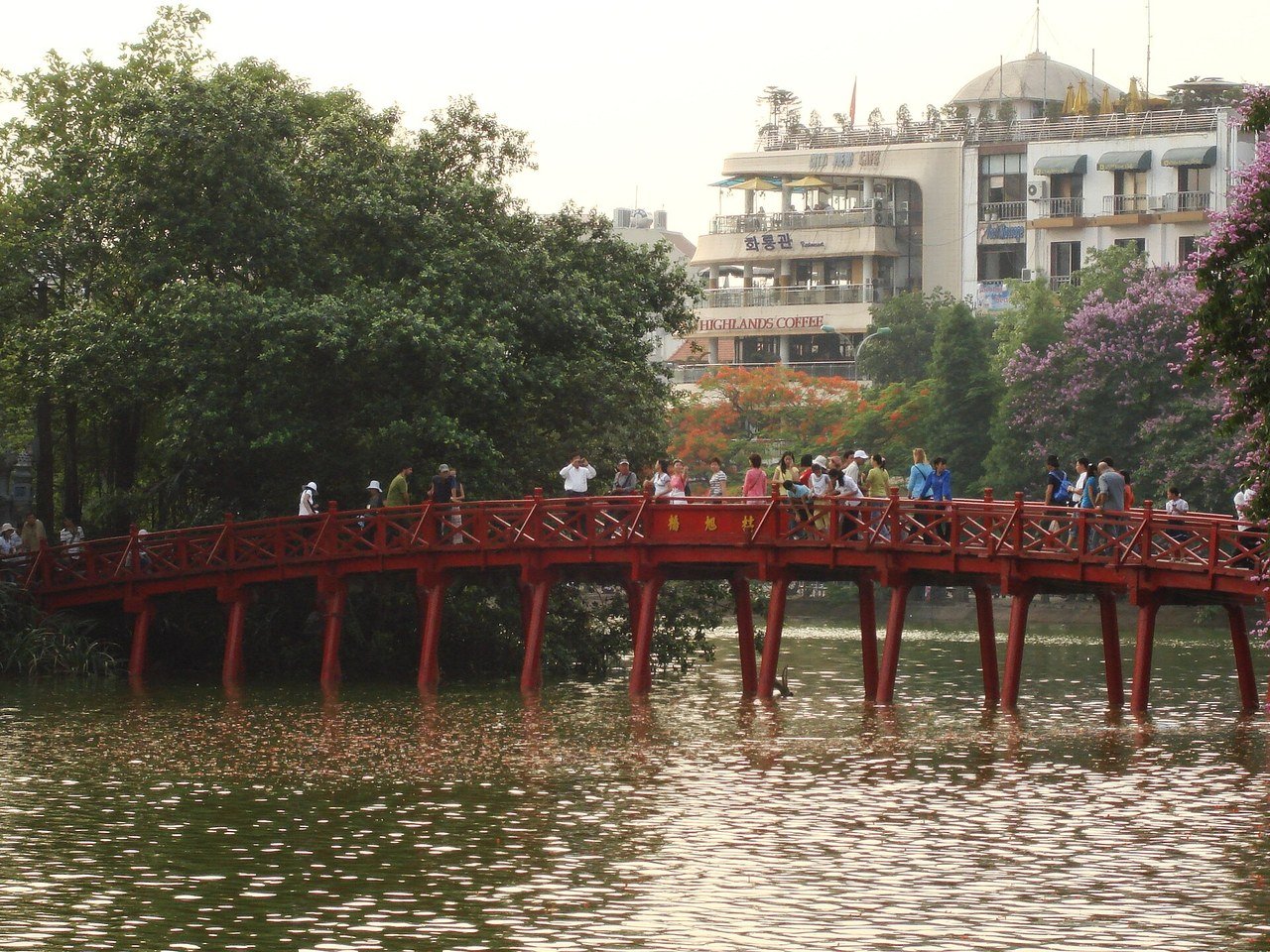
If you only have one first walk in Hanoi, start at Hoan Kiem Lake. The name means Returned Sword, and the legend is simple and easy to love: after Le Loi defeated the Ming, a golden turtle rose from this lake and took back the sacred sword he had been given to win the war, so the lake was renamed to mark the return. In the middle of the water is a small island with Ngoc Son Temple, and you reach it across The Huc, the bright red wooden bridge that has become one of the most photographed spots in the city. The present temple and the bridge both took their familiar form in the 19th century, with the red bridge dated to 1865.
Around the lake is the Old Quarter, a tight grid of streets that grew as a craftsmen’s quarter, often described through the old idea of 36 streets, each once tied to a trade. It is noisy, it is full of scooters, and it is not a museum. That is the point. You walk, you get a bowl of pho or a bun cha, you watch the lake in the late afternoon, and on weekend evenings parts of the area around the lake become walking streets. Keep an eye on your bag in the crowds. To get the location, click here.
2. Trang An, Ninh Binh: Boats Through the Limestone Karsts
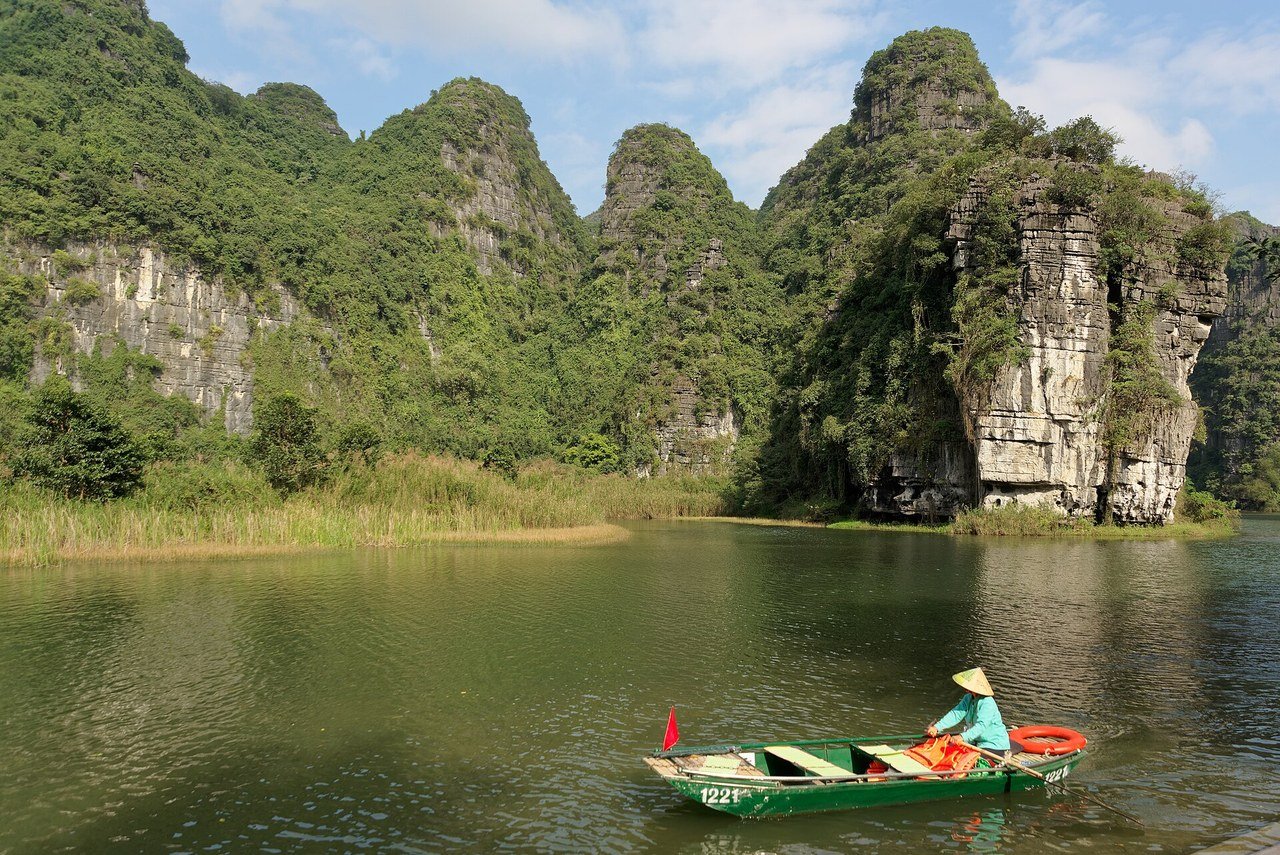
If you have seen photographs of boats sliding between green limestone towers in Vietnam and assumed they were all from Ha Long Bay, look again. A lot of those pictures are from Trang An, in Ninh Binh province, south of Hanoi. People often call it Ha Long Bay on land, and for once the nickname is fair. In June 2014 UNESCO inscribed the Trang An Landscape Complex as a World Heritage site, Vietnam’s first mixed cultural and natural site, covering the boat routes, the caves, the rice fields and the ancient capital of Hoa Lu.
You see the place from a small rowed boat, passing through quiet waterways and low cave tunnels, with cliffs rising straight out of the water and rice paddies opening out between the towers. The ride is slow on purpose. Nearby, Hang Mua is the climb for the view, 486 stone steps up to a peak with a pagoda, a dragon statue and a wide look over the karsts, and Hoa Lu is where Vietnam’s early emperors set their capital in the 10th century. I have written a fuller story on Trang An in Ninh Binh, because a short list entry is not enough for a landscape this good. To get the location, click here.
1. Hoi An Ancient Town: The Place I Would Never Let You Miss
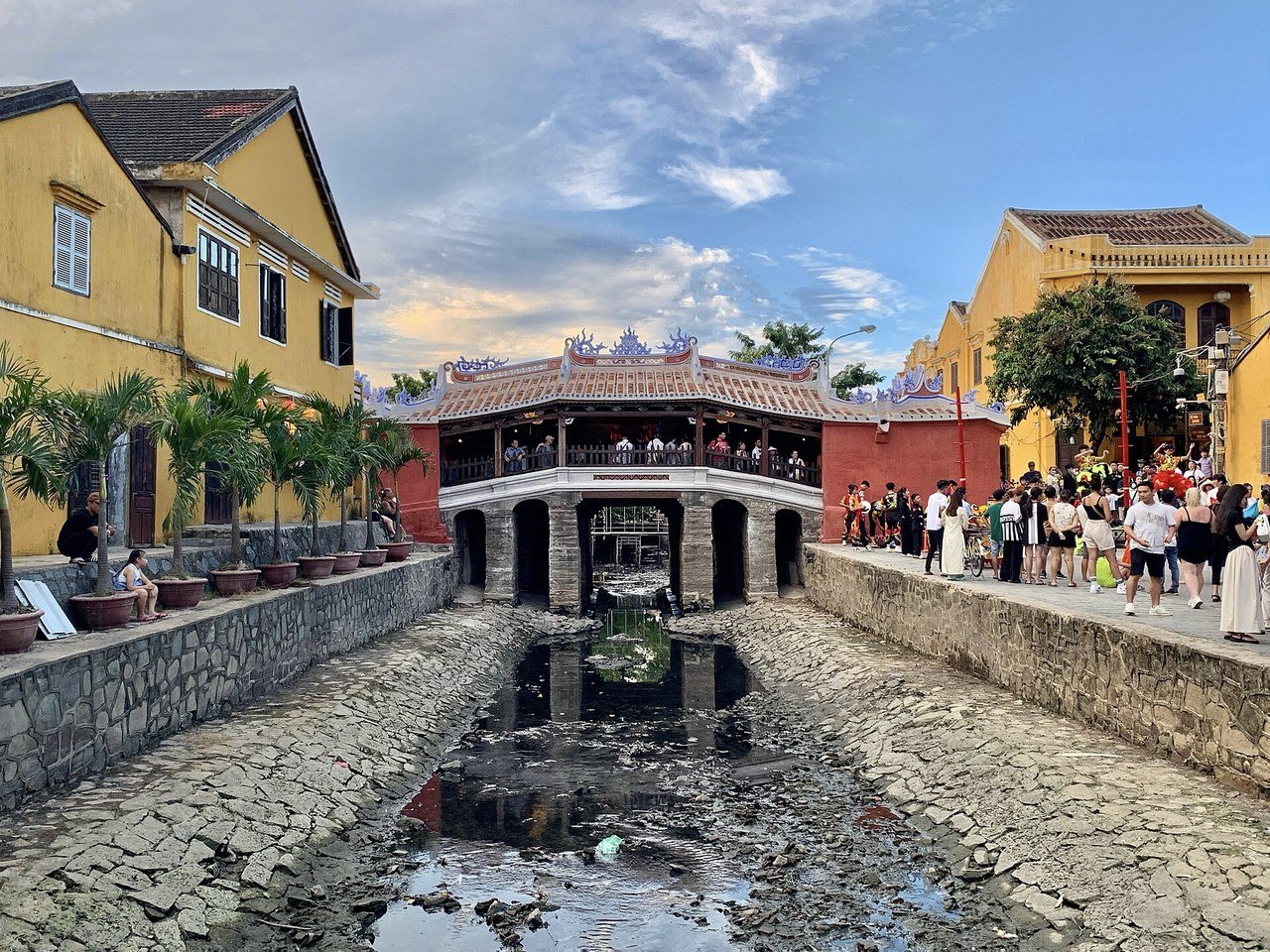
Hoi An is my No. 1, and I do not think this is a controversial choice once you have walked it after dark. This was a trading port from the 15th to the 19th century, where Vietnamese, Chinese and Japanese merchants, and later European traders, met on the Thu Bon River, and the old town is so well preserved that UNESCO listed it as a World Heritage site in 1999. The streets are tight and mostly yellow, the houses are timber-framed and tile-roofed, and the Japanese Covered Bridge, built by Japanese merchants in the late 16th century and restored many times since, still stands over a small stream in the middle of town.
During the day you can go into old merchant houses, Chinese assembly halls and the market, and you should try cao lau, the local noodle dish you will not really find in the same way elsewhere in Vietnam. At night the silk lanterns come on, the river fills with small boats, and around each full moon the old town holds a lantern festival, when the electric lights are dimmed and the place looks even more like a film set. It is crowded, it can flood in the autumn rains, and you will share the bridge with a lot of cameras. Go anyway, stay for the evening, and let the town work on you. I have written a full story on Hoi An Ancient Town if you want the history, the bridge and the lanterns in one place. To get the location, click here.
Best time to visit these places in Vietnam
Vietnam is long from north to south, so one season does not cover the whole list. In Hanoi and Ninh Binh, December to February can be cool and grey, then February to April is usually the most comfortable stretch before the heavier summer rains. Around Hoi An, Da Nang and Ba Na Hills, the wetter and stormier months are often September to November, and Hoi An’s old town can flood. On Phu Quoc the drier period is usually about November to April. If you want one window that treats most of these ten places kindly, February to April is the one I would aim for.
FAQ
- Do I need a visa for Vietnam?
Most Indian passport holders need an e-visa before they travel, applied for on the official Vietnam e-visa site. Some other nationalities are allowed in visa-free for a limited stay, and the rules change, so check the official site for your passport rather than an old blog post.
- Is it safe to visit these places in Vietnam?
Yes, these are well-visited places and day-to-day travel is straightforward if you use the usual common sense. Watch your bag in busy streets and markets, be careful with traffic when you cross the road, and do not leave phones and cameras loose on a cafe table.
- How many days do I need for this list?
You cannot do all ten justice in a long weekend. If you want Hanoi, Ninh Binh, Hoi An, the Da Nang sights and Phu Quoc without sprinting, a trip of about 10 days is a sensible shape, which is why I planned my itinerary that way.
- Is Vietnam suitable for vegetarian travellers?
Yes. Vietnam has a strong vegetarian tradition, and you will see places advertising chay, which means vegetarian food. In the big towns you will also find Indian restaurants, but you do not have to depend on them if you are happy with local vegetarian dishes, tofu, vegetables and rice.
- What should I wear and carry?
Light clothes, a hat, sunscreen and shoes you can walk in for a full day. Temples and shrines are happier if your shoulders and knees are covered. For Trang An and Hang Mua, wear shoes with a grip, and for Phu Quoc pack something for the beach.
- Will I face language problems?
You will be fine in the main visitor areas. English is widely used in tickets, hotels and restaurants in Hanoi, Hoi An, Da Nang and Phu Quoc, and a translation app covers the rest. A hello and thank you in Vietnamese is still worth it.
Final Thoughts
If you ask me to pick one place from this list and put it on your plan no matter what, it is Hoi An, with Trang An right behind it. The Golden Bridge is the photo, My Son is the one that quietly stays with you if you care about history, and Phu Quoc is where you finally sit down. Which of these ten is already at the top of your list, the lanterns or the boats in the karsts? Tell me in the comments. And if you are collecting other trips, read my top 10 places to visit in Japan, my top 10 places to visit in the Maldives, or stay closer to home with my White Town Pondicherry and my Udaipur for couples plan.
If Hoi An, Trang An and the Golden Bridge are the places that made you want to start packing, I have already done the planning in my 10-day Vietnam itinerary. You can use it for the days you have, book from its links and go, with no planning worries. If you want a custom version for your own dates, CLICK HERE to start on the trip form.
I plan the route. I don’t book the ferry, the stay, or the tickets. A custom plan is Rs. 200 per travel day. Fill the trip form, pay online, and I’ll send you the plan.